Conservatism
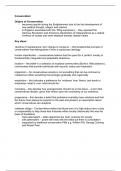
Origins of Conservatism
- becomes popular during the Enlightenment due to the fast development of
new political thought, religion and science
- in England, associated with the ‘Whig supremacy’ – they opposed the
Glorious Revolution and America’s Declaration of Independence as a radical
overhaul of society and were skeptical towards utopian ideals
Key ideas:
‘doctrine of maintenance’ and ‘change to conserve’ – this fundamental principle of
conservatism that distinguishes it from a reactionary ideology
human imperfection – conservatives believe that the quest for a ‘perfect’ society is
fundamentally misguided and potentially disastrous
localism – the belief in a collection of localized communities (Burke’s ‘little platoons’),
communities that provide individuals with security, status and inspiration
organicism – for conservatives society is not something that can be contrived or
created but rather something that emerges gradually and organically
empiricism – this indicates a preference for ‘evidence’ over ‘theory’ and tends to
emphasize ‘what is’ over ‘what should be’
normative – this denotes how arrangements ‘should’ be in the future – a term that
conservatives disdain, given their stress upon the uncertainty of our existence
progressive – this denotes a belief that problems invariably have solutions and that
the future must always be superior to the past and present, an assumption about
which conservatives are skeptical
noblesse oblige – Conservatives belies that those born of a high status have a duty
or responsibility to help those less fortunate within society (historically this was the
basis of feudalism)
- hard paternalism – elites determine the ‘best’ outcome for society
- soft paternalism – power still rests with the elites but there is consultation
- supported by traditional conservative PMs e.g. William Pitt, George Canning
and Robert Peel
, Overall patterns:
human nature – conservatism has been described as a ‘philosophy of imperfection’
due to its more skeptical vision of human nature and society
- conservatism rejects the malleable view of human nature and instead
stresses human imperfection
- humans are rational but ruthlessly selfish and competitive
- later conservatives, e.g. Oakeshott recognise human nature as both ‘fragile
and fallible’ as well as ‘benign and benevolent’
- New Right focus on the yearning for individual freedom and our capacity for
enterprise and innovation – Nozick claims we are ‘freedom-loving pack
animals’ who need some restraint of formal authority
society – conservatives generally agree that society must be conducive to stability,
security and order (as opposed to revolutionary change)
- localism – communities act as a break on selfish interest
- organicism
- empiricism
- tradition – Oakeshott’s ‘a society’s present direction stems from its past
development’
- hierarchy
- Judeo-Christian morality
- property – tied to support for tradition, continuity and stability
o New Right conservatives are more zealous about private property and
wish to extend it throughout society to create a ‘property-owning
democracy’
o the New Right analysis is fairly distinctive as it places greater emphasis
upon individual liberty
economy – generally conservatives support a ‘moderated’ form of capitalism, in
which free markets are tempered by state intervention in order to reduce volatility
- traditional conservatives support protectionist measures, e.g. tariffs
- laissez-faire economics supported by the New Right
o e.g. Rand arguing that ‘when the state becomes flabby, it also
becomes feeble’ and thus a streamlined state is needed to ensure law
and order exists
state – the main goal of the conservative state is to provide security and authority
- order and authority
- organic origins (but the state needs to be pragmatically responsive to needs)
- ruling class
- the New Right wish to strengthen the state by significantly ‘rolling back its
frontiers’ and to streamline intervention and government spending
- e.g. Robert Peel introduced the Great Reform Act of 1832, which ensured
representation at Westminster for the new industrial towns, and established
the Metropolitan Police Force in London – Peel argued that ‘without security
there can be no liberty’
Origins of Conservatism
- becomes popular during the Enlightenment due to the fast development of
new political thought, religion and science
- in England, associated with the ‘Whig supremacy’ – they opposed the
Glorious Revolution and America’s Declaration of Independence as a radical
overhaul of society and were skeptical towards utopian ideals
Key ideas:
‘doctrine of maintenance’ and ‘change to conserve’ – this fundamental principle of
conservatism that distinguishes it from a reactionary ideology
human imperfection – conservatives believe that the quest for a ‘perfect’ society is
fundamentally misguided and potentially disastrous
localism – the belief in a collection of localized communities (Burke’s ‘little platoons’),
communities that provide individuals with security, status and inspiration
organicism – for conservatives society is not something that can be contrived or
created but rather something that emerges gradually and organically
empiricism – this indicates a preference for ‘evidence’ over ‘theory’ and tends to
emphasize ‘what is’ over ‘what should be’
normative – this denotes how arrangements ‘should’ be in the future – a term that
conservatives disdain, given their stress upon the uncertainty of our existence
progressive – this denotes a belief that problems invariably have solutions and that
the future must always be superior to the past and present, an assumption about
which conservatives are skeptical
noblesse oblige – Conservatives belies that those born of a high status have a duty
or responsibility to help those less fortunate within society (historically this was the
basis of feudalism)
- hard paternalism – elites determine the ‘best’ outcome for society
- soft paternalism – power still rests with the elites but there is consultation
- supported by traditional conservative PMs e.g. William Pitt, George Canning
and Robert Peel
, Overall patterns:
human nature – conservatism has been described as a ‘philosophy of imperfection’
due to its more skeptical vision of human nature and society
- conservatism rejects the malleable view of human nature and instead
stresses human imperfection
- humans are rational but ruthlessly selfish and competitive
- later conservatives, e.g. Oakeshott recognise human nature as both ‘fragile
and fallible’ as well as ‘benign and benevolent’
- New Right focus on the yearning for individual freedom and our capacity for
enterprise and innovation – Nozick claims we are ‘freedom-loving pack
animals’ who need some restraint of formal authority
society – conservatives generally agree that society must be conducive to stability,
security and order (as opposed to revolutionary change)
- localism – communities act as a break on selfish interest
- organicism
- empiricism
- tradition – Oakeshott’s ‘a society’s present direction stems from its past
development’
- hierarchy
- Judeo-Christian morality
- property – tied to support for tradition, continuity and stability
o New Right conservatives are more zealous about private property and
wish to extend it throughout society to create a ‘property-owning
democracy’
o the New Right analysis is fairly distinctive as it places greater emphasis
upon individual liberty
economy – generally conservatives support a ‘moderated’ form of capitalism, in
which free markets are tempered by state intervention in order to reduce volatility
- traditional conservatives support protectionist measures, e.g. tariffs
- laissez-faire economics supported by the New Right
o e.g. Rand arguing that ‘when the state becomes flabby, it also
becomes feeble’ and thus a streamlined state is needed to ensure law
and order exists
state – the main goal of the conservative state is to provide security and authority
- order and authority
- organic origins (but the state needs to be pragmatically responsive to needs)
- ruling class
- the New Right wish to strengthen the state by significantly ‘rolling back its
frontiers’ and to streamline intervention and government spending
- e.g. Robert Peel introduced the Great Reform Act of 1832, which ensured
representation at Westminster for the new industrial towns, and established
the Metropolitan Police Force in London – Peel argued that ‘without security
there can be no liberty’