Recombinant DNA Technology
What is recombinant DNA technology
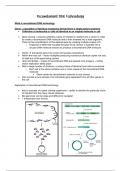
Clone = population of identical organisms derived from a single parent organism
• Collection of molecules or cells all identical to an original molecule or cell
• Gene cloning = process whereby a gene of interest is inserted into a vector in order
to create a recombinant DNA molecule that is then inserted into a host organism.
There is then amplification of this desired gene by creating multiple copies of it.
o Fragment of DNA that includes the gene to be cloned, is inserted into a
circular DNA molecule (vector) to produce a recombinant DNA molecule
• Vector à transports gene into a host cell (usually a bacterium)
• Within the host cell – vector multiplies producing numerous identical copies not only
of itself but of the gene being carried
• Host cell divides – copies of recombinant DNA are passed onto progeny + further
vector replication takes place
• After a large number of divisions, a colony/clone of identical host cells is produced
o Each cell in the clone contains one or more copies of the recombinant DNA
molecule
§ Gene carried by recombinant molecule is now cloned
• Can provide a pure sample of an individual gene separated from all other genes in
the cell
Application of recombinant DNA technology
• Key to success of a gene cloning experiment = ability to identify the particular clone
of interest from the many clones obtained
• But genomes can be large and difficult to navigate!
• + eukaryotes have introns
,USES OF R-DNA TECH =
1. Synthesizing genome libraries
2. Analyse genes
3. Express genes
4. Investigate regulatory regions of genes
5. Attach tags for analysis, detection
6. Make fusion proteins
Basic Principles of Recombinant DNA Tech
• Isolate DNA (copy, PCR)
o PCR à Polymerase chain reaction (abbreviated PCR) is a laboratory
technique for rapidly producing (amplifying) millions to billions of
copies of a specific segment of DNA
• Cut DNA at known palindromic cleavage sites using RE
• Use ligase (paste) to glue back together into new combination
• Introduce the recombined (“recombinant”) DNA into an organism for
replication and reproduction
o Numerous divisions result in clone
• Select for desired genotype/phenotype
• = Advantageous over random crosses and mutation
3 main components important for recombinant DNA tech
1. Vector and DNA fragment
2. Restriction enzymes
3. Host organism à means of expression
Why is RDT important?
• Usually one recombinant DNA molecule is transported into a single host cell
o Final set of clones may contain different recombinant DNA molecules and
each individual clone contains multiple copies of one molecule
• Gene is now separated away from all other genes in original mixture + specific
features can be studied in a cell
à Can provide a pure sample of an individual gene separated from all other genes in the
cell
TOOLS REQUIRED FOR R-DNA TECH
1. DNA sequence + purification
a. DNA = raw material required!
o Heat-denatured DNA
§ DNA strands separate when heated to just below boiling
§ Exposes nucleotides
§ Can be slowly cooled and strand will renature
o pH changes can also change DNA conformation
, require two types of DNA à
• total cell DNA à source material from which to obtain genes to be cloned
o can come from bacterial culture, plant or animal cells
o = genomic DNA of the organism along with additional DNA molecules ie.
plasmids
• pure vector DNA à plasmid or phage
o purification process = same as total cell but at some stage must separate
plasmid DNA from main bulk of chromosomal DNA also in cell
*virtually any DNA sequence can be selectively cloned and amplified!
o Difficult to clone DNA sequences =
o Inverted repeats, origins of replication, centromeres + telomeres
• HOW TO SEPARATE TOTAL CELL DNA FROM CULTURE
o Culture is grown + harvested
§ centrifugation at 1300 rpm to gather pellet of cells
§ discard supernatant
o cells = removed + broken to give cell extract
§ add solutions that help to lyse bacterial cells – exposes DNA
o DNA is purified from cell extract
§ treatments to purify DNA from cell extract
o DNA is concentrated
• PREPARATION OF CELL EXTRACT
o destabilize the cell wall using
§ EDTA to remove magnesium ions essential to preserving structure of
cell envelope + inhibits cellular enzymes that could degrade DNA
OR
• SDS to remove lipid molecules to disrupt membranes
OR
• NaOH to disrupt cell wall and alkaline pH loosens wall/disrupts hydrogen
bonds holding the DNA helix together
o Keep supernatant!
• REMOVAL OF PROTEIN CONTAMINANTS BY PHENOL EXTRACTION
o Mix cell extract with phenol and separate layers by centrifugation
§ Aqueous layer of DNA + RNA forms
§ Interface of coagulated proteins
§ Phenol at the bottom
• CONCENTRATION OF DNA BY ETHANOL PRECIPITATION = most frequently used
method of DNA concentration
o DNA is polar
o Salt has monovalent cations (Na+)
o Lower than -20C, absolute ethanol efficiently precipitates polymeric nucleic
acids
o Conformations of circular dsDNA (plasmids)
§ Supercoiled, open circular (relaxed), linear dsDNA of about 80kb
sheared
What is recombinant DNA technology
Clone = population of identical organisms derived from a single parent organism
• Collection of molecules or cells all identical to an original molecule or cell
• Gene cloning = process whereby a gene of interest is inserted into a vector in order
to create a recombinant DNA molecule that is then inserted into a host organism.
There is then amplification of this desired gene by creating multiple copies of it.
o Fragment of DNA that includes the gene to be cloned, is inserted into a
circular DNA molecule (vector) to produce a recombinant DNA molecule
• Vector à transports gene into a host cell (usually a bacterium)
• Within the host cell – vector multiplies producing numerous identical copies not only
of itself but of the gene being carried
• Host cell divides – copies of recombinant DNA are passed onto progeny + further
vector replication takes place
• After a large number of divisions, a colony/clone of identical host cells is produced
o Each cell in the clone contains one or more copies of the recombinant DNA
molecule
§ Gene carried by recombinant molecule is now cloned
• Can provide a pure sample of an individual gene separated from all other genes in
the cell
Application of recombinant DNA technology
• Key to success of a gene cloning experiment = ability to identify the particular clone
of interest from the many clones obtained
• But genomes can be large and difficult to navigate!
• + eukaryotes have introns
,USES OF R-DNA TECH =
1. Synthesizing genome libraries
2. Analyse genes
3. Express genes
4. Investigate regulatory regions of genes
5. Attach tags for analysis, detection
6. Make fusion proteins
Basic Principles of Recombinant DNA Tech
• Isolate DNA (copy, PCR)
o PCR à Polymerase chain reaction (abbreviated PCR) is a laboratory
technique for rapidly producing (amplifying) millions to billions of
copies of a specific segment of DNA
• Cut DNA at known palindromic cleavage sites using RE
• Use ligase (paste) to glue back together into new combination
• Introduce the recombined (“recombinant”) DNA into an organism for
replication and reproduction
o Numerous divisions result in clone
• Select for desired genotype/phenotype
• = Advantageous over random crosses and mutation
3 main components important for recombinant DNA tech
1. Vector and DNA fragment
2. Restriction enzymes
3. Host organism à means of expression
Why is RDT important?
• Usually one recombinant DNA molecule is transported into a single host cell
o Final set of clones may contain different recombinant DNA molecules and
each individual clone contains multiple copies of one molecule
• Gene is now separated away from all other genes in original mixture + specific
features can be studied in a cell
à Can provide a pure sample of an individual gene separated from all other genes in the
cell
TOOLS REQUIRED FOR R-DNA TECH
1. DNA sequence + purification
a. DNA = raw material required!
o Heat-denatured DNA
§ DNA strands separate when heated to just below boiling
§ Exposes nucleotides
§ Can be slowly cooled and strand will renature
o pH changes can also change DNA conformation
, require two types of DNA à
• total cell DNA à source material from which to obtain genes to be cloned
o can come from bacterial culture, plant or animal cells
o = genomic DNA of the organism along with additional DNA molecules ie.
plasmids
• pure vector DNA à plasmid or phage
o purification process = same as total cell but at some stage must separate
plasmid DNA from main bulk of chromosomal DNA also in cell
*virtually any DNA sequence can be selectively cloned and amplified!
o Difficult to clone DNA sequences =
o Inverted repeats, origins of replication, centromeres + telomeres
• HOW TO SEPARATE TOTAL CELL DNA FROM CULTURE
o Culture is grown + harvested
§ centrifugation at 1300 rpm to gather pellet of cells
§ discard supernatant
o cells = removed + broken to give cell extract
§ add solutions that help to lyse bacterial cells – exposes DNA
o DNA is purified from cell extract
§ treatments to purify DNA from cell extract
o DNA is concentrated
• PREPARATION OF CELL EXTRACT
o destabilize the cell wall using
§ EDTA to remove magnesium ions essential to preserving structure of
cell envelope + inhibits cellular enzymes that could degrade DNA
OR
• SDS to remove lipid molecules to disrupt membranes
OR
• NaOH to disrupt cell wall and alkaline pH loosens wall/disrupts hydrogen
bonds holding the DNA helix together
o Keep supernatant!
• REMOVAL OF PROTEIN CONTAMINANTS BY PHENOL EXTRACTION
o Mix cell extract with phenol and separate layers by centrifugation
§ Aqueous layer of DNA + RNA forms
§ Interface of coagulated proteins
§ Phenol at the bottom
• CONCENTRATION OF DNA BY ETHANOL PRECIPITATION = most frequently used
method of DNA concentration
o DNA is polar
o Salt has monovalent cations (Na+)
o Lower than -20C, absolute ethanol efficiently precipitates polymeric nucleic
acids
o Conformations of circular dsDNA (plasmids)
§ Supercoiled, open circular (relaxed), linear dsDNA of about 80kb
sheared