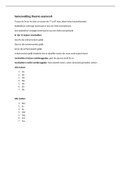
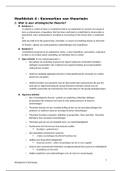
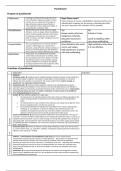
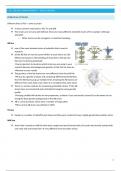
Lecture 1: introduction and assessment (Lisette …)
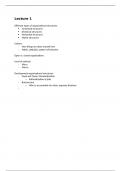
Explain methods and challenges for the assessment ….
Neuropsychology is a very broad field
- Basic foundations
o Knowledge: neuroanatomy, neuropathology, pharmacology,
neuropsychological theory, medical investigations, and psychopathology
- Clinical practice
o Skills including: clinical assessment, neuropsychological testing,
neuropsychological rehabilitation, psychological therapy, and record keeping
- Professional skills:
o Daily utilized skills: professional practice, ethics, supervision, research, team
work, management and service development
Clinical neuropsychology
(Figures in presentation)
Difference between cp and cnp that cnp is focused on cognitive side and cp focused on
treatment and looking for solutions.
Clinical neuropsychology is very important in psychiatry, but not combined
Neuroanatomy vs. functional neuroanatomy
Neuroanatomy: building blocks of the brain, where is what part, how are areas interconnect,
what cells
Functional neuroanatomy: how does each part contribute to our behavior’
Causes of cognitive impairment
Different causes can cause different kinds of damage: focal damage or diffuse damage
Focal damage: cva, open head injury, virus, brain tumors (only in one part of the brain)
Diffuse damage: neurodegenerative disorder, closed head injuries, … (over more parts of the
brain)
Neuropsychological assessment
What is it?
- A performance-based method to assess cognitive functioning
- Used to examine the cognitive consequences of
o Brain damage
o Brain disease
o ….
- In order to
o Collect (differential) diagnostic information
o If there is no evidence of organic brain dysfunction
Cognitive impairment sometimes the only indicator of pathology
Detect cognitive decline
o Assessment of treatment response
o Prediction of functional potential
, o Prediction of functional recovery
o Determine cognitive strengths & weaknesses to aid rehabilitation
What is the nature & extent of cognitive impairment:
Is there a deficit?
o If so, what cognitive functions are impaired?
E.g., short term vs. long-term, verbal vs. visual, recall vs. recognition
Where is the deficit?
Consequences:
Daily life activities
Traffic participation
Social functioning
Work/education
Leisure
Depending on individual context
Conducting a neuropsychological assessment
Patient history
o Who is the patient? Childhood, family, education
o What are the complaints
o When did the complaints start
o How did the complaints start (suddenly or gradually)
o What course have complaints taken
o Which situations trigger or relieve complaints
o What treatment has been tried
Interview with family
o Discrepancies between patient and relative are worth noting
Inaccurate reports of patients because of memory disturbances
Unawareness of or indifference to the existence of disturbances
(anosognosia, anosodiaphoria)
over/underestimation of disturbances
deciding upon and administering NS test
observing behavior during assessment
comparison with norm data
diagnostic conclusions
referrals and advise
rehabilitation treatment
limitations to a neuropsychological assessment
impact of mood
limitation of frequently used test / test familiarity
need to expand to range of neuropsychological tests
ecological validity
language and cultural considerations
etcetera
embodied cognition: you’re not your brain. Your brain and your body are part of a cognitive
machine interacting with your environment.
Explain methods and challenges for the assessment ….
Neuropsychology is a very broad field
- Basic foundations
o Knowledge: neuroanatomy, neuropathology, pharmacology,
neuropsychological theory, medical investigations, and psychopathology
- Clinical practice
o Skills including: clinical assessment, neuropsychological testing,
neuropsychological rehabilitation, psychological therapy, and record keeping
- Professional skills:
o Daily utilized skills: professional practice, ethics, supervision, research, team
work, management and service development
Clinical neuropsychology
(Figures in presentation)
Difference between cp and cnp that cnp is focused on cognitive side and cp focused on
treatment and looking for solutions.
Clinical neuropsychology is very important in psychiatry, but not combined
Neuroanatomy vs. functional neuroanatomy
Neuroanatomy: building blocks of the brain, where is what part, how are areas interconnect,
what cells
Functional neuroanatomy: how does each part contribute to our behavior’
Causes of cognitive impairment
Different causes can cause different kinds of damage: focal damage or diffuse damage
Focal damage: cva, open head injury, virus, brain tumors (only in one part of the brain)
Diffuse damage: neurodegenerative disorder, closed head injuries, … (over more parts of the
brain)
Neuropsychological assessment
What is it?
- A performance-based method to assess cognitive functioning
- Used to examine the cognitive consequences of
o Brain damage
o Brain disease
o ….
- In order to
o Collect (differential) diagnostic information
o If there is no evidence of organic brain dysfunction
Cognitive impairment sometimes the only indicator of pathology
Detect cognitive decline
o Assessment of treatment response
o Prediction of functional potential
, o Prediction of functional recovery
o Determine cognitive strengths & weaknesses to aid rehabilitation
What is the nature & extent of cognitive impairment:
Is there a deficit?
o If so, what cognitive functions are impaired?
E.g., short term vs. long-term, verbal vs. visual, recall vs. recognition
Where is the deficit?
Consequences:
Daily life activities
Traffic participation
Social functioning
Work/education
Leisure
Depending on individual context
Conducting a neuropsychological assessment
Patient history
o Who is the patient? Childhood, family, education
o What are the complaints
o When did the complaints start
o How did the complaints start (suddenly or gradually)
o What course have complaints taken
o Which situations trigger or relieve complaints
o What treatment has been tried
Interview with family
o Discrepancies between patient and relative are worth noting
Inaccurate reports of patients because of memory disturbances
Unawareness of or indifference to the existence of disturbances
(anosognosia, anosodiaphoria)
over/underestimation of disturbances
deciding upon and administering NS test
observing behavior during assessment
comparison with norm data
diagnostic conclusions
referrals and advise
rehabilitation treatment
limitations to a neuropsychological assessment
impact of mood
limitation of frequently used test / test familiarity
need to expand to range of neuropsychological tests
ecological validity
language and cultural considerations
etcetera
embodied cognition: you’re not your brain. Your brain and your body are part of a cognitive
machine interacting with your environment.