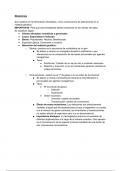
Benzene (C6H6) is the simplest aromatic hydrocarbon (or arene)
Is highly unsaturated (contain a high number of C=C bonds)
It does not readily undergo halogenation reaction except in the presence ofLewis acid such as FeBr3:
Aromatic used to describe fragrant substances: However it their chemical properties that makes them
special.
Aromatic compounds are unsaturated and cyclic.
- Do not undergo addition reactions:
To explain/predict aromaticity we use Hückel rule:
Aromatic compounds are planar and fully conjugated cyclic systems.
All C atoms must be sp2 hybridised.
Number of π e- must be (4n +2), n is an integer (0, 1, 2, 3 etc).
…
…
, All 6 C atoms and p-orbitals are equivalent, it is difficult to exactly pinpoint where the 6 π e- are based:
- Meaning we don’t know on which C atoms the 6 π e- are located.
This then leads to an assumption that all 6 π e- are free to move about it giving resonance forms:
All the H atoms of benzene can be substituted to:
- mono-substituted, di-substituted, tri-substituted or poly-substituted compounds. So, how do we name
these?
Mono-substituted are named in the same manner as other hydrocarbons, with
suffix-benzene as a parent name:
di-substituted benzenes are named using prefixes orthor- (o) for 1,2-; meta- (m) for 1,3-; and para- (p)
for 1,4-relationships on the ring:
…
, Benzenes with > 2 substituents: How to name them?
- Named using position of substituents, making sure the 2nd & 3rd substituents have low numbers as
possible:
- Substituents are then listed alphabetically in the name:
- What happens if benzene is a substituent?
EAS is the most common reaction for aromatic compounds:
- Is a reaction that involves replacement of H atom(s) by an electrophile (E+)
Many substituents can be introduced to aromatic rings this way.
…
Is highly unsaturated (contain a high number of C=C bonds)
It does not readily undergo halogenation reaction except in the presence ofLewis acid such as FeBr3:
Aromatic used to describe fragrant substances: However it their chemical properties that makes them
special.
Aromatic compounds are unsaturated and cyclic.
- Do not undergo addition reactions:
To explain/predict aromaticity we use Hückel rule:
Aromatic compounds are planar and fully conjugated cyclic systems.
All C atoms must be sp2 hybridised.
Number of π e- must be (4n +2), n is an integer (0, 1, 2, 3 etc).
…
…
, All 6 C atoms and p-orbitals are equivalent, it is difficult to exactly pinpoint where the 6 π e- are based:
- Meaning we don’t know on which C atoms the 6 π e- are located.
This then leads to an assumption that all 6 π e- are free to move about it giving resonance forms:
All the H atoms of benzene can be substituted to:
- mono-substituted, di-substituted, tri-substituted or poly-substituted compounds. So, how do we name
these?
Mono-substituted are named in the same manner as other hydrocarbons, with
suffix-benzene as a parent name:
di-substituted benzenes are named using prefixes orthor- (o) for 1,2-; meta- (m) for 1,3-; and para- (p)
for 1,4-relationships on the ring:
…
, Benzenes with > 2 substituents: How to name them?
- Named using position of substituents, making sure the 2nd & 3rd substituents have low numbers as
possible:
- Substituents are then listed alphabetically in the name:
- What happens if benzene is a substituent?
EAS is the most common reaction for aromatic compounds:
- Is a reaction that involves replacement of H atom(s) by an electrophile (E+)
Many substituents can be introduced to aromatic rings this way.
…