
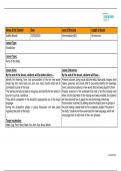
Name of the Teacher Date Level of the class Length of lesson
Zuleka Breedt 27/03/2023 Intermediate (B1) 60 minutes
Lesson Type:
Vocabulary
Lesson Topic:
Parts of the body
Lesson Aims: Lesson Outcomes:
By the end of the lesson, students will be better able to… By the end of the lesson, students will have…
Identify the meaning, form, and pronunciation of the ten new words Present outcome: Using visual aids like realia, flashcards, images, short
(head, leg, foot, hand, back, ear, arm, eye, nose, mouth) which are all videos, gestures, and choral drills to accurately identify the meanings,
connected to parts of the body. forms, and pronunciations of new words that are being taught to them.
The learners will also be able to recognize and identify the ten words in Practice outcome: In the worksheet they had to find the missing word
any form such as a sentence. when only the last letter of the missing word was provided, the students
They will be competent in the situation's appropriate use of the target will have learned how to apply the new terminology effectively.
language. Pronunciation outcome: By talking about the body's parts in groups of
During the production phase, a group discussion will take place five and making a spider web for the vocabulary subject "the parts of
regarding the parts of the body. the body," students will have exercised the new language, which will
encourage them to add more of their own phrases.
Target vocabulary:
Head, Leg, Foot, Hand, Back, Ear, Arm, Eye, Nose, Mouth
1 Lesson Plan
, Anticipated difficulties: Suggested solutions:
1. Learners may struggle with the phonology of new words 1. Allow learners time to practice accurately pronouncing the
because some sounds, such as the English /r/ and /l/, are words by modelling the words and their pronunciation.
difficult for Chinese learners to pronounce.
2. Give the learners time to practice the form of the mouth
2. The learners might struggle with pronounce the word mouth when pronounce it.
because of the form of the mouth when saying it.
3. Allow the learners time to practice to pronouncing the word
3. Learners may struggle with the word eye because they can correctly.
articulate it as another word
Language analysis:
Language Meaning of the item How you will present Concept Checking Grammatical form Pronunciation
Item meaning Questions
1. Head The physical region of Show students a picture Can it turn left, and right? Noun [hɛd]
the body that contains of a head by using
the brain, nose, flashcards
mouth, eyes, and
ears.
2. Leg A human limb that is Show students a picture Do you walk with them? Noun [lɛɡ]
primarily used for of a leg by using
body support and flashcards
walking.
2 Lesson Plan
Zuleka Breedt 27/03/2023 Intermediate (B1) 60 minutes
Lesson Type:
Vocabulary
Lesson Topic:
Parts of the body
Lesson Aims: Lesson Outcomes:
By the end of the lesson, students will be better able to… By the end of the lesson, students will have…
Identify the meaning, form, and pronunciation of the ten new words Present outcome: Using visual aids like realia, flashcards, images, short
(head, leg, foot, hand, back, ear, arm, eye, nose, mouth) which are all videos, gestures, and choral drills to accurately identify the meanings,
connected to parts of the body. forms, and pronunciations of new words that are being taught to them.
The learners will also be able to recognize and identify the ten words in Practice outcome: In the worksheet they had to find the missing word
any form such as a sentence. when only the last letter of the missing word was provided, the students
They will be competent in the situation's appropriate use of the target will have learned how to apply the new terminology effectively.
language. Pronunciation outcome: By talking about the body's parts in groups of
During the production phase, a group discussion will take place five and making a spider web for the vocabulary subject "the parts of
regarding the parts of the body. the body," students will have exercised the new language, which will
encourage them to add more of their own phrases.
Target vocabulary:
Head, Leg, Foot, Hand, Back, Ear, Arm, Eye, Nose, Mouth
1 Lesson Plan
, Anticipated difficulties: Suggested solutions:
1. Learners may struggle with the phonology of new words 1. Allow learners time to practice accurately pronouncing the
because some sounds, such as the English /r/ and /l/, are words by modelling the words and their pronunciation.
difficult for Chinese learners to pronounce.
2. Give the learners time to practice the form of the mouth
2. The learners might struggle with pronounce the word mouth when pronounce it.
because of the form of the mouth when saying it.
3. Allow the learners time to practice to pronouncing the word
3. Learners may struggle with the word eye because they can correctly.
articulate it as another word
Language analysis:
Language Meaning of the item How you will present Concept Checking Grammatical form Pronunciation
Item meaning Questions
1. Head The physical region of Show students a picture Can it turn left, and right? Noun [hɛd]
the body that contains of a head by using
the brain, nose, flashcards
mouth, eyes, and
ears.
2. Leg A human limb that is Show students a picture Do you walk with them? Noun [lɛɡ]
primarily used for of a leg by using
body support and flashcards
walking.
2 Lesson Plan


