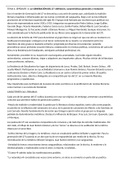
Sociology in South Africa was initially …
. directed to the solution of local social problems.
combined with social work courses.
centred on the alleviation of poverty..
focused on race relations.
The following sociologists were victimised by the apartheid government because they were
opposing apartheid:
Fatima Meer
David Webster
Raymond Suttner
Ruth First
According to the study guide, in the 1950s and 1960s the distinguishing features of a
plural society in South Africa were …
one national economy with little social integration of different racial groups.
the industrialisation of various areas in South Africa.
disparate groups combined and participated in a shared economy.
Choose the correct option. According to your study guide, the ideology of “grand
apartheid” included …
the segregation of black people into separate so-called homelands.
the identification of black ethnic groups.
developing some of the homelands into independent states.
Which of the following is consistent with the idea of separate development under apartheid?
The creation of homeland areas.
The enactment of the Group Areas Act.
The enactment of the Bantu Education Act.
According to Deborah Posel, the main problem with the instrumentalist view of the
apartheid state is that...
it failed to consider the contradictions, fissures, and tensions within the state.
it failed to look at the contradictions bequeathed by influx control and the migrant
labour system.
. directed to the solution of local social problems.
combined with social work courses.
centred on the alleviation of poverty..
focused on race relations.
The following sociologists were victimised by the apartheid government because they were
opposing apartheid:
Fatima Meer
David Webster
Raymond Suttner
Ruth First
According to the study guide, in the 1950s and 1960s the distinguishing features of a
plural society in South Africa were …
one national economy with little social integration of different racial groups.
the industrialisation of various areas in South Africa.
disparate groups combined and participated in a shared economy.
Choose the correct option. According to your study guide, the ideology of “grand
apartheid” included …
the segregation of black people into separate so-called homelands.
the identification of black ethnic groups.
developing some of the homelands into independent states.
Which of the following is consistent with the idea of separate development under apartheid?
The creation of homeland areas.
The enactment of the Group Areas Act.
The enactment of the Bantu Education Act.
According to Deborah Posel, the main problem with the instrumentalist view of the
apartheid state is that...
it failed to consider the contradictions, fissures, and tensions within the state.
it failed to look at the contradictions bequeathed by influx control and the migrant
labour system.