Global Political Economy Notes
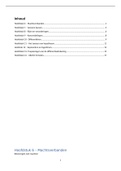
Lecture 1: Introduction to World Trade: Absolute and Comparative Advantage
Reinert Chs. 2, 3, 4
Lecture 2: Trade Policy and Regulation
Reinert Chs. 7, 8, 9
Lecture 3: International Production: MNEs, FDI, and Regulation
Reinert Chs. 10, 11, 12
Lecture 4: Introduction to International Finance
Reinert Chs. 14, 15
Lecture 5: Exchange Rates, and the IMF
Reinert Chs. 16, 17, 18
Lecture 6: Monetary Unions and Monetary Crises
Reinert Chs. 21, 20 (NB, Skip EU Section)
Midterm
Lecture 7: Hegemonic Cycles and Historical Capitalism
: Chapters 1, pp 236-242, chapters 3 and 4 (read in this order)
Lecture 8: Going for Growth: From National Development to Neoliberalism
O’Brien and Williams Chapters 5, 6, and 11
J. Stiglitz: “Introduction to Globalization and its Discontents Revisited” (surfdrive)
Lecture 9: Transnational production and nance: Challenges to state e ectiveness
O’Brien and Williams Chapters 7, 8, and 210-230, 242-245
Lecture 10: Welfare and Inequality, Social Reproduction and Social Policy
Executive Summary, World Inequality Report (surfdrive)
O’Brien and Williams 230-35, 245-259
Dean, H., 2019. . Social Policy: Why on earth does it matter (surdrive)
Lecture 11: Democracy and the 21st century world market: Debating inclusive
growth
O’Brien and Williams. Chapter 15.
(NB: There will be one short reading that will be added on surfdrive by 15 April)
1
fi ff
, Lecture 12: The future of the world economy: debating a secure and sustainable
future
O’Brien and Williams. Chapter 12 ‘Global Environmental Change.”
Why Growth Cannot be Green (surfdrive)
Kate Raworth Podcast (surfdrive)
Lecture 1: Introduction to World Trade: Absolute and
Comparative Advantage
Reading Notes: Reinert Chs. 2, 3, 4
Lecture notes
International Economics
1st topic: International trade
• That is, trade of goods and services across borders
• Trade that involves dealing with more than one sovereign government
• More than one monetary regime, set of laws
• This can lead to any number of “complications” as deals are made
• Trade regulation a ects markets
• But international trade can also be extremely lucrative
• And, arguably, it can help people in both countries
• Though, of course, it might hinder some people in one or both countries
2nd topic: International Production
• So, producing goods and services across borders
• Your smartphone might have been made in 40 di erent countries
• Many manufactured goods now are produced from highly international networks
• How does this get regulated? Who created enough stability for this to remain
pro table
3 rd topic: International Financial Systems
• Foreign exchange
• Every time you move into another currency area, you are subject to additional risk
• Also, credit can be given or withdrawn, leaving a small economy in shambles
• And FDI is covered here as well
2
fi ff ff
,4th topic: International Development: how do capital ows impact economic
development, especially in ‘developing’ countries: this is more handled in GPE even
though there are chapters in our book (Reinert)
International Trade
• Globalisation arguably started in the 1970s-1914
• First “golden age’ of international capital
• Aka heyday of the British empire
• Global economy united under the pod and the gold standard
• Before 1945 however politicians tend to act as though the global economy was a
“zero sum game”
• This meant, if I didn’t grab land and use it for resources and markets, then
someone else would
• This economic model fuelled the political model of colonialism
• This economic model was based on the old theory of mercantilism
Mercantilism
• Metropole > centre of production
• Colonies are places where you abstract raw materials from and produce
things back at the metropole
• This created more wealth
• Manufactured goods are as a rule far more pro table to produce — contain more
value added than raw materials
• So, mercantilists want production to be “at home”
• How to get raw materials for production — e.g. cotton for textile mills?
• You could buy them on a competitive international market
• Or, you could take colonies, and extract raw materials a monopsonistic prices
• Monopsony = only one buyer
• They forced the colonies to sell it cheaper since their was only one buyer
• You then produce goods at home, and sell at home
• But also use the colonies (e.g. India), as a forced market, where you have a
monopoly as a seller
• Meanwhile, other “powers” are jockeying to gain the most colonies, and most raw
materials, and markets, so that they can gain the most value added
• Most wealth = most military power = most economic power = etc.
• But during the 1930s, and 1940s, the Anglo-American economists began to push a
new idea
Trade: The Non-Zero-Sum Game
• The idea was that, instead of competing amongst each other for colonies and
captive markets
• Why not create a new international order based on Ricardo’s old idea, that trade,
via comparative advantage, would enrich everyone?
3
fi fl
, • International trade would create more wealth than would autarky, even with
colonies
• This would create incentives to work together, rather than compete
• It would also create development
• And it would cement the world into one big capitalist-democratic family
• This was extremely radical: and many still view it cynically — even though it was
the main cause of the end of colonialism (!)
• But, to have the major powers create a whole economic system based on
accountability, democracy, good government, trust, rule of law, and on human
rights and dignity
• This was the dream; and in many ways it has delivered, and continues to lift people
out of poverty
• Before Covid, by 2030, no extreme poverty
• So people bought into it: it “won” by selling not only a promise, but real prosperity
for the “middle classes” and those who aspired to be like them
Bretton Woods System
• Goal: To Foster World Trade and Democracy
• United Nations
• IMF
• World Bank
• GATT/WTO
• OECD
• Global currency union under the USD (until 1971)
• Increasing cooperation
• Free movement of capital, goods, and people across borders, with minimal
restrictions or tari s
Globalisation: Rise and Decline
• Thus, Globalisation has been happening since before WWI (with the UK as
hegemon)
• And, since WWII (with the US as hegemon)
• It was believed in 1989 that Russia would join the global order
• Fukuyama’s End of History
• And that since 1997, that China would also join this global order
• And we would be one big democratic-capitalist economy
• Since the 1980s, world leaders acted as though globalisation was inevitable
Globalisation
• What are anti-globalists’ economic concerns?
• Immigrants
• Depresses wages
• Threat of moving companies overseas
4
ff
Lecture 1: Introduction to World Trade: Absolute and Comparative Advantage
Reinert Chs. 2, 3, 4
Lecture 2: Trade Policy and Regulation
Reinert Chs. 7, 8, 9
Lecture 3: International Production: MNEs, FDI, and Regulation
Reinert Chs. 10, 11, 12
Lecture 4: Introduction to International Finance
Reinert Chs. 14, 15
Lecture 5: Exchange Rates, and the IMF
Reinert Chs. 16, 17, 18
Lecture 6: Monetary Unions and Monetary Crises
Reinert Chs. 21, 20 (NB, Skip EU Section)
Midterm
Lecture 7: Hegemonic Cycles and Historical Capitalism
: Chapters 1, pp 236-242, chapters 3 and 4 (read in this order)
Lecture 8: Going for Growth: From National Development to Neoliberalism
O’Brien and Williams Chapters 5, 6, and 11
J. Stiglitz: “Introduction to Globalization and its Discontents Revisited” (surfdrive)
Lecture 9: Transnational production and nance: Challenges to state e ectiveness
O’Brien and Williams Chapters 7, 8, and 210-230, 242-245
Lecture 10: Welfare and Inequality, Social Reproduction and Social Policy
Executive Summary, World Inequality Report (surfdrive)
O’Brien and Williams 230-35, 245-259
Dean, H., 2019. . Social Policy: Why on earth does it matter (surdrive)
Lecture 11: Democracy and the 21st century world market: Debating inclusive
growth
O’Brien and Williams. Chapter 15.
(NB: There will be one short reading that will be added on surfdrive by 15 April)
1
fi ff
, Lecture 12: The future of the world economy: debating a secure and sustainable
future
O’Brien and Williams. Chapter 12 ‘Global Environmental Change.”
Why Growth Cannot be Green (surfdrive)
Kate Raworth Podcast (surfdrive)
Lecture 1: Introduction to World Trade: Absolute and
Comparative Advantage
Reading Notes: Reinert Chs. 2, 3, 4
Lecture notes
International Economics
1st topic: International trade
• That is, trade of goods and services across borders
• Trade that involves dealing with more than one sovereign government
• More than one monetary regime, set of laws
• This can lead to any number of “complications” as deals are made
• Trade regulation a ects markets
• But international trade can also be extremely lucrative
• And, arguably, it can help people in both countries
• Though, of course, it might hinder some people in one or both countries
2nd topic: International Production
• So, producing goods and services across borders
• Your smartphone might have been made in 40 di erent countries
• Many manufactured goods now are produced from highly international networks
• How does this get regulated? Who created enough stability for this to remain
pro table
3 rd topic: International Financial Systems
• Foreign exchange
• Every time you move into another currency area, you are subject to additional risk
• Also, credit can be given or withdrawn, leaving a small economy in shambles
• And FDI is covered here as well
2
fi ff ff
,4th topic: International Development: how do capital ows impact economic
development, especially in ‘developing’ countries: this is more handled in GPE even
though there are chapters in our book (Reinert)
International Trade
• Globalisation arguably started in the 1970s-1914
• First “golden age’ of international capital
• Aka heyday of the British empire
• Global economy united under the pod and the gold standard
• Before 1945 however politicians tend to act as though the global economy was a
“zero sum game”
• This meant, if I didn’t grab land and use it for resources and markets, then
someone else would
• This economic model fuelled the political model of colonialism
• This economic model was based on the old theory of mercantilism
Mercantilism
• Metropole > centre of production
• Colonies are places where you abstract raw materials from and produce
things back at the metropole
• This created more wealth
• Manufactured goods are as a rule far more pro table to produce — contain more
value added than raw materials
• So, mercantilists want production to be “at home”
• How to get raw materials for production — e.g. cotton for textile mills?
• You could buy them on a competitive international market
• Or, you could take colonies, and extract raw materials a monopsonistic prices
• Monopsony = only one buyer
• They forced the colonies to sell it cheaper since their was only one buyer
• You then produce goods at home, and sell at home
• But also use the colonies (e.g. India), as a forced market, where you have a
monopoly as a seller
• Meanwhile, other “powers” are jockeying to gain the most colonies, and most raw
materials, and markets, so that they can gain the most value added
• Most wealth = most military power = most economic power = etc.
• But during the 1930s, and 1940s, the Anglo-American economists began to push a
new idea
Trade: The Non-Zero-Sum Game
• The idea was that, instead of competing amongst each other for colonies and
captive markets
• Why not create a new international order based on Ricardo’s old idea, that trade,
via comparative advantage, would enrich everyone?
3
fi fl
, • International trade would create more wealth than would autarky, even with
colonies
• This would create incentives to work together, rather than compete
• It would also create development
• And it would cement the world into one big capitalist-democratic family
• This was extremely radical: and many still view it cynically — even though it was
the main cause of the end of colonialism (!)
• But, to have the major powers create a whole economic system based on
accountability, democracy, good government, trust, rule of law, and on human
rights and dignity
• This was the dream; and in many ways it has delivered, and continues to lift people
out of poverty
• Before Covid, by 2030, no extreme poverty
• So people bought into it: it “won” by selling not only a promise, but real prosperity
for the “middle classes” and those who aspired to be like them
Bretton Woods System
• Goal: To Foster World Trade and Democracy
• United Nations
• IMF
• World Bank
• GATT/WTO
• OECD
• Global currency union under the USD (until 1971)
• Increasing cooperation
• Free movement of capital, goods, and people across borders, with minimal
restrictions or tari s
Globalisation: Rise and Decline
• Thus, Globalisation has been happening since before WWI (with the UK as
hegemon)
• And, since WWII (with the US as hegemon)
• It was believed in 1989 that Russia would join the global order
• Fukuyama’s End of History
• And that since 1997, that China would also join this global order
• And we would be one big democratic-capitalist economy
• Since the 1980s, world leaders acted as though globalisation was inevitable
Globalisation
• What are anti-globalists’ economic concerns?
• Immigrants
• Depresses wages
• Threat of moving companies overseas
4
ff