Thematic Theories of Architecture
Thematic theories are treatises which aim at the fulfilment of one principal goal, usually at the cost of other customary
goals of building. Theories which aim at fulfilling simultaneously several goals, perhaps all the goals that are known, are
discussed on the page Theories of architectural synthesis.
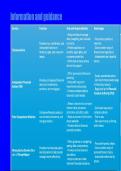
Paradigm (=style) of architecture: Basic presentation of its theory:
Doric, Ionian and Corinthian style and their Vitruve: De Architectura libri decem. It was mainly documentation of
varieties in ancient Greece and Rome earlier architectural traditions.
Medieval anonymous tradition of trade guilds has not survived to us; minor
Romanesque and Gothic styles.
fragments are the following: Villard de Honnecourt and Schmuttermayer.
Renaissance, baroque, rococo, neo-
Alberti: De re Aedificatoria. Serlio, Vignola, Palladio...
classical style
Large constructions: bridges and halls.
Galilei: Discorsi e dimostrazioni matematiche intorno a due nuove scienze.
"Structuralist" styling (=which emphasizes the
Hooke, Bernoulli, Euler...
structure).
l'Art Nouveau. Personal styles of Viollet-le-Duc: Entretiens sur l'Architecture. The book showed logical basis
architectural geniuses: Gaudi, Le Corbusier for new form languages but it did not create them yet. Notice also Owen
etc. Jones and John Ruskin.
The teaching of Gropius and Bauhaus. Adolf Loos. Neufert (1936):
Functionalism.
Bauentwurfslehre
Systems Building from prefabricated The lectures and exemplars given by Mies van der Rohe and others.
components Habraken.
Ecological architecture (energy collectors
Eco-philosophy by Henryk Skolimowski was one of the pioneering works.
etc)
Symbolic architecture. Norberg-Schulz: Intentions in Architecture, Jencks...
Postmodernism and Deconstruction Robert Venturi: Complexity and Contradiction in Architecture
Some of the theories in the table are now certainly outdated and have little interest to a modern builder, but some
contain still valid information about important goals of building, notably on the questions of functionality, construction,
economy and ecology. The last-named, still valid theories can be seen as building-specific branches of the general
goal-specific theories which pertain to all types of products and are listed in Paradigms Of Design Theory.
Vitruve
Marcus Vitruvius Pollio, the author of the oldest research on
architecture which has remained till this day, worked during
the reign of emperor August. He wrote an extensive summary
of all the theory on construction that had been written so far:
Ten Books on Architecture (De architectura libri decem). He
seems to have been a learned man, he had a thorough
knowledge of earlier Greek and Roman writings that have
now been lost. There is a list of these works in the introduction
of book VII; most of them described a temple. Two of the
writings were about proportions, and as many as nine writers
spoke about the "laws of symmetry", which in modern
terminology mostly mean the systems of module measuring.
Vitruve's book consists almost only of normative theory of
design. His rules are usually based on practical points or reasoning; sometimes he also motivates them by saying that this
has always been done, i.e., with historical tradition.
1|T H E O R Y
, Vitruve discusses not only one theme but several practical goals of building, each one of these in a separate chapter of
the book. The treatise can be seen as a collection of parallel thematic theories of design. Vitruve gives no method for
combining these into a synthesis, he only presents a classification (I:3:2) of all the requirements set for buildings:
• durability (firmitas)
• practicality or "convenience" (utilitas)
• pleasantness (venustas).
This remained a model for almost all posterior research of architecture: buildings are researched mostly as combinations
of characteristics, rather than as holistic entities. In the course of time, a particular, rather independent theory was
developed for every group of characteristics, as we will see later.
The aesthetic form rules of Vitruve influenced greatly all subsequent writers. The are based on Greek traditions of
architecture, and also on the teachings of Pythagoras (ca. 532 BC), according to which harmony is created by applying
the proportions of whole numbers. This was based on earlier observations of the tuned strings of instruments and also on
the proportions of the human body; and now Vitruve wanted to apply the same proportions to architecture as well. The
supreme criterion was, however, the estimate the public gave of the work. A building was beautiful if its appearance
was pleasant, it was in accordance with good taste, and its parts follow proportions (lat. proportio) and the "symmetry"
of measures (the unusual definition of symmetry is found in I:II:4).
The Middle Ages
Most documents remaining from the Middle Ages have to do with the monastery institution. The convents erected a
great number of buildings. However, their archives contain surprisingly few descriptions of buildings or projects. There are
numerous building contracts, but usually the building is only defined by stating its size and that it shall be made
"according to the traditional model".
On the whole, there was little interest in mundane values like the qualities of architecture. "There's no accounting for
tastes" (lat. de gustibus et coloribus non disputandum) was the rule of thumb of Scholastics, which did not favour the
development of the theory of arts (however, you could see St. Augustine on this). Fortunately, the libraries of the
monasteries preserved at least some fragments of the architectural theory of
antiquity.
The practice of architecture was, first of all, based on tradition dating back to
antiquity, and, starting from this tradition, both the Romanesque and the Gothic
building style developed over the centuries, presumably with hardly any or no
literary research. The only documented presentations that have remained till this
day are the "sketchbook" by Villard de Honnecourt from 1235 and the "Booklet on
the right way of making pinnacles" (Büchlein von der Fialen Gerechtigkeit, picture
on the right) by Roritzer, printed in Regensburg in 1486.
When the knowledge of Latin and even literacy degraded, the importance of
traditional knowledge in building increased. Traditional knowledge was learned
by doing, in the guidance of old masters, and it was probably not written down
anywhere. But tradition could be rather binding and precise in the closed guilds
of builders. It also became rather homogenous throughout Europe because
builders apparently moved from one town to another, depending on where the
building sites were.
Since the beginning of the 13th
century, craftsmen in the
building trade started forming
guilds (German: Bauhütte).
These guilds probably gathered
a great deal of traditional
information related to
construction, but it seems to have remained a professional secret of
the guilds and the masters, and they preferred not to publish it. Even if
it was written down, these notes have been lost.
2|T H E O R Y
Thematic theories are treatises which aim at the fulfilment of one principal goal, usually at the cost of other customary
goals of building. Theories which aim at fulfilling simultaneously several goals, perhaps all the goals that are known, are
discussed on the page Theories of architectural synthesis.
Paradigm (=style) of architecture: Basic presentation of its theory:
Doric, Ionian and Corinthian style and their Vitruve: De Architectura libri decem. It was mainly documentation of
varieties in ancient Greece and Rome earlier architectural traditions.
Medieval anonymous tradition of trade guilds has not survived to us; minor
Romanesque and Gothic styles.
fragments are the following: Villard de Honnecourt and Schmuttermayer.
Renaissance, baroque, rococo, neo-
Alberti: De re Aedificatoria. Serlio, Vignola, Palladio...
classical style
Large constructions: bridges and halls.
Galilei: Discorsi e dimostrazioni matematiche intorno a due nuove scienze.
"Structuralist" styling (=which emphasizes the
Hooke, Bernoulli, Euler...
structure).
l'Art Nouveau. Personal styles of Viollet-le-Duc: Entretiens sur l'Architecture. The book showed logical basis
architectural geniuses: Gaudi, Le Corbusier for new form languages but it did not create them yet. Notice also Owen
etc. Jones and John Ruskin.
The teaching of Gropius and Bauhaus. Adolf Loos. Neufert (1936):
Functionalism.
Bauentwurfslehre
Systems Building from prefabricated The lectures and exemplars given by Mies van der Rohe and others.
components Habraken.
Ecological architecture (energy collectors
Eco-philosophy by Henryk Skolimowski was one of the pioneering works.
etc)
Symbolic architecture. Norberg-Schulz: Intentions in Architecture, Jencks...
Postmodernism and Deconstruction Robert Venturi: Complexity and Contradiction in Architecture
Some of the theories in the table are now certainly outdated and have little interest to a modern builder, but some
contain still valid information about important goals of building, notably on the questions of functionality, construction,
economy and ecology. The last-named, still valid theories can be seen as building-specific branches of the general
goal-specific theories which pertain to all types of products and are listed in Paradigms Of Design Theory.
Vitruve
Marcus Vitruvius Pollio, the author of the oldest research on
architecture which has remained till this day, worked during
the reign of emperor August. He wrote an extensive summary
of all the theory on construction that had been written so far:
Ten Books on Architecture (De architectura libri decem). He
seems to have been a learned man, he had a thorough
knowledge of earlier Greek and Roman writings that have
now been lost. There is a list of these works in the introduction
of book VII; most of them described a temple. Two of the
writings were about proportions, and as many as nine writers
spoke about the "laws of symmetry", which in modern
terminology mostly mean the systems of module measuring.
Vitruve's book consists almost only of normative theory of
design. His rules are usually based on practical points or reasoning; sometimes he also motivates them by saying that this
has always been done, i.e., with historical tradition.
1|T H E O R Y
, Vitruve discusses not only one theme but several practical goals of building, each one of these in a separate chapter of
the book. The treatise can be seen as a collection of parallel thematic theories of design. Vitruve gives no method for
combining these into a synthesis, he only presents a classification (I:3:2) of all the requirements set for buildings:
• durability (firmitas)
• practicality or "convenience" (utilitas)
• pleasantness (venustas).
This remained a model for almost all posterior research of architecture: buildings are researched mostly as combinations
of characteristics, rather than as holistic entities. In the course of time, a particular, rather independent theory was
developed for every group of characteristics, as we will see later.
The aesthetic form rules of Vitruve influenced greatly all subsequent writers. The are based on Greek traditions of
architecture, and also on the teachings of Pythagoras (ca. 532 BC), according to which harmony is created by applying
the proportions of whole numbers. This was based on earlier observations of the tuned strings of instruments and also on
the proportions of the human body; and now Vitruve wanted to apply the same proportions to architecture as well. The
supreme criterion was, however, the estimate the public gave of the work. A building was beautiful if its appearance
was pleasant, it was in accordance with good taste, and its parts follow proportions (lat. proportio) and the "symmetry"
of measures (the unusual definition of symmetry is found in I:II:4).
The Middle Ages
Most documents remaining from the Middle Ages have to do with the monastery institution. The convents erected a
great number of buildings. However, their archives contain surprisingly few descriptions of buildings or projects. There are
numerous building contracts, but usually the building is only defined by stating its size and that it shall be made
"according to the traditional model".
On the whole, there was little interest in mundane values like the qualities of architecture. "There's no accounting for
tastes" (lat. de gustibus et coloribus non disputandum) was the rule of thumb of Scholastics, which did not favour the
development of the theory of arts (however, you could see St. Augustine on this). Fortunately, the libraries of the
monasteries preserved at least some fragments of the architectural theory of
antiquity.
The practice of architecture was, first of all, based on tradition dating back to
antiquity, and, starting from this tradition, both the Romanesque and the Gothic
building style developed over the centuries, presumably with hardly any or no
literary research. The only documented presentations that have remained till this
day are the "sketchbook" by Villard de Honnecourt from 1235 and the "Booklet on
the right way of making pinnacles" (Büchlein von der Fialen Gerechtigkeit, picture
on the right) by Roritzer, printed in Regensburg in 1486.
When the knowledge of Latin and even literacy degraded, the importance of
traditional knowledge in building increased. Traditional knowledge was learned
by doing, in the guidance of old masters, and it was probably not written down
anywhere. But tradition could be rather binding and precise in the closed guilds
of builders. It also became rather homogenous throughout Europe because
builders apparently moved from one town to another, depending on where the
building sites were.
Since the beginning of the 13th
century, craftsmen in the
building trade started forming
guilds (German: Bauhütte).
These guilds probably gathered
a great deal of traditional
information related to
construction, but it seems to have remained a professional secret of
the guilds and the masters, and they preferred not to publish it. Even if
it was written down, these notes have been lost.
2|T H E O R Y