PSYCHOLOGY – MENTAL HEALTH MODELS, THEORISTS, MENTAL HEALTH
& PSYCHOACTIVE SUBSTANCES
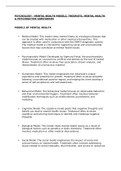
MODELS OF MENTAL HEALTH
Medical Model: This model views mental illness as a biological disease that
can be treated with medication or other medical interventions. This
approach is often used in conjunction with the DSM-5 diagnostic system.
The medical model is criticized for neglecting social and environmental
factors that may contribute to mental health issues.
Psychoanalytic Model: Developed by Sigmund Freud, the psychoanalytic
model focuses on unconscious conflicts and desires as the root of mental
illness. Treatment often involves free association, dream analysis, and
interpretation of unconscious material.
Humanistic Model: This model emphasizes the individual's unique
experience and potential for growth. Treatment often involves empathic
listening, unconditional positive regard, and helping the client develop a
sense of self-acceptance and self-awareness.
Behavioral Model: The behavioral model focuses on observable behaviors
and their environmental triggers. Treatment often involves behavior
modification techniques such as reinforcement, punishment, and
modeling.
Cognitive Model: The cognitive model posits that negative thoughts and
beliefs can lead to mental health issues. Treatment often involves
cognitive restructuring techniques to identify and challenge negative
thoughts.
Biological Model: This model views mental health issues as a result of
biological factors such as genetics or brain chemistry. Treatment often
involves medication or other medical interventions.
Social Model: The social model emphasizes the impact of social and
cultural factors on mental health. Treatment often involves addressing
issues related to social inequality, discrimination, and access to resources.
& PSYCHOACTIVE SUBSTANCES
MODELS OF MENTAL HEALTH
Medical Model: This model views mental illness as a biological disease that
can be treated with medication or other medical interventions. This
approach is often used in conjunction with the DSM-5 diagnostic system.
The medical model is criticized for neglecting social and environmental
factors that may contribute to mental health issues.
Psychoanalytic Model: Developed by Sigmund Freud, the psychoanalytic
model focuses on unconscious conflicts and desires as the root of mental
illness. Treatment often involves free association, dream analysis, and
interpretation of unconscious material.
Humanistic Model: This model emphasizes the individual's unique
experience and potential for growth. Treatment often involves empathic
listening, unconditional positive regard, and helping the client develop a
sense of self-acceptance and self-awareness.
Behavioral Model: The behavioral model focuses on observable behaviors
and their environmental triggers. Treatment often involves behavior
modification techniques such as reinforcement, punishment, and
modeling.
Cognitive Model: The cognitive model posits that negative thoughts and
beliefs can lead to mental health issues. Treatment often involves
cognitive restructuring techniques to identify and challenge negative
thoughts.
Biological Model: This model views mental health issues as a result of
biological factors such as genetics or brain chemistry. Treatment often
involves medication or other medical interventions.
Social Model: The social model emphasizes the impact of social and
cultural factors on mental health. Treatment often involves addressing
issues related to social inequality, discrimination, and access to resources.