H1: First messengers
1. Signals and receptors
Signal= substance that can be recognized by receptor in living cell
Receptor= recognizes a signal and induces cellular responses to changes in environment (via signal
transduction)
1. Signals bind to receptors in PM, cytoplasm or nucleus
2. Sends signal to effectors
3. Responses near PM, in cytoplasm or nucleus
4. Cell division + differentiation + cell death
Type of signals:
Physical signals Biological signals Chemical signals
+ 2+
- Light - Sperm (fertilisation) - Ions (H , Ca …)
- Elektro-magnetism - Pathogens (infection) - Substrates, nutrients (glucose, O2)
- Heat/T LARGE SIGNALS - Taste and odour substances (pheromones)
- Sound - Gases (ethylene, NO)
- Pressure/stretch - Nucleotides
- Steroid hormones
- Fatty acids + derivatives (prostaglandins)
- AA + amines
- Proteins, polypeptide derivatives
Interaction between cells:
a) Juxtacrine signalling: interaction between neighbouring
cells
b) Direct communication via gap junctions
c) Electric communication via cytoplasm between cells
2. Cell to cell communication
A. Direct contact between cells via gap junctions
B. Communication via surface proteins
C. Secretion of first messengers
First messengers= extracellular signals secreted by single cell (diffusion)
a) Paracrine messenger molecules (diffusion + conc-gradient):
- Autocrine + intracrine signalling (production and function in same cell)
- Synaptic signalling in NS: neurotransmitters and -modulators
b) Endocrine messenger molecules (circulation + dilution effect):
- (neuro)hormones
c) Pheromones: individuals of population interact with eachother
CELLS IN CONCENTRATION GRADIENT MAY HAVE DIFFERENT RESPONSES TO SIGNALS!
DIFFUSION CAN ONLY GO FAST OVER SHORT DISTANCE
1
, 3. Synaptic transmission
In nervous system
Single cell can be connected via different synapses with other cells
1. Synthesis of products in Golgi-apparatus + stored in secretory vesicles
2. Release of NT via exocytosis
3. Postsynaptic receptors
4. Presynaptic receptors feedback
5. Degradation circulating molecules in order for next stimulus to be induced uptake +
degradation/modification by enzymes + recycling of molecules
Neurotransmitters:
Amines - Acetylcholine: neuromuscular junction in mammals
- Adrenaline: produced by kidney medulla upon acute stress
- Noradrenaline
- Dopamine: made from tyrosine, decarboxylation product of L-Dopa
- Serotonin: derived from tryptophan
Amino acids - Glutamate: precursor for GABA
- Glycine: inhibitory
- GABA: inhibitory, made from glutamate
Nucleotides - ATP: recognized by purigenic receptors (present on many cell types in NS
Neuropeptides - Enkephalins
- Substance P
- Angiotensin
- Somatostatin
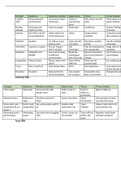
Biogenic amines:
Catecholamines Adrenaline (produced in adrenal
(Tyr) gland medulla), noradrenaline,
dopamine extra OH-group on
phenol ring
Monofenolisch Tyramine, octopamine used
e amines by Protostomia instead of
catecholamines
Histamine (His) Histamine
Indolamines Serotonine (5-
(Trp) Hydroxytryptamine),
melatonine (produced in pineal
gland)
4. Hormones
In Metazoa
Secreted by endocrine glands
1) Amines
2) Peptides
2
,3) (Glyco)proteins
4) Steroids: sex steroids + corticosteroids + ecdysteroids (ARTHROPODS)
4.1 Modes of transport
A. Lipophilic hormones: transported in blood by transport protein + receptor in cytoplasm/
nucleus
B. Hydrophilic hormones: transported in blood + receptor in plasma membrane change in
membrane properties + signal transduction to cell’s interior (peptide, protein hormones,
biogenic amines)
Hormone-receptor complex binds sites on DNA
4.2 Mode of acti on
1. Steroid hormone (S) transported by protein carrier in blood
2. S passes through PM
3. Target cell: S binds to receptor in cytoplasm
4. Hormone-receptor complex enters nucleus + binds DNA gene transcription
5. Induction protein synthesis
6. Production protein
4.3 Neuropepti des
1. mRNA processed in ER put in transport vesicle
2. Processing in Golgi-apparatus as NT
3. Transport through axon in neurosecretory granule
4. Exocytosis at nerve ending
5. NT bind receptor of target cell
4.4 Epinephrine on liver cell
1. Binding of epinephrine on receptor change in
conformation
2. G protein binds to GTP activates adenylyl cyclase bound
to PM
3. Converts ATP to cAMP (intracellular secondary molecule)
4. Activation kinase phosphorylation enzyme
5. Degradation glycogen
1. Binding of epinephrine on receptor change in conformation
2. G-protein activates phospholipase C
3. Breaks down FA in PM
4. Hydrophilic part (IP3) moves to ER
5. Release Ca2+ from ER + bind to calmodulin
4.5 Role of ecdysone in insects
Endocrine regulation of developmental + reproductive processes
Plant sterols converted in digestive system to cholesterol
Synthesis of ecdysone using Halloween (CYP) genes
3
, Sites of synthesis:
a) Epidermis (embryos)
b) Prothoracic glands (juvenile insects)
c) Gonads (adult insects)
4.6 Role of juvenile hormone in insects
Regulates development
Produced in corpora allata (brain)
Low amounts stay in juvenile stage
JH III most common in insects
Sesquiterpenoids
H2: Receptors
1. General properties of receptors
a) Signal recognition (specific interaction)
b) High binding affinity (low Kd)
c) Signal transducing properties
d) Control of receptor sensitivity and density
2. Analysis of receptor binding: steps in receptor
binding assay
1. SELECTION OF (RADIO )LABELLED LIGAND
2. PREPARATION OF TISSUE OR CELL EXTRACT (RECEPTOR PREPARATION )
Homogenisation of tissue + centrifugation at low speed cell debris is centrifuged down
3. INCUBATION OF RECEPTOR PREPARATION WITH LIGAND GIVEN T, CONC , DURATION
4. DETERMINATION OF BOUND AND FREE LIGAND CONCENTRATION
Filtration of bound + free ligand radioactivity counting
Centrifugation of bound + free ligand bound ligand centrifuged down radioactivity
counting
4
1. Signals and receptors
Signal= substance that can be recognized by receptor in living cell
Receptor= recognizes a signal and induces cellular responses to changes in environment (via signal
transduction)
1. Signals bind to receptors in PM, cytoplasm or nucleus
2. Sends signal to effectors
3. Responses near PM, in cytoplasm or nucleus
4. Cell division + differentiation + cell death
Type of signals:
Physical signals Biological signals Chemical signals
+ 2+
- Light - Sperm (fertilisation) - Ions (H , Ca …)
- Elektro-magnetism - Pathogens (infection) - Substrates, nutrients (glucose, O2)
- Heat/T LARGE SIGNALS - Taste and odour substances (pheromones)
- Sound - Gases (ethylene, NO)
- Pressure/stretch - Nucleotides
- Steroid hormones
- Fatty acids + derivatives (prostaglandins)
- AA + amines
- Proteins, polypeptide derivatives
Interaction between cells:
a) Juxtacrine signalling: interaction between neighbouring
cells
b) Direct communication via gap junctions
c) Electric communication via cytoplasm between cells
2. Cell to cell communication
A. Direct contact between cells via gap junctions
B. Communication via surface proteins
C. Secretion of first messengers
First messengers= extracellular signals secreted by single cell (diffusion)
a) Paracrine messenger molecules (diffusion + conc-gradient):
- Autocrine + intracrine signalling (production and function in same cell)
- Synaptic signalling in NS: neurotransmitters and -modulators
b) Endocrine messenger molecules (circulation + dilution effect):
- (neuro)hormones
c) Pheromones: individuals of population interact with eachother
CELLS IN CONCENTRATION GRADIENT MAY HAVE DIFFERENT RESPONSES TO SIGNALS!
DIFFUSION CAN ONLY GO FAST OVER SHORT DISTANCE
1
, 3. Synaptic transmission
In nervous system
Single cell can be connected via different synapses with other cells
1. Synthesis of products in Golgi-apparatus + stored in secretory vesicles
2. Release of NT via exocytosis
3. Postsynaptic receptors
4. Presynaptic receptors feedback
5. Degradation circulating molecules in order for next stimulus to be induced uptake +
degradation/modification by enzymes + recycling of molecules
Neurotransmitters:
Amines - Acetylcholine: neuromuscular junction in mammals
- Adrenaline: produced by kidney medulla upon acute stress
- Noradrenaline
- Dopamine: made from tyrosine, decarboxylation product of L-Dopa
- Serotonin: derived from tryptophan
Amino acids - Glutamate: precursor for GABA
- Glycine: inhibitory
- GABA: inhibitory, made from glutamate
Nucleotides - ATP: recognized by purigenic receptors (present on many cell types in NS
Neuropeptides - Enkephalins
- Substance P
- Angiotensin
- Somatostatin
Biogenic amines:
Catecholamines Adrenaline (produced in adrenal
(Tyr) gland medulla), noradrenaline,
dopamine extra OH-group on
phenol ring
Monofenolisch Tyramine, octopamine used
e amines by Protostomia instead of
catecholamines
Histamine (His) Histamine
Indolamines Serotonine (5-
(Trp) Hydroxytryptamine),
melatonine (produced in pineal
gland)
4. Hormones
In Metazoa
Secreted by endocrine glands
1) Amines
2) Peptides
2
,3) (Glyco)proteins
4) Steroids: sex steroids + corticosteroids + ecdysteroids (ARTHROPODS)
4.1 Modes of transport
A. Lipophilic hormones: transported in blood by transport protein + receptor in cytoplasm/
nucleus
B. Hydrophilic hormones: transported in blood + receptor in plasma membrane change in
membrane properties + signal transduction to cell’s interior (peptide, protein hormones,
biogenic amines)
Hormone-receptor complex binds sites on DNA
4.2 Mode of acti on
1. Steroid hormone (S) transported by protein carrier in blood
2. S passes through PM
3. Target cell: S binds to receptor in cytoplasm
4. Hormone-receptor complex enters nucleus + binds DNA gene transcription
5. Induction protein synthesis
6. Production protein
4.3 Neuropepti des
1. mRNA processed in ER put in transport vesicle
2. Processing in Golgi-apparatus as NT
3. Transport through axon in neurosecretory granule
4. Exocytosis at nerve ending
5. NT bind receptor of target cell
4.4 Epinephrine on liver cell
1. Binding of epinephrine on receptor change in
conformation
2. G protein binds to GTP activates adenylyl cyclase bound
to PM
3. Converts ATP to cAMP (intracellular secondary molecule)
4. Activation kinase phosphorylation enzyme
5. Degradation glycogen
1. Binding of epinephrine on receptor change in conformation
2. G-protein activates phospholipase C
3. Breaks down FA in PM
4. Hydrophilic part (IP3) moves to ER
5. Release Ca2+ from ER + bind to calmodulin
4.5 Role of ecdysone in insects
Endocrine regulation of developmental + reproductive processes
Plant sterols converted in digestive system to cholesterol
Synthesis of ecdysone using Halloween (CYP) genes
3
, Sites of synthesis:
a) Epidermis (embryos)
b) Prothoracic glands (juvenile insects)
c) Gonads (adult insects)
4.6 Role of juvenile hormone in insects
Regulates development
Produced in corpora allata (brain)
Low amounts stay in juvenile stage
JH III most common in insects
Sesquiterpenoids
H2: Receptors
1. General properties of receptors
a) Signal recognition (specific interaction)
b) High binding affinity (low Kd)
c) Signal transducing properties
d) Control of receptor sensitivity and density
2. Analysis of receptor binding: steps in receptor
binding assay
1. SELECTION OF (RADIO )LABELLED LIGAND
2. PREPARATION OF TISSUE OR CELL EXTRACT (RECEPTOR PREPARATION )
Homogenisation of tissue + centrifugation at low speed cell debris is centrifuged down
3. INCUBATION OF RECEPTOR PREPARATION WITH LIGAND GIVEN T, CONC , DURATION
4. DETERMINATION OF BOUND AND FREE LIGAND CONCENTRATION
Filtration of bound + free ligand radioactivity counting
Centrifugation of bound + free ligand bound ligand centrifuged down radioactivity
counting
4