Session: 2021-2022
STATISTICS
INTRODUCTION
Statistics is a branch of Mathematics which deals with collection , orga nisation, analysis and
interpretation of data.
Statistics deals mainly in the comm unication and analysis of facts and figures using statistical
method s. Collection, classification, tabulation , representation, reasoning, testing and drawing
inferences are parts of the statistical method. Graphs, tables, reasoning, estimation and prediction are
the means of stastical methods.
DR.P.K. Bose and Prof.C.R. Rao are eminent Indian stati sticians.
Statistics hel ps in making predictions and estimates. Rainfall patterns of a particular city over a
period of time can be analyzed and a fair estimate abou t next season can be arrived at, with the
help of figures (data) collected over a period of time.
The word statistics is used with two meanings.
• Collecting data systematically and presenting numerical data
• Processing the numerical data and drawing conclusions
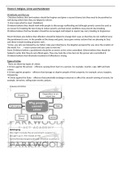
The following figure shows some information about population . Observe the figure and try to
answer the questions below it.
• What information about population does the figure represent?
• State the time interval in which the information has been collected.
• The time interval has been divided into how many parts?
How many years does each part contain?
• Does the figure show that the bi rth rate is constantl y declining?
• Does the figure show a constantly declining death-rate?
• State the census year which shows the maxim um birth rate. How much is it?
• State the time interval in which the death-rate has fallen suddenly.
Recap
Graphical representation of stati stical data include construction of
Histogram
Class-intervals on the x-axis and cumulative frequencies on the y-axis, the corresponding rectangles are
drawn.
We realize that the figure contains a variety of useful information that is easy to understand and analyze.
This is what statistics helps us to do.
Today, statistics has become a part of all branches of knowledge. It is used to study problems in Biology,
Psychology, Economics, Education, Sociology, Trade, Industry etc.
The statistical method of studying a problem broadly consists of the following steps:
N22 Page 1 of 55
,• To collect numerical data about the problem
• To preen t the collected data systematically
• To analyze the data and
• To interpret the data and draw conclusions from it
The numerical expressions which represent the characteristic of a group (a large number of numerical data)
are called measures of central tendency (or averages).
An average which is used to represent a whole series should neither have the lowest value nor the highest
value in the group but a value somewhere between the two extremes, possibly in the centre, where most of
the items of the group cluster.
There are many types of statistical average, some of them are the mean, median and mode.
Numerical data and its representation
A class consists of 64 students. The teacher gives a test in English. The score each student obtained out of
100 are as follows:
Table 1
40 72 14 40 6B 46 62 SB 37 40
SB 3B S2 47 16 so 61 37 44 SS
3B 49 44 S2 67 Sl 33 4B 23 Sl
S6 61 46 41 6S 43 71 29 so S6
6B 2S SS 49 44 73 23 63 41 42
66 S9 S2 2B so S6 60 3B 40 73
4S 30 47 40
These marks are the n umerical data called raw data collected with the purpose of knowing
attainment of the class in English.
The way in which the scores are presented hardly gives any idea about attainmen t of the class in
English. It is necessary to present any such nume1ical data in a systematic manner so as to know
some meanin g of it.
There are different methods of presenting numerical data systematically.
Arranged data
Arranged numerical data
The same scores have now been arranged in ascending order, in Table 2. Observe the table.
Table 2
14 16 23 23 25 28 29 30 33 37
37 38 38 38 40 40 40 40 40 41
41 42 43 44 44 44 45 46 46 47
47 48 49 49 50 50 50 51 51 52
52 52 55 55 56 56 56 58 58 59
60 61 61 62 63 65 66 67 68 68
71 72 73 73
N22 Page 2 of 55
,Information gathered from the table:
The minimum and maximum marks are 14 and 73 respectively. Some students have scored equal
marks. The score 40 has occurred five times which is the maximum repetiti on.
Drawba cks of this method:
• The method is very tedious.
• Often the numerical data is large and arranging them in the ascending order would take lot of
time.
• Even th ough we do it, we do not get any prominen t information from it.
Therefore, to get more information, it becomes necessary to put it in a condensed form.
Ungrouped frequency distribution table
The table 3 given below gives the ungrouped frequency distribution of the information in table 1. The table is
prepared as follows:
Start from the smallest number in the data and write the number one below the other till the largest number. We
shall now track the repeated occurrence of numbers by making a tally mark like this 'I' next to that number. The
fifth mark is drawn diagonally crossing the first four marks (IIII in this way). This makes counting of tally marks
easy. Make the sixth tally mark a small distance from the first five. The total number of tallies corresponding to a
number in the data is called the frequency of the number.
N22 Page 3 of 55
, Such a freq uency distribu tion table mak e s the numerical data more informative. One glance at the tabl e
shows us that the number of student scori ng m arks bet ween 44 and 58 very large.
Draw ba ck
The table has a large span.
This drawback is rem oved in a grou ped frequency distri buti on table.
Grouped frequency distribution table
In this method, the numerical data is classified into convenient groups or classes using tally marks.
In the table given below, the data is classified into groups 1 1 to 20, 21 to 30,... .,7 1 to 80.
Note the following im portan t points of this table:
• The method of preparing this table is easy.
• The numerical data have got a concise form.
• The individual nature of the data has disappeared. The table represents the nature of group.
• With the help of the table, it is possible to analyses the data to some extent.
Some terms used in statistics Raw numerical data
Table I shows marks of each student in a class. In terms of statistics, they are the scores of individuals of a
group. This is the primary information collected. Such an information is called Raw numerical data.
Range of the data
In table 2, the numbers are written in order. Let us call such data as the data presented in order. The
difference between the largest and the smallest number in the data is called the Range of the data. The range
of data in table 2 is 73-14=59.
Class limit
In table 4, the numerical data are presented dividing into group. Each of them is called a class. The end values
of a class are called the limits of the class or the class-limits. The smaller of the two values is called the lower
class-limit and the larger is called the upper class-limit.
Class interval
The range of a class is called its class interval.
Frequency of the class
The number of tally marks corresponding to a class is called the frequency of the class.
Cumulative frequency table
The cumulative frequency less than the upper limit of a certain class, is the sum of the frequency of that class
and the frequencies of all classes preceding it.
Table 6 is a cumulative frequency table prepared from table 4.
N22 Page 4 of 55
STATISTICS
INTRODUCTION
Statistics is a branch of Mathematics which deals with collection , orga nisation, analysis and
interpretation of data.
Statistics deals mainly in the comm unication and analysis of facts and figures using statistical
method s. Collection, classification, tabulation , representation, reasoning, testing and drawing
inferences are parts of the statistical method. Graphs, tables, reasoning, estimation and prediction are
the means of stastical methods.
DR.P.K. Bose and Prof.C.R. Rao are eminent Indian stati sticians.
Statistics hel ps in making predictions and estimates. Rainfall patterns of a particular city over a
period of time can be analyzed and a fair estimate abou t next season can be arrived at, with the
help of figures (data) collected over a period of time.
The word statistics is used with two meanings.
• Collecting data systematically and presenting numerical data
• Processing the numerical data and drawing conclusions
The following figure shows some information about population . Observe the figure and try to
answer the questions below it.
• What information about population does the figure represent?
• State the time interval in which the information has been collected.
• The time interval has been divided into how many parts?
How many years does each part contain?
• Does the figure show that the bi rth rate is constantl y declining?
• Does the figure show a constantly declining death-rate?
• State the census year which shows the maxim um birth rate. How much is it?
• State the time interval in which the death-rate has fallen suddenly.
Recap
Graphical representation of stati stical data include construction of
Histogram
Class-intervals on the x-axis and cumulative frequencies on the y-axis, the corresponding rectangles are
drawn.
We realize that the figure contains a variety of useful information that is easy to understand and analyze.
This is what statistics helps us to do.
Today, statistics has become a part of all branches of knowledge. It is used to study problems in Biology,
Psychology, Economics, Education, Sociology, Trade, Industry etc.
The statistical method of studying a problem broadly consists of the following steps:
N22 Page 1 of 55
,• To collect numerical data about the problem
• To preen t the collected data systematically
• To analyze the data and
• To interpret the data and draw conclusions from it
The numerical expressions which represent the characteristic of a group (a large number of numerical data)
are called measures of central tendency (or averages).
An average which is used to represent a whole series should neither have the lowest value nor the highest
value in the group but a value somewhere between the two extremes, possibly in the centre, where most of
the items of the group cluster.
There are many types of statistical average, some of them are the mean, median and mode.
Numerical data and its representation
A class consists of 64 students. The teacher gives a test in English. The score each student obtained out of
100 are as follows:
Table 1
40 72 14 40 6B 46 62 SB 37 40
SB 3B S2 47 16 so 61 37 44 SS
3B 49 44 S2 67 Sl 33 4B 23 Sl
S6 61 46 41 6S 43 71 29 so S6
6B 2S SS 49 44 73 23 63 41 42
66 S9 S2 2B so S6 60 3B 40 73
4S 30 47 40
These marks are the n umerical data called raw data collected with the purpose of knowing
attainment of the class in English.
The way in which the scores are presented hardly gives any idea about attainmen t of the class in
English. It is necessary to present any such nume1ical data in a systematic manner so as to know
some meanin g of it.
There are different methods of presenting numerical data systematically.
Arranged data
Arranged numerical data
The same scores have now been arranged in ascending order, in Table 2. Observe the table.
Table 2
14 16 23 23 25 28 29 30 33 37
37 38 38 38 40 40 40 40 40 41
41 42 43 44 44 44 45 46 46 47
47 48 49 49 50 50 50 51 51 52
52 52 55 55 56 56 56 58 58 59
60 61 61 62 63 65 66 67 68 68
71 72 73 73
N22 Page 2 of 55
,Information gathered from the table:
The minimum and maximum marks are 14 and 73 respectively. Some students have scored equal
marks. The score 40 has occurred five times which is the maximum repetiti on.
Drawba cks of this method:
• The method is very tedious.
• Often the numerical data is large and arranging them in the ascending order would take lot of
time.
• Even th ough we do it, we do not get any prominen t information from it.
Therefore, to get more information, it becomes necessary to put it in a condensed form.
Ungrouped frequency distribution table
The table 3 given below gives the ungrouped frequency distribution of the information in table 1. The table is
prepared as follows:
Start from the smallest number in the data and write the number one below the other till the largest number. We
shall now track the repeated occurrence of numbers by making a tally mark like this 'I' next to that number. The
fifth mark is drawn diagonally crossing the first four marks (IIII in this way). This makes counting of tally marks
easy. Make the sixth tally mark a small distance from the first five. The total number of tallies corresponding to a
number in the data is called the frequency of the number.
N22 Page 3 of 55
, Such a freq uency distribu tion table mak e s the numerical data more informative. One glance at the tabl e
shows us that the number of student scori ng m arks bet ween 44 and 58 very large.
Draw ba ck
The table has a large span.
This drawback is rem oved in a grou ped frequency distri buti on table.
Grouped frequency distribution table
In this method, the numerical data is classified into convenient groups or classes using tally marks.
In the table given below, the data is classified into groups 1 1 to 20, 21 to 30,... .,7 1 to 80.
Note the following im portan t points of this table:
• The method of preparing this table is easy.
• The numerical data have got a concise form.
• The individual nature of the data has disappeared. The table represents the nature of group.
• With the help of the table, it is possible to analyses the data to some extent.
Some terms used in statistics Raw numerical data
Table I shows marks of each student in a class. In terms of statistics, they are the scores of individuals of a
group. This is the primary information collected. Such an information is called Raw numerical data.
Range of the data
In table 2, the numbers are written in order. Let us call such data as the data presented in order. The
difference between the largest and the smallest number in the data is called the Range of the data. The range
of data in table 2 is 73-14=59.
Class limit
In table 4, the numerical data are presented dividing into group. Each of them is called a class. The end values
of a class are called the limits of the class or the class-limits. The smaller of the two values is called the lower
class-limit and the larger is called the upper class-limit.
Class interval
The range of a class is called its class interval.
Frequency of the class
The number of tally marks corresponding to a class is called the frequency of the class.
Cumulative frequency table
The cumulative frequency less than the upper limit of a certain class, is the sum of the frequency of that class
and the frequencies of all classes preceding it.
Table 6 is a cumulative frequency table prepared from table 4.
N22 Page 4 of 55