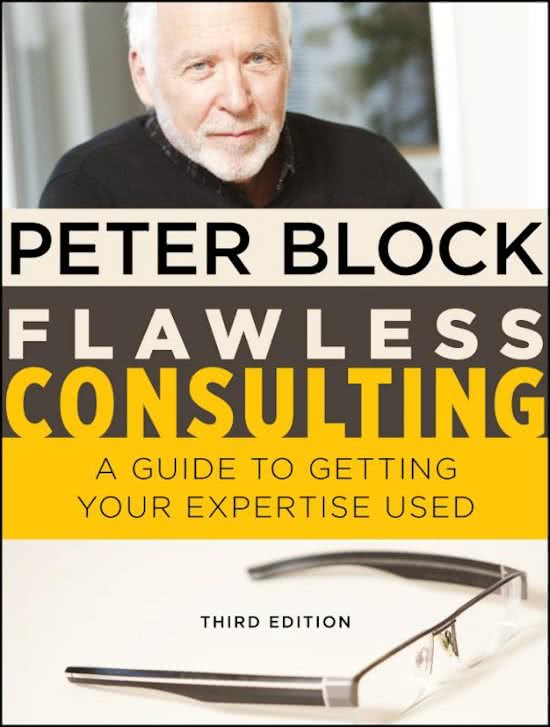
Consulting Methods Exam summary
Chapter 1: A consultant by any other name
• A consultant is a person in a position to have some influence over an individual, a
group, or an organization but has no direct power to make changes or implement
programs.
• A manager is someone who has direct responsibility for the action. The moment
you take direct responsibility, you are acting as a manager
• In organizations, clients for the services provided by support people are called line
managers.
• At one level, we consult to create change in the line organization of a structural,
policy, or procedural nature
• The second kind of change is the end result that one person or many people in the
line organization have learned something new.
There are three kinds of skills you need to do a good job:
1. Technical skills: specific to your expertise/ discipline
2. Interpersonal skills: ability to put ideas into words, etc. (Apply to all situations)
3. Consulting skills: being competent in the execution of each of the steps (5 phases)
5 phases of consulting:
1. Entry and contracting
2. Discovery and dialogue
3. Analysis and the decision to act
4. Engagement and implementation
5. Extension, recycle, or termination
Chapter 2: Techniques are not enough
In acting as a consultant, you always operate at 2 levels:
1. One level is the content: cognitive part of a discussion between yourself and the client
(analytical, rational, or explicit part of the discussion, where we are working on the
technical or business situation).
2. Your relationship to the client during each phase is a second level of data that needs
attention just as the content does.
There are four elements to the affective side of consultant-client interaction that are always
operating: responsibility, feelings, trust, and your own needs.
1. Responsibility: it’s a way of visibly expressing to the organization that the client is
taking at least 50 percent of the responsibility for the program.
2. Feelings
3. Trust
, 4. Your own needs
The set of assumptions that underlie the consulting approach:
1. Problem solving requires valid data (personal data and objective data)
2. Effective decision making requires free and open choice
3. Effective implementation requires internal commitment: People readily commit
themselves to things they believe will further their interests.
The consultant’s goals:
1. Establish a collaborative relationship
2. Solve problems so they stay solved
3. Ensure attention is given to both technical/business problem and relationships
4. Secondary goal: developing client commitment.
Roles consultants choose:
1. Expert role: client-to-expert. The support person becomes the “expert” in the
performance of a given task.
- manager plays an inactive role,
- consultant is responsible for the results, as well as decisions on how to proceed.
- Two-way communication is limited (Collaboration is not required here)
2. Pair-of-hands role: manager sees consultant as an extra pair of hands.
- Manager retains full control. Makes the decisions and methods of discovery
- Consultant takes a passive role
- Collaboration is not necessary
- Two-way communication is limited
3. Collaborative role: joint undertaking, with equal attention to both the technical issues
and the human interactions in dealing with the technical issues.
- Consultant and manager work to become interdependent
- Decision making is bilateral
- Control issues become matters for discussion and negotiation
- Communication is two-way
-
There is confusion about the distinction between the expert role and the collaborative role:
- A collaborative approach can come across as implying that the consultant and the
client have equal expertise and are partners in technical matters.
Staging the client’s involvement, step by step:
1. Define the initial problem
2. Decide whether to proceed with the project
3. Select the dimensions to be studied
4. Decide who will be involved in the project
5. Select the method
6. Do discovery
, 7-9. funneling the data and making sense of it
10. Provide the results
11. Make recommendations
12. Decide on actions
Chapter 3: Flawless consulting
• Authentic behavior with a client means you put into words what you are experiencing
with the client as you work.
• Authentic behavior leads to higher trust, higher leverage, and higher client
commitment.
• Authentic behavior also has the advantage of being incredibly simple.
Completing the requirements of each phase:
In addition to being authentic, flawless consulting demands knowl- edge of the task
requirements of each phase of the project.
• Contracting:
1. Negotiate wants
2. Cope with mixed motivation
3. Surface concerns about exposure and loss of control
4. Understand triangular and rectangular contracts
• Discovery and inquiry:
1. Layers and inquiry: the initial problem statement in a consulting project is usually
a symptom of other underlying problems.
2. Political climate
3. Resistance to sharing information
4. The interview as a joint learning event
• Feedback and the decision to act:
1. Funneling data
2. Presenting personal and organizational data (requirement for the feedback phase
to include this type of data)
3. Managing the meeting for action
4. Focusing on the here and now: identifying how the client is managing feedback
itself.
5. Don’t take it personally
• Engagement and implementation:
1. Bet on engagement over mandate and persuasion
2. Design more participation than presentation
3. Encourage difficult public exchanges
4. Put real choice on the table
5. Change the conversation to change the culture
6. Pay attention to place
Chapter 1: A consultant by any other name
• A consultant is a person in a position to have some influence over an individual, a
group, or an organization but has no direct power to make changes or implement
programs.
• A manager is someone who has direct responsibility for the action. The moment
you take direct responsibility, you are acting as a manager
• In organizations, clients for the services provided by support people are called line
managers.
• At one level, we consult to create change in the line organization of a structural,
policy, or procedural nature
• The second kind of change is the end result that one person or many people in the
line organization have learned something new.
There are three kinds of skills you need to do a good job:
1. Technical skills: specific to your expertise/ discipline
2. Interpersonal skills: ability to put ideas into words, etc. (Apply to all situations)
3. Consulting skills: being competent in the execution of each of the steps (5 phases)
5 phases of consulting:
1. Entry and contracting
2. Discovery and dialogue
3. Analysis and the decision to act
4. Engagement and implementation
5. Extension, recycle, or termination
Chapter 2: Techniques are not enough
In acting as a consultant, you always operate at 2 levels:
1. One level is the content: cognitive part of a discussion between yourself and the client
(analytical, rational, or explicit part of the discussion, where we are working on the
technical or business situation).
2. Your relationship to the client during each phase is a second level of data that needs
attention just as the content does.
There are four elements to the affective side of consultant-client interaction that are always
operating: responsibility, feelings, trust, and your own needs.
1. Responsibility: it’s a way of visibly expressing to the organization that the client is
taking at least 50 percent of the responsibility for the program.
2. Feelings
3. Trust
, 4. Your own needs
The set of assumptions that underlie the consulting approach:
1. Problem solving requires valid data (personal data and objective data)
2. Effective decision making requires free and open choice
3. Effective implementation requires internal commitment: People readily commit
themselves to things they believe will further their interests.
The consultant’s goals:
1. Establish a collaborative relationship
2. Solve problems so they stay solved
3. Ensure attention is given to both technical/business problem and relationships
4. Secondary goal: developing client commitment.
Roles consultants choose:
1. Expert role: client-to-expert. The support person becomes the “expert” in the
performance of a given task.
- manager plays an inactive role,
- consultant is responsible for the results, as well as decisions on how to proceed.
- Two-way communication is limited (Collaboration is not required here)
2. Pair-of-hands role: manager sees consultant as an extra pair of hands.
- Manager retains full control. Makes the decisions and methods of discovery
- Consultant takes a passive role
- Collaboration is not necessary
- Two-way communication is limited
3. Collaborative role: joint undertaking, with equal attention to both the technical issues
and the human interactions in dealing with the technical issues.
- Consultant and manager work to become interdependent
- Decision making is bilateral
- Control issues become matters for discussion and negotiation
- Communication is two-way
-
There is confusion about the distinction between the expert role and the collaborative role:
- A collaborative approach can come across as implying that the consultant and the
client have equal expertise and are partners in technical matters.
Staging the client’s involvement, step by step:
1. Define the initial problem
2. Decide whether to proceed with the project
3. Select the dimensions to be studied
4. Decide who will be involved in the project
5. Select the method
6. Do discovery
, 7-9. funneling the data and making sense of it
10. Provide the results
11. Make recommendations
12. Decide on actions
Chapter 3: Flawless consulting
• Authentic behavior with a client means you put into words what you are experiencing
with the client as you work.
• Authentic behavior leads to higher trust, higher leverage, and higher client
commitment.
• Authentic behavior also has the advantage of being incredibly simple.
Completing the requirements of each phase:
In addition to being authentic, flawless consulting demands knowl- edge of the task
requirements of each phase of the project.
• Contracting:
1. Negotiate wants
2. Cope with mixed motivation
3. Surface concerns about exposure and loss of control
4. Understand triangular and rectangular contracts
• Discovery and inquiry:
1. Layers and inquiry: the initial problem statement in a consulting project is usually
a symptom of other underlying problems.
2. Political climate
3. Resistance to sharing information
4. The interview as a joint learning event
• Feedback and the decision to act:
1. Funneling data
2. Presenting personal and organizational data (requirement for the feedback phase
to include this type of data)
3. Managing the meeting for action
4. Focusing on the here and now: identifying how the client is managing feedback
itself.
5. Don’t take it personally
• Engagement and implementation:
1. Bet on engagement over mandate and persuasion
2. Design more participation than presentation
3. Encourage difficult public exchanges
4. Put real choice on the table
5. Change the conversation to change the culture
6. Pay attention to place