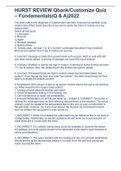
HURST REVIEW Qbank/Customize Quiz – Fundamentals(Q & A)2022
The client with a new diagnosis of hypertension has been instructed to maintain a low sodium diet. Which foods does the nurse plan to teach the client to include on a low sodium diet? Select all that apply 1. Lemonade 2. Broccoli 3. Apple 4. Smoked sausage 5. Boiled shrimp 6. Tomato soup 1, 2, & 3. Correct: Lemonade has about 5 mg of sodium. Broccoli and apples have 0 mg of sodium per serving. 4. Incorrect: Sausage is made from ground meat such as pork, beef, or veal with salt and other spices added. A serving of sausage can have 644 mg of sodium. 5. Incorrect: Shellfish or shrimp are high in sodium. A serving of boiled shrimp can have 111 mg of sodium. Also, the seasoning for the shrimp has sodium added. 6. Incorrect: Processed foods are high in sodium unless the food label states "low sodium". Even though the food may read "low sodium", the client should read the food label to evaluate the sodium content. A hospitalized client using a K-pad on an injured muscle reports the pad is not warming up. What should be the nurse's initial action? 1. Unplug unit and plug into another wall outlet. 2. Check temperature setting on the heating unit. 3. Call maintenance to repair unit immediately. 4. Increase temperature on unit till pad heats up. 2. CORRECT. The nurse is utilizing the nursing process by first collecting data pertinent to the situation. The actual problem could be related to the temperature dial on the unit, or even a malfunction in the pad itself. However, the nurse must assess the situation by checking the basics, such as whether the equipment is even turned on. 1. INCORRECT. While it is possible the outlet itself may be defective, this is not likely in a large facility. Additionally, an electric appliance should never be re-connected to an outlet while still in contact with the client. 3. INCORRECT. It is unlikely maintenance would be available to examine the device immediately and most repairs should not be attempted in the client's room because of safety considerations. 4. INCORRECT. The exact problem with the heating unit has not yet been established. Simply turning up the temperature setting is not safe since the pad may quickly get hotter, injuring the client. A new nurse enters the linen room for supplies and finds a pile of sheets on fire. What type of fire extinguisher is most appropriate for the nurse to use in this situation? 1. Foam type 2. Water only 3. Dry powder 4. Carbon dioxide 2. CORRECT. A "water only" fire extinguisher is used for Class A fires, which includes solid combustibles such as wood, paper and textiles. As long as no electric equipment is plugged into a socket in the room, the water only extinguisher is most appropriate. 1. INCORRECT. Although foam extinguishers can be utilized for both Class A and Class B fires, it is not the most appropriate extinguisher for a linen room since the nurse is unaware of electric equipment that may be charging in that room. Foam extinguishers are more appropriate for flammable liquids. 3. INCORRECT. Dry chemical, or powder, extinguishers are good for mixed material fires and electrical fires such as those that may occur in an office. However, these are not recommended for small, enclosed spaces such as a linen room because of the danger of inhaling the dry chemical. 4. INCORRECT. Carbon dioxide extinguishers are best for electrical fires or flammable liquids like paints because CO2 prevents conduction. This Class B type of extinguisher is appropriate for garage, car and truck fires or even tanker fires, but not Class A blazes. The pediatric nurse is assessing a child following an appendectomy. What is the nurse's main priority following surgery? 1. Obtain vital signs every four hours. 2. Assess the need for pain medication. 3. Tally intake and output every eight hours. 4. Auscultate lung sounds every four hours. 4. CORRECT: No matter what type of surgery, recall that the effects of anesthesia and intubation, if performed, can lead to complications, particularly in children. The potential for atelectasis and pneumonia follows surgery; therefore the client is encouraged to cough and deep breathe to minimize these risks. Auscultating lung sounds frequently post-op is crucial. 1. INCORRECT: Although vital signs are important, initially the nurse should check vitals every half hour to one hour. Despite the frequency, another assessment is even more important. 2. INCORRECT: It is crucial to medicate a postoperative client; however, pain medications should never be administered until after the initial assessment as pain medication will alter important symptoms the nurse needs to determine any complications. 3. INCORRECT: Standard intake and output is tallied once a shift, or every eight hours. Though this information is vital to determine hydration and function of the kidneys, it is not the nurse's main priority. A 70 year-old client reports not sleeping well at night, having trouble staying asleep, and awakening about 4:00 a.m. What should the nurse teach the client about sleep patterns in the elderly? 1. Don't worry about a few hours of lost sleep. 2. Elders need as much sleep as younger adults. 3. Caffeine and some medications may interfere with sleep. 4. Elders sleep more than younger adults. 3. Correct: Caffeine and some medications may interfere with sleep. 1. Incorrect. The client is concerned about the sleep problem, and the nurse should address the client's concerns. Sleep disturbances can also indicate depression. This option is denying their concerns. 2. Incorrect. Elders actually require less sleep because they are less active. Elderly do not need as much sleep. 4. Incorrect. Elders are likely to have more disturbed sleep. They usually do not need more sleep. The nurse is instructing a client newly diagnosed with gastroesophageal reflux disease (GERD) who has been prescribed omeprazole. What comment by the client indicates to the nurse that the teaching was successful? 1. "I should lay down after eating a big meal." 2. "Spicy food and caffeine might cause me pain." 3. "If the pain gets worse, I should take two pills." 4. "I will take the omeprazole whenever I have pain." 2. CORRECT: There are many foods and drinks that might cause discomfort for the client, particularly in the early stages of treatment. Although specific foods can vary among individuals, usually spicy foods, caffeine, and even alcohol can contribute to the burning sensation reported by clients with GERD. This statement by the client is accurate. 1. INCORRECT: Lying down after a large meal often contributes to reflux because the pressure of food permits stomach contents and acid to flow back up the esophagus, leading to heartburn and possibly regurgitation. Clients should remain upright for a period of time after eating, which allows gravity to keep acid below the level of the esophagus. 3. INCORRECT: Omeprazole is a proton-pump inhibitor which decreases stomach acid and works to heal existing ulcers. This medication is taken once daily at the same time, and should never be doubled unless ordered to do so by the primary healthcare provider. Any increase in discomfort while taking this medication should be immediately reported. 4. INCORRECT: A proton-pump inhibitor is taken once daily, usually in the morning prior to breakfast. This medication is not administered only in the presence of pain. Taking this medication consistently over time will decrease stomach acid and help heal any damaged stomach tissue. A home health nurse is educating a female client about home care considerations for intermittent catheterization. Which statement by the client would let the nurse know that the client understands what has been taught? 1. "After insertion, I will tape the tubing to my lower abdomen." 2. "I will wash the rubber catheter thoroughly with soap and water after use." 3. "It is important that I keep the drainage bag below the level of my bladder." 4. "Catheterization should be done hourly." 2. CORRECT: There are many foods and drinks that might cause discomfort for the client, particularly in the early stages of treatment. Although specific foods can vary among individuals, usually spicy foods, caffeine, and even alcohol can contribute to the burning sensation reported by clients with GERD. This statement by the client is accurate. 1. INCORRECT: Lying down after a large meal often contributes to reflux because the pressure of food permits stomach contents and acid to flow back up the esophagus, leading to heartburn and possibly regurgitation. Clients should remain upright for a period of time after eating, which allows gravity to keep acid below the level of the esophagus. 3. INCORRECT: Omeprazole is a proton-pump inhibitor which decreases stomach acid and works to heal existing ulcers. This medication is taken once daily at the same time, and should never be doubled unless ordered to do so by the primary healthcare provider. Any increase in discomfort while taking this medication should be immediately reported. 4. INCORRECT: A proton-pump inhibitor is taken once daily, usually in the morning prior to breakfast. This medication is not administered only in the presence of pain. Taking this medication consistently over time will decrease stomach acid and help heal any damaged stomach tissue. A nurse is evaluating an unlicensed assistive personnel (UAP) for proper body mechanics while lifting a heavy object off of the floor. What action by the UAP would indicate a need for further instruction by the nurse? 1. Testing the weight to determine if additional assistance is needed. 2. Keeping the feet shoulder width apart. 3. Bending from the waist to pick up the object. 4. Holding the object close to the body upon rising. 3. Correct: You should not bend at the waist. This will injure your back. Lower your knees, and stay close to the object to use thigh muscles. 1. Incorrect: This is correct. If it is too heavy do not attempt to lift alone. 2. Incorrect: This is correct and will help maintain balance as you lower yourself to the floor. 4. Incorrect: This is correct. Holding close to the center of gravity will help prevent injury to your back and arms. Body mechanics describes the ways we move as we go about our daily routine. Poor body mechanics are often the cause of back problems. When we don't move correctly and safely, the spine is subjected to abnormal stresses that over time can lead to degeneration of spinal structures. The process of lifting places perhaps the greatest loads on the low back and therefore, has the highest risk of injury. Use of proper lifting mechanics and posture is critical to prevent injury. How to lift safely: Place the load immediately in front of you. Bend the knees to a full squat or lunge position. Bring the load towards your chest. Assume a neutral position with your back. Tighten the lumbar and buttocks muscles to "lock" the back. Lift now from the legs to the standing position. DO NOT Lift from a twisted / sideways position. DO NOT Lift from a forward stooped / imbalanced position. While making rounds, the nurse discovers a small fire in a client's room. What should the nurse do first? 1. Remove the client from the room immediately. 2. Leave the client's room to obtain a fire extinguisher. 3. Instruct the unlicensed assistive personnel (UAP) to pull the fire alarm. 4. Evacuate all clients from the unit. 1. Correct: Rescue/Remove the client; first step in Rescue, Alarm, Contain, Extinguish (RACE). 2. Incorrect: Never leave the client in an unsafe environment. Remove the client from the area. 3. Incorrect: Not first action in RACE. Get the client out of the area first. The UAP may need to help you with this. Don't send the UAP away. 4. Incorrect: Not first action in RACE. Remove the client in immediate danger first. All clients may not have to be evacuated if the fire is contained and extinguished. What action should the nurse take when testing a client's near vision? 1. Have client read a Snellen chart from 20 feet away. 2. Have client read Ishihara plates at 30 inches (75 cm). 3. Have client read a newspaper at 14 inches (36 cm). 4. Have client alternate gaze from a near object to a distant object. 3. Correct: The nurse can get a general idea of near visual acuity by asking the client to read from a newspaper. The newspaper should be held 14 inches from the eyes. This exam can also be done with the Jaeger chart containing a few short lines or paragraphs of printed text. The size of the print gradually gets smaller. The client is asked to hold the card about 14 in. (36 cm) from the face and read aloud the paragraph containing the smallest print he/she can comfortably read. Both eyes are tested together, with and without corrective lenses. This test is routinely done after age 40, because near vision tends to decline as one ages (presbyopia). 1. Incorrect: The Snellen chart is used to test distant vision. To test distance vision, individuals stand 20 feet from the Snellen eye chart, cover one eye, read aloud the smallest line they can clearly see, and then repeat this process with the other eye. After performing an eye test, a person's visual acuity is written as a fraction. Normal vision is defined as 20/20 visual acuity, which means at 20 feet away from the eye chart, the person is able to read the line that most human beings with normal vision can read at 20 feet away. 2. Incorrect: Ishihara plates are used to assess color blindness, and are not used to test near vision. 4. Incorrect: Having the client alternate their gaze from a near object to a distant object tests for accommodation. It does not test for near vision. The charge nurse is observing a new LPN preparing to irrigate a client's indwelling urinary catheter. The nurse must intervene when the LPN initiates what action? 1. Gathers all sterile equipment for procedure. 2. Opens bottle of sterile distilled water to flush. 3. Allows return flow to be achieved by gravity. 4. Uses gentle pressure when flushing catheter. 2. CORRECT. The charge nurse is observing the LPN's ability to complete this invasive procedure, monitoring for any action that could harm the client. The charge nurse should intervene to prevent the LPN from using sterile distilled water. Only sterile normal saline (NS) can be used to flush out the catheter to prevent an alteration in the pH balance of the bladder. 1. INCORRECT. This process is appropriate since all equipment should be gathered prior to any procedure. A nurse must be organized and prepared before any client procedure. The question is asking for something the LPN has done incorrectly. 3. INCORRECT. After a urinary catheter has been gently flushed with NS, the LPN would allow the fluid and any urine to return into the sterile basin by gravity flow. This correct action would not require the charge nurse to intervene during the process. 4. INCORRECT. Flushing a catheter is a delicate procedure, requiring slight, gentle pressure to instill the normal saline. Forcing fluid into the bladder can cause trauma or damaged to the tissue. The LPN completed this action correctly, requiring no intervention by the charge nurse. What is the best method for the nurse to verify correct nasogastric (NG) tube placement after insertion? 1. X-ray of the upper GI 2. Gastric aspiration and pH testing 3. Auscultation of air instilled into the stomach 4. Visualization of the tube markings 1. Correct: The gold standard for nasogastric feeding tube placement is radiographic confirmation with X-ray. This is the most reliable method! 2. Incorrect: Both respiratory and gastrointestinal aspirates may be similar in color and may be misinterpreted. 3. Incorrect: This method cannot differentiate tube placement in the stomach or lung. The practitioner may still hear a rush of air. 4. Incorrect: Visualization of tube markings does not provide a reliable verification that the tube is in the stomach. This has never been a reliable way of verifying placement. The nurse asks if the client has an advance directive. The client responds by saying, "I have heard of advance directives, but I do not have one. What is an advance directive?" Which response by the nurse is appropriate? 1. Specifies your wishes regarding your personal effects and finances should you become unable to make decisions. 2. Specifies your wishes regarding healthcare and your finances should you become incapacitated. 3. Similar to a will, it specifies your wishes for burial should you die during hospitalization. 4. A form of a living will. It specifies your wishes regarding healthcare and treatment options should you become incapacitated. 4. Correct: An advance directive is a legal document prepared by a competent individual that specifies what treatments, if any, the client desires should the client become incapacitated or unable to make informed healthcare decisions in the future. The document includes wishes regarding resuscitation measures, withdrawing treatment and life support, and end-of-life care. 1. Incorrect: An advance directive does not address client personal effects and finances. These might be included in a last will and testament, but are not part of an advance directive. 2. Incorrect: An advance directive does not address client personal effects and finances. These might be included in a last will and testament, but are not part of an advance directive. 3. Incorrect: An advance directive does not address burial wishes. A client has developed preeclampsia at 30 weeks' gestation. The nurse is instructing the client on an appropriate diet for preeclampsia. The nurse knows the teaching was successful when the client selects what menu? Select all that apply 1. Caesar salad with feta cheese 2. Grilled cheese with tomatoes 3. Chipped ham on a croissant roll 4. Hot dog with a glass of soda pop 5. Chicken sandwich on wheat toast 2 and 5. CORRECT: A high protein, calcium rich diet is most important for the preeclampsia client who is losing protein in urine. Grilled cheese is an excellent selection for lunch, especially since it contains tomato slices, which adds another level of nourishment and vitamins. Additionally, a chicken sandwich, particularly on whole wheat toast, is very appropriate for this preeclampsia client. 1. INCORRECT: Caesar dressing is made with raw eggs, exposing the client to the potential for salmonella. Pregnant woman should not eat raw foods, including eggs, fish, or meat. Additionally, feta cheese is a 'soft cheese', exposing the client to another bacterium known as listeria. Although a salad could be a good choice, this particular salad is not healthy. 3. INCORRECT: The need to restrict salt is not a priority for preeclampsia clients, but chipped ham is a processed meat containing less protein than other meats and increasing the risk for contracting listeria. The croissant roll is made of refined white flour and sugar. The client would benefit more from whole grain products. 4. INCORRECT: Processed meats, such as hot dogs, are not the healthiest choice for the client, as they increase the risk for listeria. Also, a client with preeclampsia should avoid alcohol, caffeine, and refined sugar to help control the blood pressure. The glass of soda pop is not a healthy selection. A client who was diagnosed with amyotropic lateral sclerosis (ALS) has been immobile for 2 weeks. Which of the nursing interventions would the nurse implement? Select all that apply 1. Explore diversional activities. 2. Perform range of motion exercises. 3. Maintain the feet in dorsiflexion position. 4. Assess pressure points for skin changes. 5. Encourage a fluid intake of 1500 mL/24 hours. 1., 2., 3., & 4. Correct: The client's immobility may lead to apathy and isolation. The nurse should explore diversional activities which can reduce the frustration and depression of being immobile. Immobility will result in muscle weakness and decreased venous return. The client is encouraged to perform active range of motion exercises. Also passive range of motion exercises should be performed if the client cannot perform the active exercises themselves. Due to the client's decreased movement of the ankles, the client's feet should be positioned in the dorsiflexion position to prevent plantar flexion contractures. A bed board should be positioned to the foot of the bed. Active and passive range of motion exercises to the ankle and foot will promote proper joint movement. An immobile client's skin is affected by extrinsic, intrinsic, and shear forces. A decrease in the client's perfusion and peripheral circulation are intrinsic factors. The immobile client is experiencing the extrinsic factor of increased skin temperature at the skin pressure points. Moving the immobile client may result in a shearing force on the skin. 5. Incorrect: The effects of immobility on the urinary system may include urinary retention, renal calculi, and urinary tract infections. Also the immobile client may experience constipation if the fluid intake decreases. The fluid intake for a healthy adult is recommended at mL per 24 hours. The nurse is discussing foot care with a client who was recently diagnosed with diabetes. Which statement by the client indicates an understanding of foot care? 1. "I will soak my feet for 30 minutes a day." 2. "I will avoid using a heating pad on my feet." 3. "I can use scissors to remove the corns on my toes." 4. "I enjoy walking without my shoes around the house." 2. Correct: One of the long-term complications of diabetes is peripheral neuropathy. As the neuropathy progresses the feet have reduced sensation and may eventually become numb. The client should avoid using heating pads and hot water bottles. Due to the decrease sensation of the feet, the client is in danger of blistering and burning the feet. 1. Incorrect: A complication of diabetes is an increased risk of foot infections. The client is immunocompromised which impairs the leukocytes that destroy bacteria. The client should not allow moisture to accumulate between the toes. 3. Incorrect: Due to the possibility of the client experiencing peripheral neuropathy, the client should not remove any corns from their toes. If a cut occurs while removing the corn, the client is a risk for an ulcer developing. A primary healthcare provider should prescribe the appropriate treatment for corns. 4. Incorrect: Walking without appropriate shoes is dangerous for the client diagnosed with diabetic peripheral neuropathy. After stepping on an object, the client cannot feel the damage to the skin which could result in a scratch or cut. Which action would the nurse need to perform to increase stability while initiating a client transfer? 1. Lift with the back. 2. Put on a back belt. 3. Spread feet to width of the shoulders. 4. Lean forward slightly. 3. Correct: In order to increase stability, the nurse will need to increase the base of support. This can be done by spreading the legs to the width of the shoulders. 1. Incorrect: Do not use your back to do heavy lifting. They are not your strongest muscles. Use your legs. 2. Incorrect: A back belt will not increase the base of support. 4. Incorrect: The nurse should not lean forward or backward. The ears, shoulders, hips and feet should be aligned. The nurse is providing care for an elderly client who has a percutaneous endoscopic gastrostomy (PEG) feeding tube and is receiving continuous feeding. Which interventions should the nurse include when providing care? Select all that apply 1. Add medications to enteral feeding formula. 2. Change dressing around insertion site weekly. 3. Flush feeding tube with 30 mL warm tap water every 4 hours. 4. Maintain head of bed at 30 degree elevation. 5. Monitor for hypoglycemia. 3., & 4. Correct: All enteral feedings require flushing. Flush feeding tubes in adults with 30 mL of warm tap water every 4 hours during continuous feedings or before and after each intermittent feeding. To prevent aspiration, elevate the head of bed to a minimum of 30 degrees, but preferably 45 degrees. 1. Incorrect: Do not add medications to the enteral feeding formula. Medications can interact with the formula and may case the feeding tube to clog. 2. Incorrect: The dressing around the insertion site should be changed at least daily. 5. Incorrect: The elderly client is more likely to experience hyperglycemia rather than hypoglycemia. This is due to the high carbohydrate load in some enteral feeding formulas. A nurse is planning to teach a group who works at a local mall about proper use of automated external defibrillators (AED). Which points should the nurse emphasize? Select all that apply 1. The standard AED can be used on children over the age of 5. 2. All users of the AED must be trained in its operation. 3. CPR should be taught to users. 4. Primary healthcare provider oversight is needed to ensure proper maintenance. 5. The local EMS should be notified of the type and location of AEDs. 2., 3., 4. & 5. Correct: These are appropriate actions. 1. Incorrect: Standard AEDs can be used on children over the age of 8. For children ages 1-8, the AHA recommends the pediatric attenuated pads that are purchased separately. Which response by the nurse is appropriate when responding to a client who reports eliminating all dairy foods from their diet because of lactose intolerance? 1. "Take calcium tablets since they can be used as a total supplement for dairy products." 2. "You can take lactose enzymes which will eliminate the effects of lactose intolerance." 3. "Valuable nutrients found in milk include calcium and protein." 4. "Consume more leafy green vegetables to maintain calcium levels." 3. Correct: Milk contains both calcium and high-quality protein. 1. Incorrect: Dairy products provide for both calcium and protein. 2. Incorrect: Lactose enzymes may help but will not eliminate the problem. 4. Incorrect: People generally do not eat enough green leafy vegetables to get enough protein. The charge nurse is orienting a new nurse to the pediatric unit. Which teaching related to assessment is appropriate? 1. One assessment should be done daily on each client by the charge nurse. 2. An assessment should be done daily on each client at the beginning of the shift. 3. Assessments of clients should be updated as the nurse provides care to clients. 4. Assessments of clients should be done at the beginning of the shift and updated as nursing care is provided. 4. Correct: Assessment is ongoing; however, for each shift a baseline assessment should be done so the nurse can verify or make judgment regarding other findings throughout the 24 hour day. It is best to get the baseline as soon as possible once the shift begins, and update or reevaluate during the shift. This option actually incorporates the other 3 options making it the correct option. 1. Incorrect: Must include ongoing updated assessments, not just one assessment. These can be done by the assigned RN, not the charge nurse. 2. Incorrect: Must include ongoing updated assessments, not just at beginning of shift. 3. Incorrect: Must include initial beginning of shift assessment. The nurse in the pediatric intensive care unit (PICU) is caring for a preschool child three days after open heart surgery. What assessment finding should the nurse report immediately to the primary healthcare provider? 1. Increased episodes of fussy crying. 2. A hacking, non-productive cough. 3. Oral temperature of 100.9°F (38.3°C). 4. Chest tube draining 30 mL per shift. 3. CORRECT: An oral temperature of 100.9°F (38.3°C) is considered too elevated for 3 days post-op. An oral body temperature greater than 100.5°F (38.1°C) indicates the potential for infection. Although no other vital signs are given in the scenario, a temperature this elevated would need to be reported immediately by the nurse to the primary healthcare provider. 1. INCORRECT: Increasing episodes of crying could indicate many things in a preschool child, including pain, fear, loneliness, or even elevated body temperature. While this change in the client's status will need to be investigated further, the nurse would not need to report this behavior at this time. 2. INCORRECT: A hacking, non-productive cough, even several days after open heart surgery, could be attributed to the effects of intubation, anesthesia, or even certain cardiac medications. Clients are always encouraged to cough and deep breathe in order to prevent pulmonary complications. If the cough becomes productive or breathing becomes labored, the nurse would need to report this to the primary healthcare provider. This is not an urgent concern for the nurse. 4. INCORRECT: Chest tube drainage is common following open-heart surgery, even three days later. It is impossible to evaluate whether 30 mL in one shift is a change since there are no parameters to compare the previous shift's output. The nurse would not need to report this drainage at this time. The nurse is transferring the client from the bed to the wheelchair. Which nursing intervention would the nurse implement after assisting the client to a sitting position on the side of the bed. 1. Assess the client for lightheadedness. 2. Move the wheelchair closer to the bed. 3. Lower the bed to the lowest position. 4. Position the foot of the stronger leg closer to the bed. 1. Correct: Prior to moving the client from the side of the bed to the wheelchair, assess the client for orthostatic hypotension or postural hypotension. The client may experience a sudden decrease in blood pressure after changing the position from lying down to sitting up. 2. Incorrect: The wheelchair should be positioned in the correct position prior to positioning the client on the side of the bed. Client safety has priority. The nurse should not leave the client to move the wheelchair to the bedside. 3. Incorrect: The bed should have been lowered to the position prior to moving the client to the side of the bed. The client's feet should rest on the floor. This will assist the client in supporting themselves. 4. Incorrect: Positioning the foot of the stronger leg closer to the bed is a transfer step after assessing the client for orthostatic hypotension. Whether the stronger or weaker leg is positioned closer to the bed will not affect the client's blood pressure status. What intervention should the nurse take when providing oral care for the unconscious client? 1. Brush teeth with a stiff toothbrush. 2. Use thumb and index finger to hold the client's mouth open while brushing teeth. 3. Position the client on their side. 4. Rinse by injecting water into the center of client's mouth. 3. Correct: Placing client on side helps fluid run out of the mouth. 1. Incorrect: A soft bristled brush should be used. 2. Incorrect: Fingers should not be placed in client's mouth. 4. Incorrect: Should be injected into the sides of the client's mouth. The nurse is teaching a client about the use of a cane. Which is the correct cane technique? 1. Place the cane on weaker side of the body to support the weaker leg. Using the cane for support, the client should step forward with strong leg, and then move the weaker leg and cane forward to the strong leg. 2. Place the cane on the stronger side of the body. The cane is placed forward 6 to 10 inches while the client advances the weak leg at the same time. 3. Place cane on weaker side of body. The cane is placed forward 6 to 10 inches while the client advances weaker leg to the cane. 4. Place cane on stronger side of body to help support weaker leg. Using cane for support, step forward with the strong leg and then move the weaker leg and the cane forward to the strong leg. 2. Correct: Place the cane on the stronger side of the body. The cane is placed forward 6 to 10 inches while the client advances the weak leg at the same time. The body weight is divided between the strong leg and the cane. 1. Incorrect: The cane should be on the stronger side of the body to create a wider base for balance as the client advances the strong leg and must use the weaker leg for support with the cane. If the cane is placed on the weaker side of the body, this would create a narrower base for support and balance and increase the risk of falling. 3. Incorrect: The cane should be on the stronger side of the body to create a wider base for balance as the client advances the strong leg and must use the weaker leg for support with the cane. If the cane is placed on the weaker side of the body, this would create a narrower base for support and balance and increase the risk of falling. 4. Incorrect: The cane should be on the stronger side of the body to create a wider base for balance as the client advances the strong leg and must use the weaker leg for support with the cane. If the cane is placed on the weaker side of the body, this would create a narrower base for support and balance and increase the risk of falling. A client receiving 50 mL/hr of enteral feedings has a gastric residual volume of 200 mL and is reporting nausea. What is the appropriate nursing intervention? 1. Stop the feeding and assess gastric residual volume in 1 hour. 2. Reduce the infusion rate to 25 mL/ hour and reevaluate residual volume in 4 hours. 3. Change the feeding schedule from continuous to intermittent delivery. 4. Discard the 200 mL and continue the feedings at the same rate. 1. Correct: The safest response is to STOP the feedings and re-assess in 1 hour. Nausea may be a sign of intolerance. Continuing the feeding may also result in vomiting with possible aspiration. 2. Incorrect: Reducing the rate requires a primary healthcare provider's prescription and does not fix the problem. In this answer, the NCLEX people are giving you a scope of practice question. If you select this answer, you are telling the people who write the test that you are going to write prescriptions for your clients. 3. Incorrect: Changing the feeding schedule requires a primary healthcare provider's prescription and does not fix the problem. Again, with this answer, the NCLEX people are giving you a scope of practice answer. If you choose this answer, you are telling the people at NCLEX that you are going to write prescriptions for your clients. 4. Incorrect: Do not discard residual volumes. Discarding residual volumes can disrupt a client's fluid and electrolyte balance. Standard practice is to give it back. Discarding the residual requires a prescription. Continuing at the same rate is not safe when you have high residuals. The feedings should be stopped. The nurse is reviewing discharge instructions with the spouse of client following a laminectomy. When the nurse explains the need to log roll the client, the spouse expresses doubt about the ability to do so independently. What statement by the nurse is appropriate? 1. "Many spouses have been able to learn this procedure." 2. "Which part of this procedure has you most concerned?" 3. "Don't you have any family to help you with this procedure?" 4. "Are you worried about caring for your spouse?" 2. CORRECT. The nurse's question is open-ended since it allows the spouse to elaborate on any specific areas of concern or doubt. This approach encourages the spouse to express feelings with any care after discharge, and not just the log rolling technique. 1. INCORRECT. This statement by the nurse directs attention away from the spouse's expressed concerns, ignoring feelings stated by the spouse. It implies anyone could perform the needed log rolling and is dismissive of the spouse. 3. INCORRECT. Although the nurse may have meant to suggest others could help the spouse, the phrasing of the question insinuates the spouse should seek others to help, whereas the nurse should focus on educating and encouraging the spouse to perform the task independently. 4. INCORRECT. While the spouse's verbalized concerns may be subconsciously connected to overall care of a post-surgical client, the nurse's comment is an assumption and is confrontational. When inspecting the equipment in a client's room, what would the nurse recognize as electrical safety hazard(s)? Select all that apply 1. Flickering overhead light 2. Ground-fault circuit interrupter electrical sockets 3. Hospital labeled UL power strip 4. Bent electrical bed cord 5. Cracked electrical socket 1, 4, & 5. CORRECT. Dim or flickering lights are indications that there is a possible electrical wiring problem. Use of a damaged electrical cord or socket increases the risk of an electrical fire, shock, or burn. 2. INCORRECT. Ground-fault circuit interrupter (GFCI) electrical sockets should be in place in hospital and healthcare facilities. A GFCI socket will immediately cut off power if it detects someone receives a shock, helping prevent serious injury. 3. INCORRECT. While power strips are not ideal in the hospital setting, power strips that have been inspected and tagged with a hospital label may be used when multiple electrical outlets are required. Additionally, only power strips with the Underwriters Laboratories (UL) seal should be used.
Written for
- Institution
- HURST
- Course
- HURST
Document information
- Uploaded on
- November 5, 2022
- Number of pages
- 27
- Written in
- 2022/2023
- Type
- Exam (elaborations)
- Contains
- Questions & answers
Subjects
-
hurst review qbankcustomize quiz – fundamentalsq amp a2022
-
the client with a new diagnosis of hypertension has been instructed to maintain a low sodium diet which foods does the nurse plan to te

Document also available in package deal