

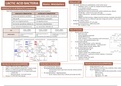
What are LAB?
LACTIC ACID BACTERIA Basics: Metabolism • LAB = gram+ bacteria→use carbohydrates as main carbon source
• Fastidious (“fussy”) → need rich, complex nutrients for growth
HOMOLACTIC VS HETEROLACTIC fermentation • ↓ in metabolic activities
• Small genomes (make the most of it)
• Most LAB are homofermentative/facultative heterofermentative (some exceptions) • Need external sources for amino acids, nucleic acid precursors, vitamins
• Morphology = rods/cocci (non-spore forming)
HOMOLACTIC FERMENTATION HETEROLACTIC FERMENTATION • Oxygen requirements = facultative anaerobes/micro aerophilic
hexoses→lactate/lactic acid (ONLY) hexoses→lactate, acetate, CO2, ethanol • Catalase-
• Obligate homofermentative, obligate heterofermentative, facultative heteroferme
EMP and PP Phosphoketolase pathway(PK) • Fermentation not very effective to generate energy and nutrients – they use SLP (
• Inhabit wide variety of niches
NOT all can degrade pentoses Can degrade pentoses • Fermented products, GIT, soil, water
Key enzymes: glucokinase, aldolase, etc. Key enzyme: phosphoketolase • Lactobacillus and Lactococcus = GRAS status (safe)
• NB – probiotic or food
e.g., Lactococcus, Streptococcus, etc. e.g., Leuconostoc, Weissella, etc.
TYPE
Group l – Obligate Group ll – Facultative Group lll – Obligate Fate of Pyruvate
homofermentative heterofermentative heterofermentative
1. Diacetyl-acetoin pathway
CHARACTERISTIC
Ferment glucose→lactate(only) Ferment glucose→lactate via Metabolize glucose and pentoses • NB for dairy LAB
via EMP. EMP. via PK pathway • Citrate metabolism→pyruvate
NO phosphoketolase Ferment pentoses via PP pathway NO aldolase
• Diacetyl NB for aroma
• Acidic conditions = induce (contribute to pH homeostasis)
• In homo- and heterofermentative LAB
2. Formate lyase pathway
• ONLY in oblig. homofer. and fac. Heterofer.
• Anaerobic and limited substrates = ↓activity of LDH
• Products: lactate, formate, acetate, etOH
3. Pyruvate dehydrogenase pathway
• Heterofermentative LAB
• Aerobic conditions
• Products: acetate, CO2, etOH(theoretical)
• etOH production = supressed in aerobic conditions → 2X acetate
4. Pyruvate oxidase pathway
• Products: acetate, CO2, H2O2
• Substrates = limited
Homolactic fermentation(HEXOSES) Heterolactic fermentation Homolactic fermentation(PENTOSES)
• Produce 100% lactic acid via EMP (hexoses) • Lack 1,6-bisphosphate aldolase • Initially observed in L. vini
• Sugars → cell via specialized transporters = require energy • Use phosphoketolase pathway(PK) • Use PP pathway for pentoses (e.g., arabinose, ribose, xylose
• Glucose → 2 moles lactic acid (pyruvate reduction) • Theoretically produce equal moles of lactate, ethanol and CO2 • Xylose metabolism in L. lactis
• Lactose dehydrogenase(LDH) → L- or D-lactic acid formed from glucose • Swith from mixed acid fermentation(PK) → homol
• L-LDH/D-LDH • ALL heterofermenters = degrade pentoses EMP) of xylose
• Racemase activity = form both isomers • Result: produce equal moles of lactate and acetate (no CO2) • Low xylose – PK
• Glucose → 2 ATP (4 ATP from lactose) • High xylose = PP + EMP
LACTIC ACID BACTERIA Basics: Metabolism • LAB = gram+ bacteria→use carbohydrates as main carbon source
• Fastidious (“fussy”) → need rich, complex nutrients for growth
HOMOLACTIC VS HETEROLACTIC fermentation • ↓ in metabolic activities
• Small genomes (make the most of it)
• Most LAB are homofermentative/facultative heterofermentative (some exceptions) • Need external sources for amino acids, nucleic acid precursors, vitamins
• Morphology = rods/cocci (non-spore forming)
HOMOLACTIC FERMENTATION HETEROLACTIC FERMENTATION • Oxygen requirements = facultative anaerobes/micro aerophilic
hexoses→lactate/lactic acid (ONLY) hexoses→lactate, acetate, CO2, ethanol • Catalase-
• Obligate homofermentative, obligate heterofermentative, facultative heteroferme
EMP and PP Phosphoketolase pathway(PK) • Fermentation not very effective to generate energy and nutrients – they use SLP (
• Inhabit wide variety of niches
NOT all can degrade pentoses Can degrade pentoses • Fermented products, GIT, soil, water
Key enzymes: glucokinase, aldolase, etc. Key enzyme: phosphoketolase • Lactobacillus and Lactococcus = GRAS status (safe)
• NB – probiotic or food
e.g., Lactococcus, Streptococcus, etc. e.g., Leuconostoc, Weissella, etc.
TYPE
Group l – Obligate Group ll – Facultative Group lll – Obligate Fate of Pyruvate
homofermentative heterofermentative heterofermentative
1. Diacetyl-acetoin pathway
CHARACTERISTIC
Ferment glucose→lactate(only) Ferment glucose→lactate via Metabolize glucose and pentoses • NB for dairy LAB
via EMP. EMP. via PK pathway • Citrate metabolism→pyruvate
NO phosphoketolase Ferment pentoses via PP pathway NO aldolase
• Diacetyl NB for aroma
• Acidic conditions = induce (contribute to pH homeostasis)
• In homo- and heterofermentative LAB
2. Formate lyase pathway
• ONLY in oblig. homofer. and fac. Heterofer.
• Anaerobic and limited substrates = ↓activity of LDH
• Products: lactate, formate, acetate, etOH
3. Pyruvate dehydrogenase pathway
• Heterofermentative LAB
• Aerobic conditions
• Products: acetate, CO2, etOH(theoretical)
• etOH production = supressed in aerobic conditions → 2X acetate
4. Pyruvate oxidase pathway
• Products: acetate, CO2, H2O2
• Substrates = limited
Homolactic fermentation(HEXOSES) Heterolactic fermentation Homolactic fermentation(PENTOSES)
• Produce 100% lactic acid via EMP (hexoses) • Lack 1,6-bisphosphate aldolase • Initially observed in L. vini
• Sugars → cell via specialized transporters = require energy • Use phosphoketolase pathway(PK) • Use PP pathway for pentoses (e.g., arabinose, ribose, xylose
• Glucose → 2 moles lactic acid (pyruvate reduction) • Theoretically produce equal moles of lactate, ethanol and CO2 • Xylose metabolism in L. lactis
• Lactose dehydrogenase(LDH) → L- or D-lactic acid formed from glucose • Swith from mixed acid fermentation(PK) → homol
• L-LDH/D-LDH • ALL heterofermenters = degrade pentoses EMP) of xylose
• Racemase activity = form both isomers • Result: produce equal moles of lactate and acetate (no CO2) • Low xylose – PK
• Glucose → 2 ATP (4 ATP from lactose) • High xylose = PP + EMP


