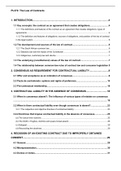
PL372: The Law of Contracts
1. INTRODUCTION.................................................................................................................4
1.1 Key concepts: the contract as an agreement that creates obligations..............................4
1.1.1 The definitions and features of the contract as an agreement that creates obligations; types of
agreements................................................................................................................................................ 4
1.1.2 The definition and features of obligations, sources of obligations, and position of the law of contract
in the legal system..................................................................................................................................... 6
1.2 The development and sources of the law of contract.........................................................6
1.2.1 The South African common law........................................................................................................ 6
1.2.2 Statutory law and the impact of the Constitution...............................................................................6
1.2.3 Indigenous, customary law and ubuntu............................................................................................. 7
1.3 The underlying (constitutional) values of the law of contract............................................7
1.4 The relationship between common-law rules of contract law and consumer legislation 8
2. CONSENSUS AS REQUIREMENT FOR CONTRACTUAL LIABILITY............................8
2.1 Offer and acceptance as an indication of consensus.........................................................8
2.2 Pacta de contrahendo: options and rights of preference.................................................14
2.3 Pre-contractual relationship................................................................................................18
3. CONTRACTUAL LIABILITY IN THE ABSENCE OF CONSENSUS...............................18
3.1 When is consensus absent?: The influence of various types of mistake on consensus
..................................................................................................................................................... 18
3.2 When is there contractual liability even though consensus is absent?..........................23
3.2.1 The subjective and objective theories of contractual liability:..........................................................23
3.2.2 Doctrines that impose contractual liability in the absence of consensus....................25
(a) The iustus-error doctrine..................................................................................................................... 25
(b) The Smith v Hughes- doctrine and quasi-mutual assent.....................................................................26
(c) Estoppel.............................................................................................................................................. 29
(d) Reconciling the doctrines.................................................................................................................... 29
4. RECISSION OF AN EXISTING CONTRACT DUE TO IMPROPERLY OBTAINED
CONSENT.............................................................................................................................29
4.1 General.................................................................................................................................. 29
4.2 Misrepresentation................................................................................................................ 30
4.3 Duress or metus................................................................................................................... 31
, Requirements:.......................................................................................................................................... 32
Problem areas:......................................................................................................................................... 33
4.4 Undue Influence................................................................................................................... 37
Definition and Requirements.................................................................................................................... 37
Preller v Jordaan...................................................................................................................................... 37
BOE Bank v Van Zyl................................................................................................................................ 38
What are the remedies for undue influence?............................................................................................ 38
4.5 Other cases of improperly obtained consent.....................................................................38
Developing our law to provide more protection for the weak....................................................................39
5. CAPACITY (NOT PRESCRIBED).....................................................................................39
6. FORMAL REQUIREMENTS.............................................................................................39
6.1 Introduction.......................................................................................................................... 39
6.2 Statutory Formalities........................................................................................................... 39
General.................................................................................................................................................... 39
Specific Statutory Formalities................................................................................................................... 40
6.3 Formalities imposed by parties...........................................................................................41
Formalities for the conclusion of a contract.............................................................................................. 41
Formalities for the variation of a contract.................................................................................................42
Limiting the Shifren principle.................................................................................................................... 42
6.4 The “Parol Evidence Rule”..................................................................................................45
Introduction.............................................................................................................................................. 45
Definition of the Parol Evidence rule........................................................................................................ 45
The two legs of the Parol Evidence rule................................................................................................... 45
Scope/Application of the Parol Evidence Rule.........................................................................................45
6.5 Rectification.......................................................................................................................... 48
The purpose of rectification...................................................................................................................... 48
Requirements for rectification................................................................................................................... 48
Rectification and the Parol Evidence Rule...............................................................................................49
Rectification and Formalities.................................................................................................................... 49
7. POSSIBILITY OF PERFORMANCE.................................................................................50
8. CERTAINTY OF PERFORMANCE...................................................................................50
9. LEGALITY.........................................................................................................................50
9.1 Introduction.......................................................................................................................... 50
Definition of illegality................................................................................................................................ 50
Distinguish between the Content of a contract and the Purpose/Object of a contract..............................51
Burden of proof of Illegality....................................................................................................................... 51
,9.2 Statutory Illegality................................................................................................................ 51
General.................................................................................................................................................... 51
Transactions in fraudem legis.................................................................................................................. 52
Examples of Statutory Illegality................................................................................................................ 52
9.3 Common Law Illegality.........................................................................................................52
Test for Common Law illegality................................................................................................................ 52
Relevance of the Constitution in determining public policy.......................................................................52
Application of the Public Policy test for Illegality.......................................................................................53
9.4 Illegality Examples............................................................................................................... 58
State Administration................................................................................................................................. 59
Civil Justice Systems............................................................................................................................... 59
Prevention of Crime................................................................................................................................. 61
Liability for delict/loses............................................................................................................................. 61
Marriage/family......................................................................................................................................... 61
Freedom of testation................................................................................................................................ 61
Freedom to trade...................................................................................................................................... 61
9.5 Consequences of Illegality..................................................................................................63
Valid but unenforceability......................................................................................................................... 63
Void (and unenforceable)......................................................................................................................... 63
, 1. INTRODUCTION
1.1 Key concepts: the contract as an agreement that creates obligations.
1.1.1 The definitions and features of the contract as an agreement that creates obligations;
types of agreements
Bourbon-Leftley v WPK
The definition of a contract and types of agreements (1.1,1.7)
o The definition of a contract
An agreement between two or more parties, made with serious
intention to create legally enforceable obligations
The presence of serious intention (animus contrahendi) differentiates a
contract from a mere agreement.
The ability to distinguish between an agreement and a contract
was determine in the Bourbon-Leftley case.
What is not included in the definition of a contract?
Writing is not essential
Delivery/Performance is not essential
Specific type is not essential
Giving something in return/Consideration is not essential
o Types of agreements
An agreement is a meeting of the minds/consensus
Consensus must be coupled with the proper intention (animus
contrahendi)
Consensus can be actual (subjective)
Genuine agreement exists when all parties:
o Seriously intend to contract
o Are of one mind as to the material aspects
o Are conscious of the fact that their minds have met
Traditionally analysed in terms of an offer and acceptance
This communication of intention has 3 aspects which should
coincide
o 1. True intention of A’s mind
o 2. The expressed intention (A’s declaration of his will)
o 3. The perceived intention (B’s understanding of what A
intends)
1. INTRODUCTION.................................................................................................................4
1.1 Key concepts: the contract as an agreement that creates obligations..............................4
1.1.1 The definitions and features of the contract as an agreement that creates obligations; types of
agreements................................................................................................................................................ 4
1.1.2 The definition and features of obligations, sources of obligations, and position of the law of contract
in the legal system..................................................................................................................................... 6
1.2 The development and sources of the law of contract.........................................................6
1.2.1 The South African common law........................................................................................................ 6
1.2.2 Statutory law and the impact of the Constitution...............................................................................6
1.2.3 Indigenous, customary law and ubuntu............................................................................................. 7
1.3 The underlying (constitutional) values of the law of contract............................................7
1.4 The relationship between common-law rules of contract law and consumer legislation 8
2. CONSENSUS AS REQUIREMENT FOR CONTRACTUAL LIABILITY............................8
2.1 Offer and acceptance as an indication of consensus.........................................................8
2.2 Pacta de contrahendo: options and rights of preference.................................................14
2.3 Pre-contractual relationship................................................................................................18
3. CONTRACTUAL LIABILITY IN THE ABSENCE OF CONSENSUS...............................18
3.1 When is consensus absent?: The influence of various types of mistake on consensus
..................................................................................................................................................... 18
3.2 When is there contractual liability even though consensus is absent?..........................23
3.2.1 The subjective and objective theories of contractual liability:..........................................................23
3.2.2 Doctrines that impose contractual liability in the absence of consensus....................25
(a) The iustus-error doctrine..................................................................................................................... 25
(b) The Smith v Hughes- doctrine and quasi-mutual assent.....................................................................26
(c) Estoppel.............................................................................................................................................. 29
(d) Reconciling the doctrines.................................................................................................................... 29
4. RECISSION OF AN EXISTING CONTRACT DUE TO IMPROPERLY OBTAINED
CONSENT.............................................................................................................................29
4.1 General.................................................................................................................................. 29
4.2 Misrepresentation................................................................................................................ 30
4.3 Duress or metus................................................................................................................... 31
, Requirements:.......................................................................................................................................... 32
Problem areas:......................................................................................................................................... 33
4.4 Undue Influence................................................................................................................... 37
Definition and Requirements.................................................................................................................... 37
Preller v Jordaan...................................................................................................................................... 37
BOE Bank v Van Zyl................................................................................................................................ 38
What are the remedies for undue influence?............................................................................................ 38
4.5 Other cases of improperly obtained consent.....................................................................38
Developing our law to provide more protection for the weak....................................................................39
5. CAPACITY (NOT PRESCRIBED).....................................................................................39
6. FORMAL REQUIREMENTS.............................................................................................39
6.1 Introduction.......................................................................................................................... 39
6.2 Statutory Formalities........................................................................................................... 39
General.................................................................................................................................................... 39
Specific Statutory Formalities................................................................................................................... 40
6.3 Formalities imposed by parties...........................................................................................41
Formalities for the conclusion of a contract.............................................................................................. 41
Formalities for the variation of a contract.................................................................................................42
Limiting the Shifren principle.................................................................................................................... 42
6.4 The “Parol Evidence Rule”..................................................................................................45
Introduction.............................................................................................................................................. 45
Definition of the Parol Evidence rule........................................................................................................ 45
The two legs of the Parol Evidence rule................................................................................................... 45
Scope/Application of the Parol Evidence Rule.........................................................................................45
6.5 Rectification.......................................................................................................................... 48
The purpose of rectification...................................................................................................................... 48
Requirements for rectification................................................................................................................... 48
Rectification and the Parol Evidence Rule...............................................................................................49
Rectification and Formalities.................................................................................................................... 49
7. POSSIBILITY OF PERFORMANCE.................................................................................50
8. CERTAINTY OF PERFORMANCE...................................................................................50
9. LEGALITY.........................................................................................................................50
9.1 Introduction.......................................................................................................................... 50
Definition of illegality................................................................................................................................ 50
Distinguish between the Content of a contract and the Purpose/Object of a contract..............................51
Burden of proof of Illegality....................................................................................................................... 51
,9.2 Statutory Illegality................................................................................................................ 51
General.................................................................................................................................................... 51
Transactions in fraudem legis.................................................................................................................. 52
Examples of Statutory Illegality................................................................................................................ 52
9.3 Common Law Illegality.........................................................................................................52
Test for Common Law illegality................................................................................................................ 52
Relevance of the Constitution in determining public policy.......................................................................52
Application of the Public Policy test for Illegality.......................................................................................53
9.4 Illegality Examples............................................................................................................... 58
State Administration................................................................................................................................. 59
Civil Justice Systems............................................................................................................................... 59
Prevention of Crime................................................................................................................................. 61
Liability for delict/loses............................................................................................................................. 61
Marriage/family......................................................................................................................................... 61
Freedom of testation................................................................................................................................ 61
Freedom to trade...................................................................................................................................... 61
9.5 Consequences of Illegality..................................................................................................63
Valid but unenforceability......................................................................................................................... 63
Void (and unenforceable)......................................................................................................................... 63
, 1. INTRODUCTION
1.1 Key concepts: the contract as an agreement that creates obligations.
1.1.1 The definitions and features of the contract as an agreement that creates obligations;
types of agreements
Bourbon-Leftley v WPK
The definition of a contract and types of agreements (1.1,1.7)
o The definition of a contract
An agreement between two or more parties, made with serious
intention to create legally enforceable obligations
The presence of serious intention (animus contrahendi) differentiates a
contract from a mere agreement.
The ability to distinguish between an agreement and a contract
was determine in the Bourbon-Leftley case.
What is not included in the definition of a contract?
Writing is not essential
Delivery/Performance is not essential
Specific type is not essential
Giving something in return/Consideration is not essential
o Types of agreements
An agreement is a meeting of the minds/consensus
Consensus must be coupled with the proper intention (animus
contrahendi)
Consensus can be actual (subjective)
Genuine agreement exists when all parties:
o Seriously intend to contract
o Are of one mind as to the material aspects
o Are conscious of the fact that their minds have met
Traditionally analysed in terms of an offer and acceptance
This communication of intention has 3 aspects which should
coincide
o 1. True intention of A’s mind
o 2. The expressed intention (A’s declaration of his will)
o 3. The perceived intention (B’s understanding of what A
intends)