

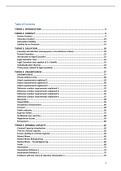
Table of Contents
THEME 1: INTRODUCTION ................................................................................................. 4
THEME 2: CONDUCT .......................................................................................................... 9
Human Conduct ......................................................................................................................... 9
Voluntary Conduct ................................................................................................................... 10
Antecedent Liability ................................................................................................................. 12
Liability for an Omission ........................................................................................................... 14
THEME 3: CAUSATION ..................................................................................................... 18
Causation introduction (consequence v circumstance crimes) .................................................. 18
Factual Causation ..................................................................................................................... 19
Introduction to legal Causation ................................................................................................ 21
Legal Causation Tests ............................................................................................................... 22
Legal Causation tests applied to S v Daniëls .............................................................................. 23
Individualisation theories ......................................................................................................... 24
Tricky issues related to legal causation ..................................................................................... 25
THEME 4: UNLAWFULNESS .............................................................................................. 27
UNLAWFULNESS ....................................................................................................................... 27
Private defence Intro ................................................................................................................ 28
Attack requirements explained 1 .............................................................................................. 29
Attack requirements explained 2:............................................................................................. 30
Attack requirements explained 3 .............................................................................................. 31
Defensive conduct requirements explained 1: .......................................................................... 32
Defensive conduct requirements explained 2: .......................................................................... 34
Defensive conduct requirements explained 3: .......................................................................... 35
Defensive conduct requirements explained 4 ........................................................................... 37
Necessity .................................................................................................................................. 38
Impossibility ............................................................................................................................. 45
Disciplinary Chastisement ........................................................................................................ 46
Consent .................................................................................................................................... 48
Public authority ........................................................................................................................ 56
Superior Orders ........................................................................................................................ 57
De Minimis non curat lex .......................................................................................................... 58
Negotiorum Gestio ................................................................................................................... 59
Entrapment .............................................................................................................................. 60
THEME 5: CRIMINAL CAPACITY ........................................................................................ 62
Criminal Capacity Introduction ................................................................................................. 62
Test for criminal capacity ......................................................................................................... 62
Factors leading to criminal capacity .......................................................................................... 64
Mental Illness ........................................................................................................................... 64
Mental Illness Biological leg ..................................................................................................... 65
Mental Illness – Psychological leg ............................................................................................. 66
Youth ....................................................................................................................................... 68
Intoxication .............................................................................................................................. 72
Intoxication Defences 1 ............................................................................................................ 74
Intoxication Defences 2 ............................................................................................................ 75
Problems with the crime of statutory intoxication 1 ................................................................. 76
1
, Problems with the crime of statutory intoxication 2 ................................................................. 77
Intoxication latest developments ............................................................................................. 79
PROVOCATION/ EMOTIONAL STRESS ....................................................................................... 80
Provocation/ emotional stress defences ................................................................................... 81
THEME 6: FAULT .............................................................................................................. 88
Introducing Fault (Mens Rea) ................................................................................................... 88
Forms of intent – dolus directus, indirectus, eventualis ............................................................ 91
Dolus determinatus v indeterminatus ...................................................................................... 92
Negligence (culpa) introduction................................................................................................ 93
Intent v Motive ........................................................................................................................ 94
Dolus eventualis introduction and the foresee possibility requirement .................................... 95
Mistake in the casual chain ...................................................................................................... 97
Dolus Eventualis Reconcile Requirment .................................................................................. 101
Dolus eventualis v Luxuaria .................................................................................................... 103
NEGLIENCE ............................................................................................................................. 105
Differences between negligence and intent ............................................................................ 105
Test for negligence ................................................................................................................. 106
Test for negligence – objective or subjective? ......................................................................... 108
Negligence and intent ............................................................................................................ 110
DEFENCES EXCLUDING INTENT ............................................................................................... 111
Ignorance/mistake: Genuine and essential ............................................................................. 111
Ignorance/mistake: essential v non-material .......................................................................... 112
Ignorance of the law 1 ............................................................................................................ 114
Ignorance of the Law 2 ........................................................................................................... 116
Putative grounds of justification ............................................................................................. 118
THEME 7: PARTICIPATION IN CRIME .............................................................................. 121
Liability as perpetrator ........................................................................................................... 122
Common purpose doctrine ..................................................................................................... 122
Common purpose unlawful conduct requirement .................................................................. 123
Common purpose fault requirement ...................................................................................... 126
Common purpose scope of liability ........................................................................................ 128
Common purpose extended field of application? ................................................................... 131
Withdrawal from common purpose ....................................................................................... 133
“Joiners-in” ............................................................................................................................ 134
Critique of common purpose liability...................................................................................... 135
Accomplice Liability: Definition and Unlawful conduct ........................................................... 138
Issues with unlawful conduct requirement ............................................................................. 140
Fault and Punishment ............................................................................................................ 142
Accessory after the fact liability: ............................................................................................ 144
Practical problems with accessories requirement ................................................................... 146
THEME 8 – INCOMPLETE CRIMES ................................................................................... 148
Introduction: .......................................................................................................................... 148
Attempt ................................................................................................................................. 150
Completed Attempt ............................................................................................................... 150
Uncompleted attempt ............................................................................................................ 151
Withdrawal from attempt ...................................................................................................... 156
Factual attempt to commit the impossible ............................................................................. 158
Legal attempt to commit the impossible ................................................................................ 161
Practical examples: mistake and attempt to commit the impossible ....................................... 162
Incitement.............................................................................................................................. 163
2
,Conspiracy ............................................................................................................................. 166
Relationship between the attempts, incitement and conspiracy ............................................. 168
3
, THEME 1: INTRODUCTION
Principle of Legality
And more specifically its practical application when it comes to criminalization
Principle of legality rules:
IUS = law or right
1. IUS ACCEPTUM
- the conduct must be recognized by law as a crime
- Conduct must be declared as a crime by common law sources or the legislature
(parliament)
- the courts don’t have the competency to declare a conduct a crime
-courts are bound by the law as we have received it to date
-if courts had the power to define new crimes, it would infringe on IUS CERTUM and IUS
PRAEVIUM principles since law making is both uncertain and retrospective
2. IUS PRAEVIUM
- Conduct must be recognized as a crime before it took place
- you can’t blame someone for doing a crime if it wasn’t a criminalized at the time – this is
even said in the constitution
- Constitution section 35(3)(1) … “right to a fair trial includes the right not to be convicted
for an act or omission that was not an offence under either national or international law at
time it was committed or omitted
3.IUS CERTUM
- Law must be clear and unambiguous. The law mustn’t be vague
- implies the principle of fair warning
4. IUS STRICTIM
- must interpret crime narrowly
- if there’s doubt about whether someone’s conduct has infringed upon
legislation/prohibition. Crimes must be narrowly interpreted.
5. NULLA POENA SINE LEGE
- No punishment without law
Explain the implication that these rules have for a lawmaker that is undertaking
criminalisation
Criminalisation = decision to prohibit conduct as a crime. Hence, a crime is conduct that the
law has declared to be criminal.
The only body who may criminalise conduct is parliament (the legislature)
4
THEME 1: INTRODUCTION ................................................................................................. 4
THEME 2: CONDUCT .......................................................................................................... 9
Human Conduct ......................................................................................................................... 9
Voluntary Conduct ................................................................................................................... 10
Antecedent Liability ................................................................................................................. 12
Liability for an Omission ........................................................................................................... 14
THEME 3: CAUSATION ..................................................................................................... 18
Causation introduction (consequence v circumstance crimes) .................................................. 18
Factual Causation ..................................................................................................................... 19
Introduction to legal Causation ................................................................................................ 21
Legal Causation Tests ............................................................................................................... 22
Legal Causation tests applied to S v Daniëls .............................................................................. 23
Individualisation theories ......................................................................................................... 24
Tricky issues related to legal causation ..................................................................................... 25
THEME 4: UNLAWFULNESS .............................................................................................. 27
UNLAWFULNESS ....................................................................................................................... 27
Private defence Intro ................................................................................................................ 28
Attack requirements explained 1 .............................................................................................. 29
Attack requirements explained 2:............................................................................................. 30
Attack requirements explained 3 .............................................................................................. 31
Defensive conduct requirements explained 1: .......................................................................... 32
Defensive conduct requirements explained 2: .......................................................................... 34
Defensive conduct requirements explained 3: .......................................................................... 35
Defensive conduct requirements explained 4 ........................................................................... 37
Necessity .................................................................................................................................. 38
Impossibility ............................................................................................................................. 45
Disciplinary Chastisement ........................................................................................................ 46
Consent .................................................................................................................................... 48
Public authority ........................................................................................................................ 56
Superior Orders ........................................................................................................................ 57
De Minimis non curat lex .......................................................................................................... 58
Negotiorum Gestio ................................................................................................................... 59
Entrapment .............................................................................................................................. 60
THEME 5: CRIMINAL CAPACITY ........................................................................................ 62
Criminal Capacity Introduction ................................................................................................. 62
Test for criminal capacity ......................................................................................................... 62
Factors leading to criminal capacity .......................................................................................... 64
Mental Illness ........................................................................................................................... 64
Mental Illness Biological leg ..................................................................................................... 65
Mental Illness – Psychological leg ............................................................................................. 66
Youth ....................................................................................................................................... 68
Intoxication .............................................................................................................................. 72
Intoxication Defences 1 ............................................................................................................ 74
Intoxication Defences 2 ............................................................................................................ 75
Problems with the crime of statutory intoxication 1 ................................................................. 76
1
, Problems with the crime of statutory intoxication 2 ................................................................. 77
Intoxication latest developments ............................................................................................. 79
PROVOCATION/ EMOTIONAL STRESS ....................................................................................... 80
Provocation/ emotional stress defences ................................................................................... 81
THEME 6: FAULT .............................................................................................................. 88
Introducing Fault (Mens Rea) ................................................................................................... 88
Forms of intent – dolus directus, indirectus, eventualis ............................................................ 91
Dolus determinatus v indeterminatus ...................................................................................... 92
Negligence (culpa) introduction................................................................................................ 93
Intent v Motive ........................................................................................................................ 94
Dolus eventualis introduction and the foresee possibility requirement .................................... 95
Mistake in the casual chain ...................................................................................................... 97
Dolus Eventualis Reconcile Requirment .................................................................................. 101
Dolus eventualis v Luxuaria .................................................................................................... 103
NEGLIENCE ............................................................................................................................. 105
Differences between negligence and intent ............................................................................ 105
Test for negligence ................................................................................................................. 106
Test for negligence – objective or subjective? ......................................................................... 108
Negligence and intent ............................................................................................................ 110
DEFENCES EXCLUDING INTENT ............................................................................................... 111
Ignorance/mistake: Genuine and essential ............................................................................. 111
Ignorance/mistake: essential v non-material .......................................................................... 112
Ignorance of the law 1 ............................................................................................................ 114
Ignorance of the Law 2 ........................................................................................................... 116
Putative grounds of justification ............................................................................................. 118
THEME 7: PARTICIPATION IN CRIME .............................................................................. 121
Liability as perpetrator ........................................................................................................... 122
Common purpose doctrine ..................................................................................................... 122
Common purpose unlawful conduct requirement .................................................................. 123
Common purpose fault requirement ...................................................................................... 126
Common purpose scope of liability ........................................................................................ 128
Common purpose extended field of application? ................................................................... 131
Withdrawal from common purpose ....................................................................................... 133
“Joiners-in” ............................................................................................................................ 134
Critique of common purpose liability...................................................................................... 135
Accomplice Liability: Definition and Unlawful conduct ........................................................... 138
Issues with unlawful conduct requirement ............................................................................. 140
Fault and Punishment ............................................................................................................ 142
Accessory after the fact liability: ............................................................................................ 144
Practical problems with accessories requirement ................................................................... 146
THEME 8 – INCOMPLETE CRIMES ................................................................................... 148
Introduction: .......................................................................................................................... 148
Attempt ................................................................................................................................. 150
Completed Attempt ............................................................................................................... 150
Uncompleted attempt ............................................................................................................ 151
Withdrawal from attempt ...................................................................................................... 156
Factual attempt to commit the impossible ............................................................................. 158
Legal attempt to commit the impossible ................................................................................ 161
Practical examples: mistake and attempt to commit the impossible ....................................... 162
Incitement.............................................................................................................................. 163
2
,Conspiracy ............................................................................................................................. 166
Relationship between the attempts, incitement and conspiracy ............................................. 168
3
, THEME 1: INTRODUCTION
Principle of Legality
And more specifically its practical application when it comes to criminalization
Principle of legality rules:
IUS = law or right
1. IUS ACCEPTUM
- the conduct must be recognized by law as a crime
- Conduct must be declared as a crime by common law sources or the legislature
(parliament)
- the courts don’t have the competency to declare a conduct a crime
-courts are bound by the law as we have received it to date
-if courts had the power to define new crimes, it would infringe on IUS CERTUM and IUS
PRAEVIUM principles since law making is both uncertain and retrospective
2. IUS PRAEVIUM
- Conduct must be recognized as a crime before it took place
- you can’t blame someone for doing a crime if it wasn’t a criminalized at the time – this is
even said in the constitution
- Constitution section 35(3)(1) … “right to a fair trial includes the right not to be convicted
for an act or omission that was not an offence under either national or international law at
time it was committed or omitted
3.IUS CERTUM
- Law must be clear and unambiguous. The law mustn’t be vague
- implies the principle of fair warning
4. IUS STRICTIM
- must interpret crime narrowly
- if there’s doubt about whether someone’s conduct has infringed upon
legislation/prohibition. Crimes must be narrowly interpreted.
5. NULLA POENA SINE LEGE
- No punishment without law
Explain the implication that these rules have for a lawmaker that is undertaking
criminalisation
Criminalisation = decision to prohibit conduct as a crime. Hence, a crime is conduct that the
law has declared to be criminal.
The only body who may criminalise conduct is parliament (the legislature)
4


