Introduction:
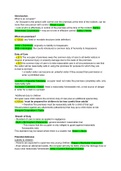
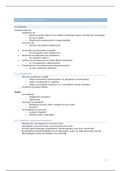
What is an occupier?
- An Occupier is the person with control over the premises at the time of the incident, can be
more than one person with control: Wheat v Lacon
- Look at who is effectively in control of the premises at the time of the incident Harris v
Birkenhead Corporations-> may be no-one in effective control: Bailey v Armes
What are premises?
s.1(3)(a): any fixed or movable structure (wide definition)
Addie v Dumbreck: originally no liability to trespassers
BRB v Herrington: the courts introduced a common duty of humanity to trespassers
Duty of Care
- s.2(1) The occupier of premises owes the common duty of care to all lawful visitors in
respect of personal injury or property damage due to the state of the premises
- s.2(2) the common duty of care is to take reasonable care in all circumstances to see that
the visitor will be reasonably safe in using the premises for purpose for which they are
invited to be there
> a lawful visitor can become an unlawful visitor if they exceed their permission or
enter a prohibited area
Laverton v Kiapasha Takeaway: occupier need not make the premises completely safe, only
reasonably safe
Rochester Cathedral v Debell: Need a reasonably foreseeable risk, a real source of danger
in order for a claim to succeed
Additional duty to children
Occupier owes child visitors the common duty of care plus an additional special duty
s.2(3)(a): 'must be prepared for children to be less careful than adults'
> therefore 'the premises must be reasonably safe for a child of that age'
Should protect against any allurements (attractions) that may put a child visitor at risk
Glasgow Corporation v Taylor
Breach of Duty
- Standard of care is same as applied in negligence
- Blyth v Birmingham Waterworks: general standard: reasonable man
- This means that the occupier is only obliged to guard against reasonably
foreseeable risks
This standard may be raised where there is a sizable risk: Bolton v Stone
Potential defences
Liability to children
- Parents are expected to supervise very young children: Phipps v Rochester Corporation
- Even where an allurement exists, the occupier will only be liable where the damage (loss or
injury) was reasonably foreseeable Jolley v London Borough of Sutton
What is an occupier?
- An Occupier is the person with control over the premises at the time of the incident, can be
more than one person with control: Wheat v Lacon
- Look at who is effectively in control of the premises at the time of the incident Harris v
Birkenhead Corporations-> may be no-one in effective control: Bailey v Armes
What are premises?
s.1(3)(a): any fixed or movable structure (wide definition)
Addie v Dumbreck: originally no liability to trespassers
BRB v Herrington: the courts introduced a common duty of humanity to trespassers
Duty of Care
- s.2(1) The occupier of premises owes the common duty of care to all lawful visitors in
respect of personal injury or property damage due to the state of the premises
- s.2(2) the common duty of care is to take reasonable care in all circumstances to see that
the visitor will be reasonably safe in using the premises for purpose for which they are
invited to be there
> a lawful visitor can become an unlawful visitor if they exceed their permission or
enter a prohibited area
Laverton v Kiapasha Takeaway: occupier need not make the premises completely safe, only
reasonably safe
Rochester Cathedral v Debell: Need a reasonably foreseeable risk, a real source of danger
in order for a claim to succeed
Additional duty to children
Occupier owes child visitors the common duty of care plus an additional special duty
s.2(3)(a): 'must be prepared for children to be less careful than adults'
> therefore 'the premises must be reasonably safe for a child of that age'
Should protect against any allurements (attractions) that may put a child visitor at risk
Glasgow Corporation v Taylor
Breach of Duty
- Standard of care is same as applied in negligence
- Blyth v Birmingham Waterworks: general standard: reasonable man
- This means that the occupier is only obliged to guard against reasonably
foreseeable risks
This standard may be raised where there is a sizable risk: Bolton v Stone
Potential defences
Liability to children
- Parents are expected to supervise very young children: Phipps v Rochester Corporation
- Even where an allurement exists, the occupier will only be liable where the damage (loss or
injury) was reasonably foreseeable Jolley v London Borough of Sutton