100% satisfaction guarantee Immediately available after payment Both online and in PDF No strings attached 4.2 TrustPilot
logo-home
Exam (elaborations)

SAE3701 assignment 2 Feedback.

Rating
-
Sold
-
Pages
14
Grade
A+
Uploaded on
30-06-2022
Written in
2021/2022

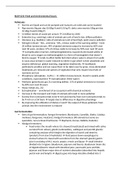
SAE3701 Assignment 2 Feedback. Pre-colonial education embraced the building of character, the development of physical ability and the attainment of honourable virtues that are a fundamental part of maturity. Pre-colonial education was oral in nature and was taught through the peoples own languages. Through legends, children learned the virtues of their community and appreciated the power and beauty of their own languages before colonization took place. 2. The main aspects of socialization in pre-colonial societies are the values and beliefs that were instilled in individuals, the rules that were used when interacting with others and the gaining of cultural norms. The primary agents of socialisation are family as they have an important role in shaping the child’s behaviour. Children from a very young age were taught how to feel, think and act in an “appropriate” manner, and to do what was told to them without any questions. 3. Formal learning was taught through initiation rites and apprenticeship. It was distinctly known as the “hierarchically controlled educational system”. Whereas informal learning was taught through the elders and parents in the society/village/tribe through a practice of socialization (interacting with others). They acquire skills, knowledge and values from their everyday experiences and learnt through folklore. 4. –Authority structures changed - New social groups were created - African chiefs and their kingdoms were defeated by white subjugation - People’s views towards education changed as they saw that it was a way into a more leading economic and social system. - Black individuals were willing to comply into monetary labour Question 2 1. Missionary schools were responsible for teaching children how to read and write. They also taught obedience, manual work as well as convenient education and a major emphasis was put on Christian principles. They were 2 sets of groups that were able to graduate from the school, children who got a basic education that consisted of only reading and writing, and those who received a higher level of education (math, etc). 2. The three aspects of mission education that was always criticised was the; industrial and manual education (instead of teaching learners the proper skills needed, they were taught about having the correct attitudes when working), Racism and subordination(schools curriculum was based on European history rather than local history. The black learners were only able to get basic education, therefore only having limited job opportunities) and lastly Sexism and woman’s subordination(They believed that females had to be taught domestic values as they have no place in the economy) 3. The purpose of introducing Bantu education was to provide education to black people. Its major condition was implementing racially separated educational amenities. Bantu education was aimed to direct black or nonwhite youth to the unskilled labour market.. Teaching took place in the learner’s mother tongue, though the syllabus included classes in English and Afrikaans. Lessons included needlework (for girls), handcraft, planting, and soil management as well as Christian religion. The education aimed at training the children for manual labour and tedious jobs that the government saw appropriate for those of their race, and it was openly planned to encourage the idea that black people were to accept being submissive to white South Africans. 4. The criticism under the Bantu education act was mainly about how education for black and non-white South Africans was built on a shallow foundation as it underfunded. The training of teachers were poor and classrooms were overcrowded. There was inadequate finance for people of colours education. Question 3 1. The students from Mofolo secondary school had their first incident when they argued with their principle over the issue of being taught in Afrikaans. This then lead to other schools standing up and hosting strikes. Black South African high school learners started to protest against the Afrikaans declaration, which forced all black schools to use Afrikaans and English in a language of instruction. 2. It was seen as the government’s way of showing the authority and power they hold over black individuals. Learners were comfortable with the way they were taught and were familiar with the language. Changing the whole schooling process to a language that they were unfamiliar with seemed unfair. Some teachers could not understand Afrikaans, let alone teach in it. 3. I do believe that his comments are fair as the pass rate in the schools of today are at an all time low. Even after the revolt and after the government took back their law on Afrikaans, learners remained disruptive for that entire year, which in due turn has worsen over years as the behaviour of learners today are unruly and disruptive. The pass mark for certain subjects are 40% and 30% in the year 2020. Even though the pass mark is low in order for us to “help” learners pass, it does not benefit them at all! In some ways we are still providing the kids of today with adequate education even though we have moved away from sexism and racism. 4. The constitution of South Africa and the transformation priorities were the 2 major changes in the South African constitution. Availability to education was known as a basic human right, and access to the infrastructure was updated to serve a unitary education system. The Constitution guaranteed South Africans enjoyment in fairness of admittance to excellent services, and that all growth will appear and develop with the governments aims at non-sexism, non-racism, equal opportunities and dignity. Question 4 1. Everyone has the right to attend independent educational institutions (colleges, universities, private schools, etc) that do not discriminate on the basis of race and are registered with the state. All citizens have the right to a basic education and to further their education should they wish to. We have a right to receive education in any of the official languages that we choose in public educational institutions. Everyone has a right to quality of education that should be free of discrimination, relevant and culturally appropriate for all students. Learners should not be expected to conform to any specific religious or ideological views. 2. The South African Schools Act (SASA) allowed schools to direct themselves as it defines the different types of schools and the power of those schools concerning admissions, language policy and maximum class sizes. The criticisms in relation to these powers is the fact that self governance caused discriminatory admission policies and levying school fees caused imbalanced education between schools in rural areas and schools in urban areas. 3. All parents were obliged to enrol their children in schools or crèche as per government law, children from the age of 5 must attend a school of some sort. The population of children in South Africa has increased. 4. The increase of private schools slightly does affect the decline in government schools. Basically, as financial stability improved for black individuals, their access to suburban areas increased and their chances at urban schools also increased. This meant that the amount of children at township and rural schools decreased, while the demand for improved quality schools and education has increased. It does not mean that all schools in rural areas offer a low quality of education, but it is commonly known that educators from urban schools are more qualified and have access to better infrastructure than those at township schools. Question 5 1. Inclusive education recognises the rights of all learners to feel welcomed into a supportive learning environment in their own community. It is about ensuring access to quality education for all learners by successfully meeting their diverse needs in a way that is responsive, compliant, courteous and supportive. 2. Racial inequalities still exist as performance in certain subject areas such as mathematics and languages seem to be superior towards non-black learners. Learners choose subjects that are easier to pass, instead of subjects that they could benefit from, for example physics, biology and mathematics. They opt to the easiest way out being mathematics lit, which happens to have majority of the black and a hand full of Indian learners, where as white learners excel in the

Show more Read less


Whoops! We can’t load your doc right now. Try again or contact support.

Document information

Uploaded on
June 30, 2022
Number of pages
14
Written in
2021/2022
Type
Exam (elaborations)
Contains
Questions & answers

Subjects

Content preview

SAE3701
assignment 2
Feedback.
THE SOUTH AFRICAN EDUCATION SYSTEM

, Question 1

1. Pre-colonial education embraced the building of character, the development of
physical ability and the attainment of honourable virtues that are a fundamental
part of maturity. Pre-colonial education was oral in nature and was taught
through the peoples own languages. Through legends, children learned the
virtues of their community and appreciated the power and beauty of their own
languages before colonization took place.


2. The main aspects of socialization in pre-colonial societies are the values and
beliefs that were instilled in individuals, the rules that were used when
interacting with others and the gaining of cultural norms. The primary agents of
socialisation are family as they have an important role in shaping the child’s
behaviour. Children from a very young age were taught how to feel, think and act
in an “appropriate” manner, and to do what was told to them without any
questions.


3. Formal learning was taught through initiation rites and apprenticeship. It was
distinctly known as the “hierarchically controlled educational system”. Whereas
informal learning was taught through the elders and parents in the
society/village/tribe through a practice of socialization (interacting with others).
They acquire skills, knowledge and values from their everyday experiences and
learnt through folklore.


4. –Authority structures changed
- New social groups were created
- African chiefs and their kingdoms were defeated by white subjugation
- People’s views towards education changed as they saw that it was a way into a
more leading economic and social system.
- Black individuals were willing to comply into monetary labour

Get to know the seller

Seller avatar
Reputation scores are based on the amount of documents a seller has sold for a fee and the reviews they have received for those documents. There are three levels: Bronze, Silver and Gold. The better the reputation, the more your can rely on the quality of the sellers work.
SOLUTIONS2024 Chamberlain College Of Nursing
View profile
Follow You need to be logged in order to follow users or courses
Sold
908
Member since
3 year
Number of followers
696
Documents
5458
Last sold
1 day ago
ALPHA STUDY CENTRE.

Alpha Academy is a dedicated study centre where you will find QUALITY & RELIABLE study resources that will help you prepare, revise and pass your examinations for all majors and modules in real TIME.. Good Luck from ALPHA ACADEMY.

3,7

180 reviews

5
91
4
26
3
19
2
7
1
37

Recently viewed by you

Why students choose Stuvia

Created by fellow students, verified by reviews

Quality you can trust: written by students who passed their exams and reviewed by others who've used these notes.

Didn't get what you expected? Choose another document

No worries! You can immediately select a different document that better matches what you need.

Pay how you prefer, start learning right away

No subscription, no commitments. Pay the way you're used to via credit card or EFT and download your PDF document instantly.

Student with book image

“Bought, downloaded, and aced it. It really can be that simple.”

Alisha Student

Frequently asked questions