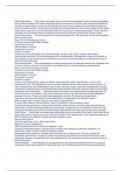
CAPM formula
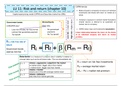
LU 11: Risk and return (chapter 10) • Model is based on comparison of returns on individual
investments and shares with return on market as a
Capital asset pricing model (CAPM) and Securities market line (SML)
whole.
• Company’s exposure to constant market fluctuations
High risk = Higher return
Low risk = Lower return
Government bonds Shares/Equity (market returns) is referred to as systematic (or
market) risk of a company.
CHEAPER why? More risky
- Less risk (virtually risk free) formal - No guaranteed • CAPM makes major and fundamental assumption:
contract that guarantees payment payments Linear relationship between the return on the shares
- Tax benefit - No Tax benefit of an individual company and return on market
portfolio.
Rf = risk free rate of
Ri = Rf + (Rm – Rf)
return
Government bonds
used as risk free
Beta-factor is a measure of a share’s return volatility in relation to
a broad index such as the all share index. The non-diversifiable risk
Rf = return on risk free investments
>1 shares = aggressive; outperform the market
+ market return: bigger return than market
- market return: bigger loss than market
Rm = average market return
=1 shares = neutral
(Rm – Rf) = market risk premium
returns are in line with average market return
<1 shares = defensive
less risky than market generally
LU 11: Risk and return (chapter 10) • Model is based on comparison of returns on individual
investments and shares with return on market as a
Capital asset pricing model (CAPM) and Securities market line (SML)
whole.
• Company’s exposure to constant market fluctuations
High risk = Higher return
Low risk = Lower return
Government bonds Shares/Equity (market returns) is referred to as systematic (or
market) risk of a company.
CHEAPER why? More risky
- Less risk (virtually risk free) formal - No guaranteed • CAPM makes major and fundamental assumption:
contract that guarantees payment payments Linear relationship between the return on the shares
- Tax benefit - No Tax benefit of an individual company and return on market
portfolio.
Rf = risk free rate of
Ri = Rf + (Rm – Rf)
return
Government bonds
used as risk free
Beta-factor is a measure of a share’s return volatility in relation to
a broad index such as the all share index. The non-diversifiable risk
Rf = return on risk free investments
>1 shares = aggressive; outperform the market
+ market return: bigger return than market
- market return: bigger loss than market
Rm = average market return
=1 shares = neutral
(Rm – Rf) = market risk premium
returns are in line with average market return
<1 shares = defensive
less risky than market generally