Module 1
Empirisme is de wetenschappelijke
methode. Door systematische,
onbevooroordeelde observaties van
zintuigen of instrumenten worden De Groot’s empirische cyclus
conclusies getrokken. 1. Observatie: verzamelen en
groeperen van empirische feiten
- Systematisch
2. Theorie: vorm een theorie op basis
- Doortastend
van observaties (indcutie)
- Independantly verifiable
3. Voorspelling: leidt een toetsbare
hypothese af uit je theorie (deductie)
s
Cyclu
4. Toetsing: voer een onderzoek uit om je
Producers vs Consumers hypothese te testen
Producers gebruiken onderzoeks- 5. Evaluatie: wat betekenen de
methoden om onderzoek te creëren. Vaak onderzoeksuitkomsten (nieuwe
professoren/onderzoekers. observaties) voor de theorie
Consumers gebruiken onderzoeks- Opnieuw de cyclus met aangepast
methoden om evt toepasbaar onderzoek te onderzoek
evalueren.
Als de voorspelling uitkomt wordt de
Types of research theorie ondersteund. Als de voorspelling
Basic research wordt gedaan om algemene niet uitkomt compliceert dit de theorie. Dan
kennis en begrip van psychologie uit te wordt deze aangepast.
breiden.
Applied research gaat over specifieke,
Methoden van wetenschappers
praktische, real-world problemen.
- Onderzoekers zijn empiristen
Translational research vertaalt de
- Verder onderzoeken dan 1 effect -> wie,
bevindingen van basic research naar
wanneer, waarom
toegepaste gebieden en zo bv
- Publiceren werk in peer-reviewed
behandelingen en interventie te
tijdschrift
ontwikkelen en testen.
- Wetenschappelijke communicatie door
bekritiseren/goedkeuren van
gepubliceerde artikelen
Goede theoriën worden ondersteund door - Merton’s normen:
data, zijn falsificeerbaar en Universalisme universalism
spaarzaam/simpel. Gemeenschappelijkheid communality
Ongeïnteresseerdheid disinterestedness
Georganiseerd skepticisme organized
skepticism
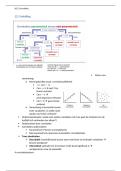
Theory-data cycle van Morling:
15
,
, 15
Keywords
Evidence based treatment:
therapies supported by research Disinterestedness:
scientists strive to discover the
Empiricism: truth, regardless of what is is. They accept
using evidence from the senses or what the data tell them and their
instruments that assist the senses as the background shouldn’t bias their
basis for conclusions (empiricists are interpretation or reporting of results.
systematic and rigorous and aim their work
to be independently verifiable) Organized skepticism:
Scientists question everything, including
Theory: their own theories, widely accepted ideas
set of statements that describes general and ‘ancient wisdom’.
principles about how variables relate to one
another Self-correcting:
it discovers it’s own mistaken theories and
Hypothesis/prediction: corrects them.
the specific outcome the
researcher will observe in a study if the Applied research:
theory is accurate addressing a practical problem while the
work is conducted in a real-world context.
Data:
a set of observations, that can Basic research:
either support or challenge a theory enhancing the general body of knowledge
Preregistered: Transitional research: attempting to
publicly stated (hypothesis) after the study translate the findings of basic research into
is designed, but before collecting any data applied areas
Replication:
study that is conducted again test
the consistency of the result
Weight of the evidence:
the collection of studies of the
same theory (including replications)
Falsifiability:
a theory that is falsifiable
should lead to hypotheses that could fail to
support the theory when tested out
Universalism:
the same preestablished criteria
apply to all scientist and research. Scientific
claims are are evaluated according to their
merit, independent of the researcher’s
credentials or reputation.
Communality:
scientific knowledge is created by a
community and its findings belong to the
community, therefore results should be
shared transparently.
15
Empirisme is de wetenschappelijke
methode. Door systematische,
onbevooroordeelde observaties van
zintuigen of instrumenten worden De Groot’s empirische cyclus
conclusies getrokken. 1. Observatie: verzamelen en
groeperen van empirische feiten
- Systematisch
2. Theorie: vorm een theorie op basis
- Doortastend
van observaties (indcutie)
- Independantly verifiable
3. Voorspelling: leidt een toetsbare
hypothese af uit je theorie (deductie)
s
Cyclu
4. Toetsing: voer een onderzoek uit om je
Producers vs Consumers hypothese te testen
Producers gebruiken onderzoeks- 5. Evaluatie: wat betekenen de
methoden om onderzoek te creëren. Vaak onderzoeksuitkomsten (nieuwe
professoren/onderzoekers. observaties) voor de theorie
Consumers gebruiken onderzoeks- Opnieuw de cyclus met aangepast
methoden om evt toepasbaar onderzoek te onderzoek
evalueren.
Als de voorspelling uitkomt wordt de
Types of research theorie ondersteund. Als de voorspelling
Basic research wordt gedaan om algemene niet uitkomt compliceert dit de theorie. Dan
kennis en begrip van psychologie uit te wordt deze aangepast.
breiden.
Applied research gaat over specifieke,
Methoden van wetenschappers
praktische, real-world problemen.
- Onderzoekers zijn empiristen
Translational research vertaalt de
- Verder onderzoeken dan 1 effect -> wie,
bevindingen van basic research naar
wanneer, waarom
toegepaste gebieden en zo bv
- Publiceren werk in peer-reviewed
behandelingen en interventie te
tijdschrift
ontwikkelen en testen.
- Wetenschappelijke communicatie door
bekritiseren/goedkeuren van
gepubliceerde artikelen
Goede theoriën worden ondersteund door - Merton’s normen:
data, zijn falsificeerbaar en Universalisme universalism
spaarzaam/simpel. Gemeenschappelijkheid communality
Ongeïnteresseerdheid disinterestedness
Georganiseerd skepticisme organized
skepticism
Theory-data cycle van Morling:
15
,
, 15
Keywords
Evidence based treatment:
therapies supported by research Disinterestedness:
scientists strive to discover the
Empiricism: truth, regardless of what is is. They accept
using evidence from the senses or what the data tell them and their
instruments that assist the senses as the background shouldn’t bias their
basis for conclusions (empiricists are interpretation or reporting of results.
systematic and rigorous and aim their work
to be independently verifiable) Organized skepticism:
Scientists question everything, including
Theory: their own theories, widely accepted ideas
set of statements that describes general and ‘ancient wisdom’.
principles about how variables relate to one
another Self-correcting:
it discovers it’s own mistaken theories and
Hypothesis/prediction: corrects them.
the specific outcome the
researcher will observe in a study if the Applied research:
theory is accurate addressing a practical problem while the
work is conducted in a real-world context.
Data:
a set of observations, that can Basic research:
either support or challenge a theory enhancing the general body of knowledge
Preregistered: Transitional research: attempting to
publicly stated (hypothesis) after the study translate the findings of basic research into
is designed, but before collecting any data applied areas
Replication:
study that is conducted again test
the consistency of the result
Weight of the evidence:
the collection of studies of the
same theory (including replications)
Falsifiability:
a theory that is falsifiable
should lead to hypotheses that could fail to
support the theory when tested out
Universalism:
the same preestablished criteria
apply to all scientist and research. Scientific
claims are are evaluated according to their
merit, independent of the researcher’s
credentials or reputation.
Communality:
scientific knowledge is created by a
community and its findings belong to the
community, therefore results should be
shared transparently.
15