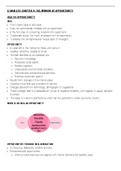
EI Man 214: Chapter 4: the window of oppourtunity
Idea vs oppourtunity
Idea
o Must create value & add value
o Does not automatically translate into an opportunity
o Is the first step of converting creativity into opportunity
o Traditionally enjoys too much emphasis from entrepreneurs
o Translates into entrepreneurial myopia (lack of foresight)
Opportunity
o Is a gap left in the market by those who serve it
o Qualities: attractive, durable & timely
o Normally identified by an individual who:
o Has prior knowledge
o Possesses social capital
o Exhibits cognition
o Understands environmental conditions
o Demonstrates entrepreneurial alertness
o Practices systematic search
o Results form changes in the market place
o Could be more than just a product or service
o Changes derived from technology, demography or regulations
o These changes lead to a disequilibrium (a loss of equilibrium/stability, with regards to supply, demand
& prices)
o This leads to market imperfections which has the potential to create economic returns
When is an idea an opportunity
Attractive
Durable
Idea Timely Opportunity
Anchored in
product/serv
ice
Opportunities through idea generation
o A conscious, deliberate, creative process
o Entrepreneurial opportunities
o When products/services are aligned with market demand and facilitate value
, Opportunity evaluation
5 basic questions
o Risk and rewards of this opportunity?
o Is this an attractive & sufficient market opportunity?
o Is the proposed solution feasible in terms of a technological and market perspective?
o Will there be a sustainable competitive advantage?
o Will the opportunity be lucrative?
Screening opportunities
o Important issues and aspects overlooked or underemphasised
o Helps entrepreneur to determine the potential of the opportunity
o Criteria used to screen opportunities:
o Industry & market issues
o Economics
o Harvest issues
o Management team
o Fatal flaw issues
o Personal criteria
o Strategic differentiation
Industry and market issues
o Market structure:
o Number of sellers present in a market
o Size distribution of sellers
o Product differentiation
o Entry & exit conditions
o Number of buyers present
o Demand sensitivity to price changes
o Market size:
o Large and growing market ideal
o Competitive threat low
o Substantial returns if small portion of market captured
o Market capacity
o Full capacity = demand outweighs supply
o Attractive & high potential
Idea vs oppourtunity
Idea
o Must create value & add value
o Does not automatically translate into an opportunity
o Is the first step of converting creativity into opportunity
o Traditionally enjoys too much emphasis from entrepreneurs
o Translates into entrepreneurial myopia (lack of foresight)
Opportunity
o Is a gap left in the market by those who serve it
o Qualities: attractive, durable & timely
o Normally identified by an individual who:
o Has prior knowledge
o Possesses social capital
o Exhibits cognition
o Understands environmental conditions
o Demonstrates entrepreneurial alertness
o Practices systematic search
o Results form changes in the market place
o Could be more than just a product or service
o Changes derived from technology, demography or regulations
o These changes lead to a disequilibrium (a loss of equilibrium/stability, with regards to supply, demand
& prices)
o This leads to market imperfections which has the potential to create economic returns
When is an idea an opportunity
Attractive
Durable
Idea Timely Opportunity
Anchored in
product/serv
ice
Opportunities through idea generation
o A conscious, deliberate, creative process
o Entrepreneurial opportunities
o When products/services are aligned with market demand and facilitate value
, Opportunity evaluation
5 basic questions
o Risk and rewards of this opportunity?
o Is this an attractive & sufficient market opportunity?
o Is the proposed solution feasible in terms of a technological and market perspective?
o Will there be a sustainable competitive advantage?
o Will the opportunity be lucrative?
Screening opportunities
o Important issues and aspects overlooked or underemphasised
o Helps entrepreneur to determine the potential of the opportunity
o Criteria used to screen opportunities:
o Industry & market issues
o Economics
o Harvest issues
o Management team
o Fatal flaw issues
o Personal criteria
o Strategic differentiation
Industry and market issues
o Market structure:
o Number of sellers present in a market
o Size distribution of sellers
o Product differentiation
o Entry & exit conditions
o Number of buyers present
o Demand sensitivity to price changes
o Market size:
o Large and growing market ideal
o Competitive threat low
o Substantial returns if small portion of market captured
o Market capacity
o Full capacity = demand outweighs supply
o Attractive & high potential