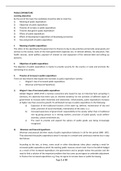
PUBLIC EXPENDITURE
Learning objectives
By the end of this topic the candidates should be able to state the;-
1) Meaning of public expenditure
2) Objectives of public expenditure
3) Theories of increase in public expenditure
4) Theories that govern public expenditure
5) Effects of public expenditure
6) Effects of development expenditure of developing economies
7) Size and growth of public expenditure
1. Meaning of public expenditure
This refers to the spending by the government to finance its day to day activities and provide social goods and
services to the society. Some of the main government expenses are; in national defense, fee education, free
health services, social welfare, payment of interest on and repayment of the national debt and setting up
pensions.
2. Objectives of public expenditure
The objective of public expenditure is mainly to provide security for the country or state and promote the
well-being of its citizens.
3. Theories of increase in public expenditure
There are two theories that explain the increases in public expenditure namely:-
i. Wagner’s law of increased public expenditure
ii. Wiseman and Peacock Hypothesis.
i) Wagner’s law of increased public expenditure
Adolph Wagner (1835-1917) a German economist who based his law on historical facts prevailing in
Germany. He observed that there was an inherent tendency for the activities of different layers of
government to increase both intensively and extensively. Unfortunately, public expenditure increases
at higher rate than economic growth. He attributed increase in public expenditure to the following-:
a) Expansion of the traditional function of the state e.g. defense, maintenance of law and
order, provision of social overheads, maintenance of the state. e.t.c
b) Increased awareness of government responsibility to the society rather than in traditional
role eg giving pension to it retiring workers, provision of public goods, social welfare
activities, culture enrichment etc.
c) The need to provide and expand the sphere of public goods was being increasingly
recognized.
ii) Wiseman and Peacock Hypothesis
Wiseman and peacock did their study of public expenditure behavior in UK for the period 1890- 1955.
They observed that public expenditure doesn’t increase in a smooth and continuous manner but in step
like fashion.
According to the two, at times, some social or other disturbances takes place creating a need for
increased public expenditure which the existing public revenue cannot meet. Due to the deficit budget
as a result of the increased expenditure, the government and its people review the position and the
need to find a solution of the important problem that has come up and agree to undertake adjustment
to finance the increased expenditure e.g. they can agree to increase taxes or public borrowing.
Page 1 of 10
, The time when the government and the people are deliberating on what to do to finance the
expenditure, is known as the ‘inspection effect.’ The movement from the older level of expenditure
and taxation to a new and a higher level is referred to as the displacement effect.
At a new tax tolerance level, (i.e. new expenditure level), people are now ready to tolerate a greater
burden of taxation and as a result, the general level of expenditure and revenue goes up. This way, the
public expenditure and revenue get stabilized at a new level until another disturbance occurs to cause
a displacement effect.
4. Theories that govern Public Expenditure
There are six main theories of public expenditure as follows:
i. The doctrine of Laissez faire
ii. Individual choice theory
iii. The authoritarian conception/ the organic theory
iv. Optimum level of public expenditure theory
v. The ballot box theory
vi. The positive theory of government expenditure
i) The doctrine of Laissez faire
This one is based on the principle of minimum state intervention in the working of the economy.
‘Governments are always and without exemption the greatest spendthrifts of society,’ according to
Adam Smith, because, they spend other people’s money. Adam Smith believed that individual people
acting in self-interest will promote public good under the guidance of the ‘invisible hand’. The
implication of this theory was a low level of public expenditure and taxation but the need for some
increase in public expenditure was conceded.
ii) Individual choice theory
Emphasis in theoretical discussion of public finance shifted to the consideration of the basis on which
collective decision in the public sector should be made. Writers such as Ferra (1850) advocated
individual choice as the basis of social choice and of collective decision making. The problem of this
approach was the aggregation of individual preferences and of relating them to policies.
iii) The authoritarian conception/organic theory
The organic theory avoided this difficulty, since it was based on the assumption that the decisions were
made by ruling group
iv) Optimum level of expenditure theory
Having accepted the need for some public expenditure, economists turned their attention to the
question of what was its desired level. This theory is associated with W. Stanley Jevons (1835- 1882), an
English Economist. The theory postulates that, as a person’s consumption increases, each additional
(marginal unit) of a good consumed gives lower satisfaction (utility) than the one before. Thus the
consumer experiences diminishing utility.
The theory is based on the relationship between the satisfaction derived from the consumption of
goods and services provided by that state and the sacrifice involved in paying taxes to finance public
expenditure.
Page 2 of 10
Learning objectives
By the end of this topic the candidates should be able to state the;-
1) Meaning of public expenditure
2) Objectives of public expenditure
3) Theories of increase in public expenditure
4) Theories that govern public expenditure
5) Effects of public expenditure
6) Effects of development expenditure of developing economies
7) Size and growth of public expenditure
1. Meaning of public expenditure
This refers to the spending by the government to finance its day to day activities and provide social goods and
services to the society. Some of the main government expenses are; in national defense, fee education, free
health services, social welfare, payment of interest on and repayment of the national debt and setting up
pensions.
2. Objectives of public expenditure
The objective of public expenditure is mainly to provide security for the country or state and promote the
well-being of its citizens.
3. Theories of increase in public expenditure
There are two theories that explain the increases in public expenditure namely:-
i. Wagner’s law of increased public expenditure
ii. Wiseman and Peacock Hypothesis.
i) Wagner’s law of increased public expenditure
Adolph Wagner (1835-1917) a German economist who based his law on historical facts prevailing in
Germany. He observed that there was an inherent tendency for the activities of different layers of
government to increase both intensively and extensively. Unfortunately, public expenditure increases
at higher rate than economic growth. He attributed increase in public expenditure to the following-:
a) Expansion of the traditional function of the state e.g. defense, maintenance of law and
order, provision of social overheads, maintenance of the state. e.t.c
b) Increased awareness of government responsibility to the society rather than in traditional
role eg giving pension to it retiring workers, provision of public goods, social welfare
activities, culture enrichment etc.
c) The need to provide and expand the sphere of public goods was being increasingly
recognized.
ii) Wiseman and Peacock Hypothesis
Wiseman and peacock did their study of public expenditure behavior in UK for the period 1890- 1955.
They observed that public expenditure doesn’t increase in a smooth and continuous manner but in step
like fashion.
According to the two, at times, some social or other disturbances takes place creating a need for
increased public expenditure which the existing public revenue cannot meet. Due to the deficit budget
as a result of the increased expenditure, the government and its people review the position and the
need to find a solution of the important problem that has come up and agree to undertake adjustment
to finance the increased expenditure e.g. they can agree to increase taxes or public borrowing.
Page 1 of 10
, The time when the government and the people are deliberating on what to do to finance the
expenditure, is known as the ‘inspection effect.’ The movement from the older level of expenditure
and taxation to a new and a higher level is referred to as the displacement effect.
At a new tax tolerance level, (i.e. new expenditure level), people are now ready to tolerate a greater
burden of taxation and as a result, the general level of expenditure and revenue goes up. This way, the
public expenditure and revenue get stabilized at a new level until another disturbance occurs to cause
a displacement effect.
4. Theories that govern Public Expenditure
There are six main theories of public expenditure as follows:
i. The doctrine of Laissez faire
ii. Individual choice theory
iii. The authoritarian conception/ the organic theory
iv. Optimum level of public expenditure theory
v. The ballot box theory
vi. The positive theory of government expenditure
i) The doctrine of Laissez faire
This one is based on the principle of minimum state intervention in the working of the economy.
‘Governments are always and without exemption the greatest spendthrifts of society,’ according to
Adam Smith, because, they spend other people’s money. Adam Smith believed that individual people
acting in self-interest will promote public good under the guidance of the ‘invisible hand’. The
implication of this theory was a low level of public expenditure and taxation but the need for some
increase in public expenditure was conceded.
ii) Individual choice theory
Emphasis in theoretical discussion of public finance shifted to the consideration of the basis on which
collective decision in the public sector should be made. Writers such as Ferra (1850) advocated
individual choice as the basis of social choice and of collective decision making. The problem of this
approach was the aggregation of individual preferences and of relating them to policies.
iii) The authoritarian conception/organic theory
The organic theory avoided this difficulty, since it was based on the assumption that the decisions were
made by ruling group
iv) Optimum level of expenditure theory
Having accepted the need for some public expenditure, economists turned their attention to the
question of what was its desired level. This theory is associated with W. Stanley Jevons (1835- 1882), an
English Economist. The theory postulates that, as a person’s consumption increases, each additional
(marginal unit) of a good consumed gives lower satisfaction (utility) than the one before. Thus the
consumer experiences diminishing utility.
The theory is based on the relationship between the satisfaction derived from the consumption of
goods and services provided by that state and the sacrifice involved in paying taxes to finance public
expenditure.
Page 2 of 10