BLGY1232 Post-transcriptional initiation control and regulatory RNAs
Organization of the trp operon
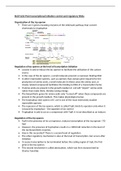
There are 5 genes encoding enzymes of the shikimate pathway that convert
chorismate to tryptophan
Regulation of trp operon at the level of transcription initiation
• Lactose is said to induce the lac operon to facilitate the utilisation of this carbon
source
• In the case of the lac operon, a small molecule prevents a repressor binding DNA
• In other repressible systems, such as operons that contain gene required for the
production of amino acids, a small molecule (in these cases the amino acid, or
closely related compound) facilitates the binding to DNA of a transcription factor
• If amino acids are present in the growth medium E. coli will “import” amino acids
rather than make them, thereby saving energy.
• The biosynthetic genes for amino acids only “turned off” when these compounds are
present in the growth medium. This makes physiological sense
• The tryptophan (trp) operon of E. coli is one of the most extensively studied
repressible operons
• The repressor of the trp operon, which is called TrpR, binds its operator only when it
is bound by tryptophan – the opposite of lac control
• Tryptophan is said to act as a corepressor with TrpR. It is not described as an inducer.
Regulation of the trp operon
• TrpR in the presence of its co-repressor, reduces transcription of the trp operon ~70-
fold
• However, the presence of tryptophan results in a 1000-fold reduction in the level of
the trp biosynthetic enzymes.
• How is this reconciled? There is a second level of regulation
• The other regulatory mechanism is also at the level of transcription, but occurs after
initiation
• It causes transcription to be terminated before the coding region of trpE, the first
gene in the trp operon
• This second mechanism is called attenuation, which was first characterised by
Charles Yanofsky
, • Attenuation can regulate transcription level by a factor of 8 to 10, and combined
with the repression mechanism, 560-700 fold.
• The cis-acting regulatory elements are contained within the 5’ leader of the mRNA
(originally designated trpL), i.e. the segment between the 5’ end and the
translational start codon of trpE
The cis-acting players in attenuation
• Within the 5’ leader (trpL) there is a sequence called the attenuator
• This sequence contains a short open reading frame that contains two trp codons and
four segments that can form three alternative secondary structures. The first of
these segments contains the trp codons.
cis-regulatory elements (CREs) are regions of non-coding nucleic acid that regulate
the expression of co-localised genes. The Latin prefix cis translates to “on this side”.
CREs are found in the vicinity of the gene, or genes, they regulate and they typically
regulate gene expression by functioning as binding sites for other factors (not limited
to proteins).
trans-acting factors encode diffusible factors that can regulate the expression of
genes at distance. It translates to "acting from a different side".
The trans-acting players in attenuation
• The ribosome, RNA polymerase and tryptophan itself. No other components
• The close coupling of transcription and translation in prokaryotes critical to the
mechanism of attenuation.
Priming the attenuation switch
• Transcription is initiate and soon after the RNA polymerase passes the ATG of the
leader peptide in the DNA, a ribosome loads onto the corresponding AUG of the
partly synthesised mRNA and begins translation of the coding region of the leader
peptide.
• What happens next depends on the availability of charged tryptophan tRNAs.
Organization of the trp operon
There are 5 genes encoding enzymes of the shikimate pathway that convert
chorismate to tryptophan
Regulation of trp operon at the level of transcription initiation
• Lactose is said to induce the lac operon to facilitate the utilisation of this carbon
source
• In the case of the lac operon, a small molecule prevents a repressor binding DNA
• In other repressible systems, such as operons that contain gene required for the
production of amino acids, a small molecule (in these cases the amino acid, or
closely related compound) facilitates the binding to DNA of a transcription factor
• If amino acids are present in the growth medium E. coli will “import” amino acids
rather than make them, thereby saving energy.
• The biosynthetic genes for amino acids only “turned off” when these compounds are
present in the growth medium. This makes physiological sense
• The tryptophan (trp) operon of E. coli is one of the most extensively studied
repressible operons
• The repressor of the trp operon, which is called TrpR, binds its operator only when it
is bound by tryptophan – the opposite of lac control
• Tryptophan is said to act as a corepressor with TrpR. It is not described as an inducer.
Regulation of the trp operon
• TrpR in the presence of its co-repressor, reduces transcription of the trp operon ~70-
fold
• However, the presence of tryptophan results in a 1000-fold reduction in the level of
the trp biosynthetic enzymes.
• How is this reconciled? There is a second level of regulation
• The other regulatory mechanism is also at the level of transcription, but occurs after
initiation
• It causes transcription to be terminated before the coding region of trpE, the first
gene in the trp operon
• This second mechanism is called attenuation, which was first characterised by
Charles Yanofsky
, • Attenuation can regulate transcription level by a factor of 8 to 10, and combined
with the repression mechanism, 560-700 fold.
• The cis-acting regulatory elements are contained within the 5’ leader of the mRNA
(originally designated trpL), i.e. the segment between the 5’ end and the
translational start codon of trpE
The cis-acting players in attenuation
• Within the 5’ leader (trpL) there is a sequence called the attenuator
• This sequence contains a short open reading frame that contains two trp codons and
four segments that can form three alternative secondary structures. The first of
these segments contains the trp codons.
cis-regulatory elements (CREs) are regions of non-coding nucleic acid that regulate
the expression of co-localised genes. The Latin prefix cis translates to “on this side”.
CREs are found in the vicinity of the gene, or genes, they regulate and they typically
regulate gene expression by functioning as binding sites for other factors (not limited
to proteins).
trans-acting factors encode diffusible factors that can regulate the expression of
genes at distance. It translates to "acting from a different side".
The trans-acting players in attenuation
• The ribosome, RNA polymerase and tryptophan itself. No other components
• The close coupling of transcription and translation in prokaryotes critical to the
mechanism of attenuation.
Priming the attenuation switch
• Transcription is initiate and soon after the RNA polymerase passes the ATG of the
leader peptide in the DNA, a ribosome loads onto the corresponding AUG of the
partly synthesised mRNA and begins translation of the coding region of the leader
peptide.
• What happens next depends on the availability of charged tryptophan tRNAs.