BLGY1232 Interactions between genes
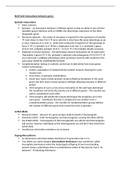
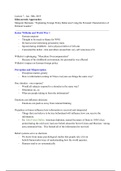
Epistatic interactions
Most common
Epistasis – an interaction between 2 different genes so that an allele of one of them
(epistatic gene) interferes with or inhibits the phenotypic expression of the other
(hypostatic gene)
Recessive epistasis – the action of one gene is required for the expression of another
coat colour in mice 9:4:3 Aa cc and AA cc mice have the same phenotype as aa
cc mice, Epistasis of cc over A-, white hairs produced irrespective of the genotype at
locus A C is epistatic to A Not a single gene trait (not 3:1), probably 2 genes
(9+6+1=16), probably epistasis (9+6+1 = 9+4+3) 1/16 probably double recessive
Duplicate recessive epistasis – the phenotype requires both genes for its expression
probably 2 genes (9+7=16), probably 2 epistatic interacting genes (9+4+3=9+7)
you cannot get a wildtype phenotypes when grossing 2 parents with mutants in the
same gene (GENETIC COMPLEMENTATION)
Complementation testing is routinely carried out to determine how many genes
control a phenotype;
1. Collect a population of independently isolated mutants showing the same
mutant trait
2. Cross them, in pairwise combinations
3. Count how many crosses produce mutant offspring (mutations in the same
gene) and how many crosses produce wildtype offspring (mutants in different
genes)
4. If the progeny of such a cross show restoration of the wild-type phenotype
the mutations carried by the parents are in different genes – the mutants are
said to complement each other
5. If the progeny still exhibit the mutant phenotype the mutations are in the
same gene – individuals that don’t complement one another form a
complementation group – the number of complementation groups defines
the number of different genes that control the trait in question
Lethal alleles
Recessive lethal – absence of a gene product leads to death in homozygotes
Dominant lethal – both homozygotes and heterozygotes carrying the allele will die
Sex linked lethal – homozygotes of the homogametic sex will die and heterozygotes
will survive, however individuals of the heterogametic sex will die if they inherit the
lethal allele
Usually loss-of-function mutations are recessive
Segregation patterns
Co-dominance and Intermediate dominance F2 generation has 1:2:1
Two alleles are said to display intermediate dominance (also sometimes called
incomplete dominance) when the heterozgote offspring of two true-breeding
parents shows a phenotype that is not identical to either of the parents, but is “in-
between” blending inheritance
Epistatic interactions
Most common
Epistasis – an interaction between 2 different genes so that an allele of one of them
(epistatic gene) interferes with or inhibits the phenotypic expression of the other
(hypostatic gene)
Recessive epistasis – the action of one gene is required for the expression of another
coat colour in mice 9:4:3 Aa cc and AA cc mice have the same phenotype as aa
cc mice, Epistasis of cc over A-, white hairs produced irrespective of the genotype at
locus A C is epistatic to A Not a single gene trait (not 3:1), probably 2 genes
(9+6+1=16), probably epistasis (9+6+1 = 9+4+3) 1/16 probably double recessive
Duplicate recessive epistasis – the phenotype requires both genes for its expression
probably 2 genes (9+7=16), probably 2 epistatic interacting genes (9+4+3=9+7)
you cannot get a wildtype phenotypes when grossing 2 parents with mutants in the
same gene (GENETIC COMPLEMENTATION)
Complementation testing is routinely carried out to determine how many genes
control a phenotype;
1. Collect a population of independently isolated mutants showing the same
mutant trait
2. Cross them, in pairwise combinations
3. Count how many crosses produce mutant offspring (mutations in the same
gene) and how many crosses produce wildtype offspring (mutants in different
genes)
4. If the progeny of such a cross show restoration of the wild-type phenotype
the mutations carried by the parents are in different genes – the mutants are
said to complement each other
5. If the progeny still exhibit the mutant phenotype the mutations are in the
same gene – individuals that don’t complement one another form a
complementation group – the number of complementation groups defines
the number of different genes that control the trait in question
Lethal alleles
Recessive lethal – absence of a gene product leads to death in homozygotes
Dominant lethal – both homozygotes and heterozygotes carrying the allele will die
Sex linked lethal – homozygotes of the homogametic sex will die and heterozygotes
will survive, however individuals of the heterogametic sex will die if they inherit the
lethal allele
Usually loss-of-function mutations are recessive
Segregation patterns
Co-dominance and Intermediate dominance F2 generation has 1:2:1
Two alleles are said to display intermediate dominance (also sometimes called
incomplete dominance) when the heterozgote offspring of two true-breeding
parents shows a phenotype that is not identical to either of the parents, but is “in-
between” blending inheritance