
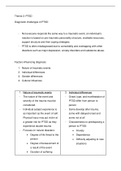
Theme 2: PTSD
Diagnostic challenges of PTSD
- Not everyone responds the same way to a traumatic event, an individual’s
reaction is based on pre-traumatic personality structure, available resources,
support structure and their coping strategies
- PTSD is often misdiagnosed due to comorbidity and overlapping with other
disorders such as major depression, anxiety disorders and substance abuse.
Factors influencing diagnosis
1. Nature of traumatic events
2. Individual differences
3. Gender differences
4. Cultural influences
1. Nature of traumatic events 2. Individual differences
- The nature of the event and - Onset, type, and manifestation of
severity of the trauma must be PTSD differ from person to
considered. person
- Individual subject experience is - Some develop after trauma,
as important as the event of self. some with delayed onset and
Physical injury may put victim at some not at all
a greater risk for PTSD as they - Characteristics to predisposing a
experience double trauma person to PTSD:
- Focuses on natural disasters: • Anxiety
• Degree of life threat to the • Dependence
person • Difficulty adjusting to new
• Degree of bereavement of situations
a result of the event
• Duration of suffering
, • Amount of geographic • Prior history of
placement psychological problems
• Cause of the disaster: etc.
man made disaster have a
more negative effect.
3. Gender differences 4. Cultural influences
- PTSD is more common amongst - Trauma may be defined in terms
females than males across their of socio-cultural factors.
lifespan Individual interpretation of an
- Women present more with event will be influenced by
PTSD, helplessness, anxiety, individual frame of reference, this
and depression, while males will have an influence in
present more with alcohol abuse, diagnosis.
aggression, and physical - Not all reactions are culturally
complaints acceptable
- Females experience PTSD for - Sex role socialisation may lead
longer durations than males men and women to respond
- An increased risk for PTSD for differently to symptoms of
females can be attributed to a distress and be more or less
greater likelihood of exposure to likely to report symptoms,
traumatic events such as rape - Cultural norms that surround
and other forms of personal different groups may explain the
violence. variability in presenting with a
- Within populations frequently disorder
exposed to traumatic events, - Psychology has not taken an
such as South Africa, gender interest in cultural diversity, to
differences in risk for PTSD are remain relevant, the discipline
non-significant will have to take cultural
differences into consideration
- The DSM is primarily a
Eurocentric model, which may
result in misdiagnosis in South
Africa. It is necessary to have
Diagnostic challenges of PTSD
- Not everyone responds the same way to a traumatic event, an individual’s
reaction is based on pre-traumatic personality structure, available resources,
support structure and their coping strategies
- PTSD is often misdiagnosed due to comorbidity and overlapping with other
disorders such as major depression, anxiety disorders and substance abuse.
Factors influencing diagnosis
1. Nature of traumatic events
2. Individual differences
3. Gender differences
4. Cultural influences
1. Nature of traumatic events 2. Individual differences
- The nature of the event and - Onset, type, and manifestation of
severity of the trauma must be PTSD differ from person to
considered. person
- Individual subject experience is - Some develop after trauma,
as important as the event of self. some with delayed onset and
Physical injury may put victim at some not at all
a greater risk for PTSD as they - Characteristics to predisposing a
experience double trauma person to PTSD:
- Focuses on natural disasters: • Anxiety
• Degree of life threat to the • Dependence
person • Difficulty adjusting to new
• Degree of bereavement of situations
a result of the event
• Duration of suffering
, • Amount of geographic • Prior history of
placement psychological problems
• Cause of the disaster: etc.
man made disaster have a
more negative effect.
3. Gender differences 4. Cultural influences
- PTSD is more common amongst - Trauma may be defined in terms
females than males across their of socio-cultural factors.
lifespan Individual interpretation of an
- Women present more with event will be influenced by
PTSD, helplessness, anxiety, individual frame of reference, this
and depression, while males will have an influence in
present more with alcohol abuse, diagnosis.
aggression, and physical - Not all reactions are culturally
complaints acceptable
- Females experience PTSD for - Sex role socialisation may lead
longer durations than males men and women to respond
- An increased risk for PTSD for differently to symptoms of
females can be attributed to a distress and be more or less
greater likelihood of exposure to likely to report symptoms,
traumatic events such as rape - Cultural norms that surround
and other forms of personal different groups may explain the
violence. variability in presenting with a
- Within populations frequently disorder
exposed to traumatic events, - Psychology has not taken an
such as South Africa, gender interest in cultural diversity, to
differences in risk for PTSD are remain relevant, the discipline
non-significant will have to take cultural
differences into consideration
- The DSM is primarily a
Eurocentric model, which may
result in misdiagnosis in South
Africa. It is necessary to have


