Week 1
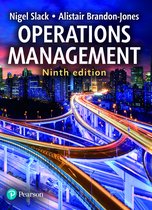
Operations management is the activity of managing the resources which are devoted to the
production and delivery of products and services. → belangrijk, toetsvraag
Het managen van operationele processen is het managen van de mensen en middelen die
toebedeeld zijn aan het maken en leveren van producten en diensten.
Analyis at three levels (vb):
1. The supply network – flow between operations → meerdere bedrijven die samen iets
opleveren
2. The operation – flow between processes → binnen een organisatie waarbij processen door
verschillende afdelingen lopen
3. The set and props manufacturing process → de activiteiten binnen een afdeling
Pdca → plan, do, check, act
- Richten → P
- Inrichten → P
- Verrichten → D
- Verbeteren C → A
DMAIC cycle → define, measure, analyze, improve, control
Wat is operations management?
- Prestatie-indicatoren voor het operationele strategie
- Primaire proces
- Supply chain
- Organisatie risico’s
4V model → komt vaak in toets
- Volume → hoge volume heeft een hoge herhaalbaarheid in het proces
- Variety → Variëteit in productie, hoeveel verschillende dingen maken of doen wij
- Variaton → Klantvraag, diversiteit van de vraag
- Visibilty → zichtbaarheid
It is important to understand how different operations are positioned on the four vs. is there
consistency in the organization?
Is their position where it should be?
Are the strategic implications of the position in the model clear?
,Week 2
Three levels of operations performance → belangrijk voor toets
Societal level – operations sustainability
Strategic level – operations strategic impact
Operational level – operations performance objectives
Societal level:
,Strategic level:
Operational level:
, External and internal benefits of conformance quality:
Irrespective of a product or service’s specification quality, producing it so it conforms to its
specification consistently brings benefits to any operation.
Externally – it enhances the product or service in the market, or at least avoids customer complaints.
Internally – it brings other benefits to the operation
- It prevents errors slowing down throughout speed
- It prevents errors causing internal unreliability and low dependability
- It prevents errors causing wasted time and effort, therefore saving cost.
External and internal benefits of speed:
External – it means the elapsed time between a customer asking for a product or service and getting
it (in a satisfactory condition)
It often enhances the value of the product or service to customers.
Internally – it brings other benefits to the operation
- It helps to overcome internal problems by maintaining dependability
- It reduces the need to manage transformed resources as they pass through the operation,
therefore saving cost.
External and internal benefits of dependability
Externally – it enhances the product or service in the market, or at least avoids customer complaints.
Internally – it brings other benefits to the operation
- It prevents late delivery slowing down throughout speed
- It prevents lateness causing disruption and wasted time and effort, therefore saving cost.
External and internal benefits of flexibility
Externally – it enhances the product or service in the market, because it provides more choice of the
customer and shorter time to market for new products
Internally – it brings other benefits to the operation
- It improves quality, dependability and speed because the organization can adapt to changes
in the environment.
Operations management is the activity of managing the resources which are devoted to the
production and delivery of products and services. → belangrijk, toetsvraag
Het managen van operationele processen is het managen van de mensen en middelen die
toebedeeld zijn aan het maken en leveren van producten en diensten.
Analyis at three levels (vb):
1. The supply network – flow between operations → meerdere bedrijven die samen iets
opleveren
2. The operation – flow between processes → binnen een organisatie waarbij processen door
verschillende afdelingen lopen
3. The set and props manufacturing process → de activiteiten binnen een afdeling
Pdca → plan, do, check, act
- Richten → P
- Inrichten → P
- Verrichten → D
- Verbeteren C → A
DMAIC cycle → define, measure, analyze, improve, control
Wat is operations management?
- Prestatie-indicatoren voor het operationele strategie
- Primaire proces
- Supply chain
- Organisatie risico’s
4V model → komt vaak in toets
- Volume → hoge volume heeft een hoge herhaalbaarheid in het proces
- Variety → Variëteit in productie, hoeveel verschillende dingen maken of doen wij
- Variaton → Klantvraag, diversiteit van de vraag
- Visibilty → zichtbaarheid
It is important to understand how different operations are positioned on the four vs. is there
consistency in the organization?
Is their position where it should be?
Are the strategic implications of the position in the model clear?
,Week 2
Three levels of operations performance → belangrijk voor toets
Societal level – operations sustainability
Strategic level – operations strategic impact
Operational level – operations performance objectives
Societal level:
,Strategic level:
Operational level:
, External and internal benefits of conformance quality:
Irrespective of a product or service’s specification quality, producing it so it conforms to its
specification consistently brings benefits to any operation.
Externally – it enhances the product or service in the market, or at least avoids customer complaints.
Internally – it brings other benefits to the operation
- It prevents errors slowing down throughout speed
- It prevents errors causing internal unreliability and low dependability
- It prevents errors causing wasted time and effort, therefore saving cost.
External and internal benefits of speed:
External – it means the elapsed time between a customer asking for a product or service and getting
it (in a satisfactory condition)
It often enhances the value of the product or service to customers.
Internally – it brings other benefits to the operation
- It helps to overcome internal problems by maintaining dependability
- It reduces the need to manage transformed resources as they pass through the operation,
therefore saving cost.
External and internal benefits of dependability
Externally – it enhances the product or service in the market, or at least avoids customer complaints.
Internally – it brings other benefits to the operation
- It prevents late delivery slowing down throughout speed
- It prevents lateness causing disruption and wasted time and effort, therefore saving cost.
External and internal benefits of flexibility
Externally – it enhances the product or service in the market, because it provides more choice of the
customer and shorter time to market for new products
Internally – it brings other benefits to the operation
- It improves quality, dependability and speed because the organization can adapt to changes
in the environment.