Learning Unit 5
The role of an auditor
• To provide reasonable assurance
→ on information prepared by someone else;
→ inspiring confidence that the information is true, fair and correct;
→ and enhances the degree of confidence of for the intended user.
Assurance engagement
In which a practitioner expresses a conclusion designed to enhance the degree of
confidence of the intended user.
Why do we need auditors/ Importance?
1. Split between ownership and management
→ Entities are owned by people who do not manage them (Shareholders v Directors).
→ Independent person to express an opinion of managers and their fair representation.
2. Accountability
→ Directors and Government can be held accountable for their actions.
→ Companies who affect the environment must be held accountable to relevant laws and regulations.
3. Confidence in financial information
→ Auditor provides credibility and assurance of the information provided by the business to the public.
,→ Availability of independently audited financial information assists in
i. Directing individual investors towards investments that suit their needs.
ii. Developing the economy as a whole by ensuring that funds are directed to firms who provide
evidence of sound management.
iii. Enabling government to collect taxed on an equitable basis.
iv. Inspiring confidence in how government handles its finances.
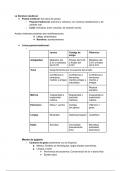
•Expresses an independent opinion on whether AFS of a
company, fairly represent the financial position and the results
of the company’s operations.
Registered (external)
auditor •NOT employee of company
•Must register with IRBA.
•Performs independent assignments on behalf of the board
of directors of the company.
•Relates to the evaluation of efficiency, economy and
effectiveness of company’s internal control.
Internal auditor
•Helps senior management reach responsibilities in running
the organisation by providing independent information about
company departments, divisions or subsidiaries.
•Employee of company.
•Similar to internal auditor but within government
departments.
•Evaluate and investigate the internal affairs of the
government
Government auditors •Called the ‘Auditor General’.
•Office is independent of the government departments in
which assignments are carried out.
•No registration with professional bodies required.
, •Investigate and gather evidence where there has been
alleged financial mismanagement, theft or fraud.
Forensic Auditors •Independent of the entity under investigation.
•Degree of confidence in the financial evidence is
increased.
•Specialise in a particular field.
•Environmental and VAT auditors.
Special purpose auditors •Enhance ‘correctness’ of FS.
Audit opinion
Is not assurance of the future viability of the company nor the efficiency of daily tasks by
management.
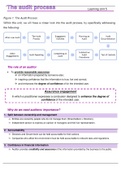
Pre-conditions for an assurance engagement.
, Reasonable assurance Limited assurance Absolute assurance
# “high but not absolute” level # Lower level of assurance # Complete assurance
of assurance. but still meaningful to users. # Not possible, since there are
# Positive assurance - Audit # Negative assurance – limitations
# AFS are fairly presented in Review
a positive form. # Conclusion is presented in a
# Phrase: “In our opinion the negative form that the
financial statements present statements are not fairly
fairly…” presented.
# Phrase: “Nothing came to
our attention which causes
us to believe that these FS
do not present fairly”.
The role of an auditor
• To provide reasonable assurance
→ on information prepared by someone else;
→ inspiring confidence that the information is true, fair and correct;
→ and enhances the degree of confidence of for the intended user.
Assurance engagement
In which a practitioner expresses a conclusion designed to enhance the degree of
confidence of the intended user.
Why do we need auditors/ Importance?
1. Split between ownership and management
→ Entities are owned by people who do not manage them (Shareholders v Directors).
→ Independent person to express an opinion of managers and their fair representation.
2. Accountability
→ Directors and Government can be held accountable for their actions.
→ Companies who affect the environment must be held accountable to relevant laws and regulations.
3. Confidence in financial information
→ Auditor provides credibility and assurance of the information provided by the business to the public.
,→ Availability of independently audited financial information assists in
i. Directing individual investors towards investments that suit their needs.
ii. Developing the economy as a whole by ensuring that funds are directed to firms who provide
evidence of sound management.
iii. Enabling government to collect taxed on an equitable basis.
iv. Inspiring confidence in how government handles its finances.
•Expresses an independent opinion on whether AFS of a
company, fairly represent the financial position and the results
of the company’s operations.
Registered (external)
auditor •NOT employee of company
•Must register with IRBA.
•Performs independent assignments on behalf of the board
of directors of the company.
•Relates to the evaluation of efficiency, economy and
effectiveness of company’s internal control.
Internal auditor
•Helps senior management reach responsibilities in running
the organisation by providing independent information about
company departments, divisions or subsidiaries.
•Employee of company.
•Similar to internal auditor but within government
departments.
•Evaluate and investigate the internal affairs of the
government
Government auditors •Called the ‘Auditor General’.
•Office is independent of the government departments in
which assignments are carried out.
•No registration with professional bodies required.
, •Investigate and gather evidence where there has been
alleged financial mismanagement, theft or fraud.
Forensic Auditors •Independent of the entity under investigation.
•Degree of confidence in the financial evidence is
increased.
•Specialise in a particular field.
•Environmental and VAT auditors.
Special purpose auditors •Enhance ‘correctness’ of FS.
Audit opinion
Is not assurance of the future viability of the company nor the efficiency of daily tasks by
management.
Pre-conditions for an assurance engagement.
, Reasonable assurance Limited assurance Absolute assurance
# “high but not absolute” level # Lower level of assurance # Complete assurance
of assurance. but still meaningful to users. # Not possible, since there are
# Positive assurance - Audit # Negative assurance – limitations
# AFS are fairly presented in Review
a positive form. # Conclusion is presented in a
# Phrase: “In our opinion the negative form that the
financial statements present statements are not fairly
fairly…” presented.
# Phrase: “Nothing came to
our attention which causes
us to believe that these FS
do not present fairly”.