

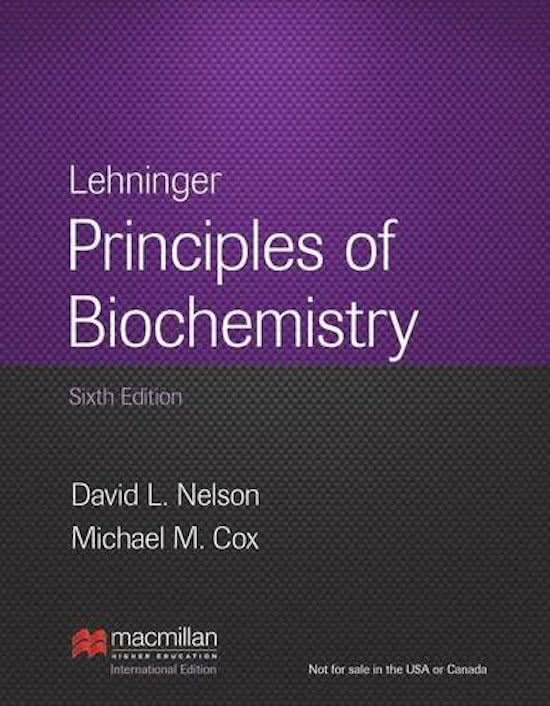
Lehninger Principles of Biochemistry 7th Edition
Nelson Test Bank
Table Of Contents
Table of Contents 1. The Foundations of Biochemistry 2. Water 3. Amino Acids, Peptides, and
Proteins 4. The Three-Dimensional Structure of Proteins 5. Protein Function 6. Enzymes 7.
Carbohydrates and Glycobiology 8. Nucleotides and Nucleic Acids 9. DNA-Based Information
Technologies 10. Lipids 11. Biological Membranes and Transport 12. Biosignaling 13. Bioenergetics and
Biochemical Reaction Types 14. Glycolysis, Gluconeogenesis, and the Pentose Phosphate Pathway 15.
Principles of Metabolic Regulation 16. The Citric Acid Cycle 17. Fatty Acid Catabolism 18. Amino Acid
Oxidation and the Production of Urea 19. Oxidative Phosphorylation and Photophosphorylation
Oxidative Phosphorylation 20. Carbohydrate Biosynthesis in Plants and Bacteria 21. Lipid Biosynthesis
22. Biosynthesis of Amino Acids, Nucleotides, and Related Molecules 23. Hormonal Regulation and
Integration of Mammalian Metabolism 24. Genes and Chromosomes 25. DNA Metabolism 26. RNA
Metabolism 27. Protein Metabolism 28. Regulation of Gene Expression
,1. In a bacterial cell, the DNA is in the:
A) cell envelope.
B) cell membrane.
C) nucleoid.
D) nucleus.
E) ribosomes.
2. A major change occurring in the evolution of eukaryotes from prokaryotes was the
development of:
A) DNA.
B) photosynthetic capability.
C) plasma membranes.
D) ribosomes.
E) the nucleus.
3. In eukaryotes, the nucleus is enclosed by a double membrane called the:
A) cell membrane.
B) nuclear envelope.
C) nucleolus.
D) nucleoplasm.
E) nucleosome.
4. The dimensions of living cells are limited, on the lower end by the minimum number of
biomolecules necessary for function, and on the upper end by the rate of diffusion of
solutes such as oxygen. Except for highly elongated cells, they usually have lengths and
diameters in the range of:
A) 0.1 m to 10 m.
B) 0.3 m to 30 m.
C) 0.3 m to 100 m.
D) 1 m to 100 m.
E) 1 m to 300 m.
5. Which group of single-celled microorganisms has many members found growing in
extreme environments?
A) bacteria
B) archaea
C) eukaryotes
D) heterotrophs
E) None of the answers is correct.
Page 1
, 6. The bacterium E. coli requires simple organic molecules for growth and energy—it is
therefore a:
A) chemoautotroph.
B) chemoheterotroph.
C) lithotroph.
D) photoautotroph.
E) photoheterotroph.
7. Which is a list of organelles?
A) mitochondria, chromatin, endoplasmic reticulum
B) peroxisomes, lysosomes, plasma membrane
C) proteasomes, peroxisomes, lysosomes
D) mitochondria, endoplasmic reticulum, peroxisomes
E) All of the answers are correct.
8. Which list has the cellular components arranged in order of INCREASING size?
A) amino acid < protein < mitochondrion < ribosome
B) amino acid < protein < ribosome < mitochondrion
C) amino acid < ribosome < protein < mitochondrion
D) protein < amino acid < mitochondrion < ribosome
E) protein < ribosome < mitochondrion < amino acid
9. The three-dimensional structure of macromolecules is formed and maintained primarily
through noncovalent interactions. Which one of the following is NOT considered a
noncovalent interaction?
A) carbon-carbon bonds
B) hydrogen bonds
C) hydrophobic interactions
D) ionic interactions
E) van der Waals interactions
10. Which element is NOT among the four most abundant in living organisms?
A) carbon
B) hydrogen
C) nitrogen
D) oxygen
E) phosphorus
Page 2
, 11. The four covalent bonds in methane (CH4) are arranged around carbon to give which
geometry?
A) linear
B) tetrahedral
C) trigonal bipyramidal
D) trigonal planar
E) trigonal pyramidal
12. What functional groups are present on this molecule?
A) ether and aldehyde
B) hydroxyl and aldehyde
C) hydroxyl and carboxylic acid
D) hydroxyl and ester
E) hydroxyl and ketone
13. The macromolecules that serve in the storage and transmission of genetic information
are:
A) carbohydrates.
B) lipids.
C) membranes.
D) nucleic acids.
E) proteins.
14. Stereoisomers that are nonsuperimposable mirror images of each other are known as:
A) anomers.
B) cis-trans isomers.
C) diastereoisomers.
D) enantiomers.
E) geometric isomers.
15. The catalog of all proteins functioning in a cell is the:
A) metabolome.
B) proteasome.
C) lysosome.
D) proteome.
E) genome.
Page 3
Nelson Test Bank
Table Of Contents
Table of Contents 1. The Foundations of Biochemistry 2. Water 3. Amino Acids, Peptides, and
Proteins 4. The Three-Dimensional Structure of Proteins 5. Protein Function 6. Enzymes 7.
Carbohydrates and Glycobiology 8. Nucleotides and Nucleic Acids 9. DNA-Based Information
Technologies 10. Lipids 11. Biological Membranes and Transport 12. Biosignaling 13. Bioenergetics and
Biochemical Reaction Types 14. Glycolysis, Gluconeogenesis, and the Pentose Phosphate Pathway 15.
Principles of Metabolic Regulation 16. The Citric Acid Cycle 17. Fatty Acid Catabolism 18. Amino Acid
Oxidation and the Production of Urea 19. Oxidative Phosphorylation and Photophosphorylation
Oxidative Phosphorylation 20. Carbohydrate Biosynthesis in Plants and Bacteria 21. Lipid Biosynthesis
22. Biosynthesis of Amino Acids, Nucleotides, and Related Molecules 23. Hormonal Regulation and
Integration of Mammalian Metabolism 24. Genes and Chromosomes 25. DNA Metabolism 26. RNA
Metabolism 27. Protein Metabolism 28. Regulation of Gene Expression
,1. In a bacterial cell, the DNA is in the:
A) cell envelope.
B) cell membrane.
C) nucleoid.
D) nucleus.
E) ribosomes.
2. A major change occurring in the evolution of eukaryotes from prokaryotes was the
development of:
A) DNA.
B) photosynthetic capability.
C) plasma membranes.
D) ribosomes.
E) the nucleus.
3. In eukaryotes, the nucleus is enclosed by a double membrane called the:
A) cell membrane.
B) nuclear envelope.
C) nucleolus.
D) nucleoplasm.
E) nucleosome.
4. The dimensions of living cells are limited, on the lower end by the minimum number of
biomolecules necessary for function, and on the upper end by the rate of diffusion of
solutes such as oxygen. Except for highly elongated cells, they usually have lengths and
diameters in the range of:
A) 0.1 m to 10 m.
B) 0.3 m to 30 m.
C) 0.3 m to 100 m.
D) 1 m to 100 m.
E) 1 m to 300 m.
5. Which group of single-celled microorganisms has many members found growing in
extreme environments?
A) bacteria
B) archaea
C) eukaryotes
D) heterotrophs
E) None of the answers is correct.
Page 1
, 6. The bacterium E. coli requires simple organic molecules for growth and energy—it is
therefore a:
A) chemoautotroph.
B) chemoheterotroph.
C) lithotroph.
D) photoautotroph.
E) photoheterotroph.
7. Which is a list of organelles?
A) mitochondria, chromatin, endoplasmic reticulum
B) peroxisomes, lysosomes, plasma membrane
C) proteasomes, peroxisomes, lysosomes
D) mitochondria, endoplasmic reticulum, peroxisomes
E) All of the answers are correct.
8. Which list has the cellular components arranged in order of INCREASING size?
A) amino acid < protein < mitochondrion < ribosome
B) amino acid < protein < ribosome < mitochondrion
C) amino acid < ribosome < protein < mitochondrion
D) protein < amino acid < mitochondrion < ribosome
E) protein < ribosome < mitochondrion < amino acid
9. The three-dimensional structure of macromolecules is formed and maintained primarily
through noncovalent interactions. Which one of the following is NOT considered a
noncovalent interaction?
A) carbon-carbon bonds
B) hydrogen bonds
C) hydrophobic interactions
D) ionic interactions
E) van der Waals interactions
10. Which element is NOT among the four most abundant in living organisms?
A) carbon
B) hydrogen
C) nitrogen
D) oxygen
E) phosphorus
Page 2
, 11. The four covalent bonds in methane (CH4) are arranged around carbon to give which
geometry?
A) linear
B) tetrahedral
C) trigonal bipyramidal
D) trigonal planar
E) trigonal pyramidal
12. What functional groups are present on this molecule?
A) ether and aldehyde
B) hydroxyl and aldehyde
C) hydroxyl and carboxylic acid
D) hydroxyl and ester
E) hydroxyl and ketone
13. The macromolecules that serve in the storage and transmission of genetic information
are:
A) carbohydrates.
B) lipids.
C) membranes.
D) nucleic acids.
E) proteins.
14. Stereoisomers that are nonsuperimposable mirror images of each other are known as:
A) anomers.
B) cis-trans isomers.
C) diastereoisomers.
D) enantiomers.
E) geometric isomers.
15. The catalog of all proteins functioning in a cell is the:
A) metabolome.
B) proteasome.
C) lysosome.
D) proteome.
E) genome.
Page 3

