NOTES FOR DELICT: 201 TUTORIAL LETTERS
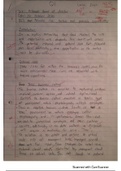
FACTUAL LEGAL CAUSATION:
Concerned with whether judging from the facts, a certain act of the
defendant caused the harm suffered by the plaintiff
‘condictio sine qua non’ test or ‘but for’ test is used to determine FC
X throws an apple at Y and he falls and breaks an arm, Y Admitted in
hospital and nurse forgets to close window and Y gets pneumonia.
There is a factual cause between X act and Pneumonia, injuries and
medical costs.
LEGAL CAUSATION:
Courts apply legal policy considerations rather than making a finding
on the facts.
‘flexible approach’ is used to determine FC, the main question is
whether the link between the act and result is close enough when
judged in a view of policy considerations.
Mokgethi and Bentley cases formulated the flexible approach
In mokgethi there was no legal cause between the injury caused by
defendant and the plaitiffs death because of a novus actus
interveniens. (x shoots y, y instructed by doctor to move for pressure
sores to heal, y did not, y died from pressure sores, x shoots y, y goes
to hospital and nurse forgets to close window and Y gets pneumonia,
no legal cause)
In alston and mafesa cases it was recognized that a novus actus
interveniens removes legal causation.
ACTIO LEGIS AQUILIAE: to claim patrimonial loss caused wrongfully
and culpably (intention not always required)
Inadvertently damaging someone’s ‘thing’ (drum, violin)
FACTUAL LEGAL CAUSATION:
Concerned with whether judging from the facts, a certain act of the
defendant caused the harm suffered by the plaintiff
‘condictio sine qua non’ test or ‘but for’ test is used to determine FC
X throws an apple at Y and he falls and breaks an arm, Y Admitted in
hospital and nurse forgets to close window and Y gets pneumonia.
There is a factual cause between X act and Pneumonia, injuries and
medical costs.
LEGAL CAUSATION:
Courts apply legal policy considerations rather than making a finding
on the facts.
‘flexible approach’ is used to determine FC, the main question is
whether the link between the act and result is close enough when
judged in a view of policy considerations.
Mokgethi and Bentley cases formulated the flexible approach
In mokgethi there was no legal cause between the injury caused by
defendant and the plaitiffs death because of a novus actus
interveniens. (x shoots y, y instructed by doctor to move for pressure
sores to heal, y did not, y died from pressure sores, x shoots y, y goes
to hospital and nurse forgets to close window and Y gets pneumonia,
no legal cause)
In alston and mafesa cases it was recognized that a novus actus
interveniens removes legal causation.
ACTIO LEGIS AQUILIAE: to claim patrimonial loss caused wrongfully
and culpably (intention not always required)
Inadvertently damaging someone’s ‘thing’ (drum, violin)