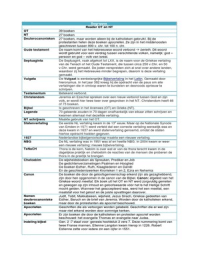
Financial & management accounting
Training 1 Chapter 1 Summary powerpoint:
Terms:
Stockholder: (aandelhouders) Someone who own a bit of a company. They have right on dividend.
Creditor: (schuldeiser) People who you own money. People how make money by giving loans
(leningen) and charging interest for them.
Dividends: The stockholder receives a portion of the profit the company makes.
Revenues: inkomsten
Expenses: uitgaven
Gain= all other profits you make buy selling things different than your inventory such as that you sell
your chairs and tables.
Fixed costs: vaste kosten/ non-current assets
Accounting: A system that collects and processes financial information about an organization. This
information is needed for decision makers such as managers (internal decision makers) and
Stockholders, creditors, investors, suppliers, customers. (external decision makers)
Financial accounting reports: For external decision makers. Less detailed information.
Managerial accounting reports: For the managers. Detailed plans and continuous performance
details.
The business operations:
1. Purchase parts and the labor.
2. Manufacture the product.
3. Sell the products to consumers.
4. External financing.
5. Collect cash from costumers and pay the creditors.
Accounting is used for decision making of planning and control.
Planning Describes haw the organization will achieve its goals.
Control The process of doing the plans and evaluating if the goals have been achieved.
Pretax income= inkomsten voor belasting
Income taxs expence= inkomstenbelastingen
Inventory: Items made to sell to customers.
Supplies: Things the company uses for themselves. For example: papers, pens.
1
, Balance sheet:
Balance sheet: (Balans) An overview of the amount of assets, liabilities and stockholders’ equity in a
company at one point in time.
Assets: Something of value that your company owns.
Liabilities: Depts (schulden) Anything your company owes someone.
Stockholders’ equity: (eigenvermogen) Assets- liabilities. Financing of the company provided by the
owners and shareholders.
Assets = Liabilities + stockholders’ equity.
Balance sheet:
Assets: Liabilities:
Short- term assets: Short-term liabilities:
Cash Accounts payable (Crediteuren)
Short-term investment Accrued expenses/ accrued
Accounts receivable liabilities: Amounts owed for
(debiteuren) wages, salaries and interest.
Notes receivable (a written Notes payable (borrowed
promise that another party is amount + interest)
going to pay) Income taxes payable: (The taxes
Inventory (voorraad) you owe the government)
Supplies Unearned revenue (customer
Prepaid expenses pays for services that not yet
(vooruitbetaalde kosten: Rent, have been performed.
insurance.)
Long-term liabilities:
Long-term loans
Mortgage (hypotheek)
Long-term assets: Long-term stockholders ‘equity:
Long -term investments Contributed capital
Equipment (eigenvermogen) Consists of:
Buildings Common stock and additional
Land paid in capital
Intangibles (f.e. patent, Retained earnings profit from the
goodwill) previous period that is saved so
- Accumulated depreciation they can spend it later.
(noted as a negative asset)
*Add the profit of the P&L account to retained earnings!
2
, Income statement:
Income statement: (winst&verliesrekening) Revenues and expenses a company has within a year. It
shows you the profit or loss.
Revenues: ontvangsten
Expenses: kosten
Revenues – expenses = Net income
Gross margin: revenues – costs of sold
goods
Operational margin: gross margin – selling
expenses and other costs.
Profit before tax= operational margin +
interest income and other income.
Profit acter tax= profit before tax – income
taxes
Profit and loss account:
Debit Credit
Expenses Revenues
Depreciation
expense
Total Total
3
, Training 2 Summary of PowerPoint chapter 2
Assets are divided in 2 categories:
Current assets: All the assets that the company expects to sell or convert in to cash within 1
year. For example: cash, bank, inventory (is always current).
Non-current assets: (fixed assets) Long term assets that won’t be used or sold in the next
year. F.e. intangible assets (goodwill (the price you pay for the good brand name. You pay for
future cash that you will earn because of the brand), patent, copywright).
Liquid assets: Assets that can easily be converted in to cash.
Rules of assets:
- Assets are measured in the historical worth. The value at which they were purchased.
- The assets are in order of liquidity. Least liquid first to most liquid.
Fiscal year: The period over which a financial report runs.
Accounts receivable: the amount customers owe to the company. (debiteuren)
Prepaid expenses: payments that are paid in advance to suppliers. (F.e. rent, insurance)
Depreciation: (afschrijving) The depreciation are calculated over the used time and not since they
were bought. Noted on the P&L account/ income statement.
Amortization: afschrijving for intangible assets.
Accumulated depreciation: Noted on the balance sheet as a negative number. In a T-account notes
on the credit side!
The amount of depreciation depends on:
1. The depreciable amount: purchase price – residual value (restwaarde)
2. Residual value= (restwaarde) The amount a company expects to receive at the end of the
economic value.
3. The estimate of the asset’s useful life (the time it is profitable to use).
Depreciation methods:
Straight line method (each year the same amount)
Accelerated depreciation (more in the first years)
Activity based method (hours machine is used)
Net book value: What an asset is really worth. Net book value= original price – depreciation
Intangible assets can be categorized as:
- Indefinite lives: an asset with a life frame. For example patent. It has depreciation.
- Indefinite lives: they do not depreciate. For example a brand name.
Liabilities are divided in 2 categories:
Current liabilities: the debt that are due within a year.
Non-current liabilities: Debts that are due minimal over a year.
4
Training 1 Chapter 1 Summary powerpoint:
Terms:
Stockholder: (aandelhouders) Someone who own a bit of a company. They have right on dividend.
Creditor: (schuldeiser) People who you own money. People how make money by giving loans
(leningen) and charging interest for them.
Dividends: The stockholder receives a portion of the profit the company makes.
Revenues: inkomsten
Expenses: uitgaven
Gain= all other profits you make buy selling things different than your inventory such as that you sell
your chairs and tables.
Fixed costs: vaste kosten/ non-current assets
Accounting: A system that collects and processes financial information about an organization. This
information is needed for decision makers such as managers (internal decision makers) and
Stockholders, creditors, investors, suppliers, customers. (external decision makers)
Financial accounting reports: For external decision makers. Less detailed information.
Managerial accounting reports: For the managers. Detailed plans and continuous performance
details.
The business operations:
1. Purchase parts and the labor.
2. Manufacture the product.
3. Sell the products to consumers.
4. External financing.
5. Collect cash from costumers and pay the creditors.
Accounting is used for decision making of planning and control.
Planning Describes haw the organization will achieve its goals.
Control The process of doing the plans and evaluating if the goals have been achieved.
Pretax income= inkomsten voor belasting
Income taxs expence= inkomstenbelastingen
Inventory: Items made to sell to customers.
Supplies: Things the company uses for themselves. For example: papers, pens.
1
, Balance sheet:
Balance sheet: (Balans) An overview of the amount of assets, liabilities and stockholders’ equity in a
company at one point in time.
Assets: Something of value that your company owns.
Liabilities: Depts (schulden) Anything your company owes someone.
Stockholders’ equity: (eigenvermogen) Assets- liabilities. Financing of the company provided by the
owners and shareholders.
Assets = Liabilities + stockholders’ equity.
Balance sheet:
Assets: Liabilities:
Short- term assets: Short-term liabilities:
Cash Accounts payable (Crediteuren)
Short-term investment Accrued expenses/ accrued
Accounts receivable liabilities: Amounts owed for
(debiteuren) wages, salaries and interest.
Notes receivable (a written Notes payable (borrowed
promise that another party is amount + interest)
going to pay) Income taxes payable: (The taxes
Inventory (voorraad) you owe the government)
Supplies Unearned revenue (customer
Prepaid expenses pays for services that not yet
(vooruitbetaalde kosten: Rent, have been performed.
insurance.)
Long-term liabilities:
Long-term loans
Mortgage (hypotheek)
Long-term assets: Long-term stockholders ‘equity:
Long -term investments Contributed capital
Equipment (eigenvermogen) Consists of:
Buildings Common stock and additional
Land paid in capital
Intangibles (f.e. patent, Retained earnings profit from the
goodwill) previous period that is saved so
- Accumulated depreciation they can spend it later.
(noted as a negative asset)
*Add the profit of the P&L account to retained earnings!
2
, Income statement:
Income statement: (winst&verliesrekening) Revenues and expenses a company has within a year. It
shows you the profit or loss.
Revenues: ontvangsten
Expenses: kosten
Revenues – expenses = Net income
Gross margin: revenues – costs of sold
goods
Operational margin: gross margin – selling
expenses and other costs.
Profit before tax= operational margin +
interest income and other income.
Profit acter tax= profit before tax – income
taxes
Profit and loss account:
Debit Credit
Expenses Revenues
Depreciation
expense
Total Total
3
, Training 2 Summary of PowerPoint chapter 2
Assets are divided in 2 categories:
Current assets: All the assets that the company expects to sell or convert in to cash within 1
year. For example: cash, bank, inventory (is always current).
Non-current assets: (fixed assets) Long term assets that won’t be used or sold in the next
year. F.e. intangible assets (goodwill (the price you pay for the good brand name. You pay for
future cash that you will earn because of the brand), patent, copywright).
Liquid assets: Assets that can easily be converted in to cash.
Rules of assets:
- Assets are measured in the historical worth. The value at which they were purchased.
- The assets are in order of liquidity. Least liquid first to most liquid.
Fiscal year: The period over which a financial report runs.
Accounts receivable: the amount customers owe to the company. (debiteuren)
Prepaid expenses: payments that are paid in advance to suppliers. (F.e. rent, insurance)
Depreciation: (afschrijving) The depreciation are calculated over the used time and not since they
were bought. Noted on the P&L account/ income statement.
Amortization: afschrijving for intangible assets.
Accumulated depreciation: Noted on the balance sheet as a negative number. In a T-account notes
on the credit side!
The amount of depreciation depends on:
1. The depreciable amount: purchase price – residual value (restwaarde)
2. Residual value= (restwaarde) The amount a company expects to receive at the end of the
economic value.
3. The estimate of the asset’s useful life (the time it is profitable to use).
Depreciation methods:
Straight line method (each year the same amount)
Accelerated depreciation (more in the first years)
Activity based method (hours machine is used)
Net book value: What an asset is really worth. Net book value= original price – depreciation
Intangible assets can be categorized as:
- Indefinite lives: an asset with a life frame. For example patent. It has depreciation.
- Indefinite lives: they do not depreciate. For example a brand name.
Liabilities are divided in 2 categories:
Current liabilities: the debt that are due within a year.
Non-current liabilities: Debts that are due minimal over a year.
4