Sociology Week 5
Embodiment → The lived experience of one’s own body
Implicit within the concept of embodiment is a sense of dynamism or constant shifting
meanings and understandings. Embodiment is experienced within particular historical,
cultural, political, and societal frames, and these are also shaped by gender and race” (Jaye,
2004: 41 42).
…the way that individuals negotiate their everyday lives via the utility of their bodies, and
how they mediate, interpret, and interact with their physical and social environments.
The context of the BPS and EF in relation to other healthcare models
EF → broad holistic framework based on clinical, psychological, social, and patient
knowledge
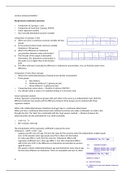
4 realms of bodily knowledge that make up EF
- Physiological
- Phenomenological
- Social
- Clinical
3 embodiment states/conditions (states refer to patient and their experiences of health and
illness)
- Embodiment – state of wellbeing
- Disembodiment – state of disruption
- Re-embodiment – state of re-integration into well-being
Illness behaviour, help and health seeking, HC treatment or management and the role of HCPs
are often key to disembodiment and re-embodiment
These states can be considered as patients transition through health, illness, and the restoration
of health to provide holistic care
, 1. Physiological Body
The physical, material, or corporeal body is made up of two key components:
- The objective anatomical form and
- It’s physiological function
e.g., bodily systems: cardiovascular, respiratory, central nervous system, gastrointestinal,
genitourinary, liver & portal systems, etc
The physiological body is where disease (or the effects thereof) can be objectively seen,
measured, diagnosed, targeted for repair or intervention & where health can be seen to
return/not.
We usually only become aware of (it/us) when it is diseased / dysfunctional
2. Phenomenological Body (knowledge and experience)
Who am I? : Autonomous / Sociogenic?
Self/person’s identity, personality, understandings, memories, awareness, & experience of
themselves as/in a body AND their subjective, emotional, psychological, spiritual meanings,
interpretations, expectations, values, & feelings (that make up ‘me’)
An individual’s subjective awareness, understanding, meanings, interpretation, and
experience of the body
An intermediary position shaped both by the physiological state the social context
Is accessed in taking patient histories, developing the doctor patient relationship, and in
developing chronic illness management plans with the patient.
It helps us understand the illness experience, patient’s worldview, impact of the illness,
patient fears and expectations of treatment and HC. Thus, to improve treatment, outcomes,
and HC.
3. Social Body (knowledge, perspectives, ideologies)
The socio-cultural and political framework used to define, constitute, give value, and meaning
to the patient body.
Is connected to the processes through which an individual becomes part of a social
‘group’ in society (race, class, gender, age, able-bodied, healthy, etc.)
The social body shows us the collective attitudes about bodies, health, and illness within
cultural groups and across society.
“The gaze’’ determines the so-called normal vs. stigmatized bodies and determines what is
socially/culturally ‘’taboo’’.
The social body also enables us to consider psychological, socio-cultural, and economic effects
and implications of the diagnosis, disease progression, side effects of treatment, and lifestyle
changes that will come about as a result of disease, illness, sickness, treatment, and care.
Embodiment → The lived experience of one’s own body
Implicit within the concept of embodiment is a sense of dynamism or constant shifting
meanings and understandings. Embodiment is experienced within particular historical,
cultural, political, and societal frames, and these are also shaped by gender and race” (Jaye,
2004: 41 42).
…the way that individuals negotiate their everyday lives via the utility of their bodies, and
how they mediate, interpret, and interact with their physical and social environments.
The context of the BPS and EF in relation to other healthcare models
EF → broad holistic framework based on clinical, psychological, social, and patient
knowledge
4 realms of bodily knowledge that make up EF
- Physiological
- Phenomenological
- Social
- Clinical
3 embodiment states/conditions (states refer to patient and their experiences of health and
illness)
- Embodiment – state of wellbeing
- Disembodiment – state of disruption
- Re-embodiment – state of re-integration into well-being
Illness behaviour, help and health seeking, HC treatment or management and the role of HCPs
are often key to disembodiment and re-embodiment
These states can be considered as patients transition through health, illness, and the restoration
of health to provide holistic care
, 1. Physiological Body
The physical, material, or corporeal body is made up of two key components:
- The objective anatomical form and
- It’s physiological function
e.g., bodily systems: cardiovascular, respiratory, central nervous system, gastrointestinal,
genitourinary, liver & portal systems, etc
The physiological body is where disease (or the effects thereof) can be objectively seen,
measured, diagnosed, targeted for repair or intervention & where health can be seen to
return/not.
We usually only become aware of (it/us) when it is diseased / dysfunctional
2. Phenomenological Body (knowledge and experience)
Who am I? : Autonomous / Sociogenic?
Self/person’s identity, personality, understandings, memories, awareness, & experience of
themselves as/in a body AND their subjective, emotional, psychological, spiritual meanings,
interpretations, expectations, values, & feelings (that make up ‘me’)
An individual’s subjective awareness, understanding, meanings, interpretation, and
experience of the body
An intermediary position shaped both by the physiological state the social context
Is accessed in taking patient histories, developing the doctor patient relationship, and in
developing chronic illness management plans with the patient.
It helps us understand the illness experience, patient’s worldview, impact of the illness,
patient fears and expectations of treatment and HC. Thus, to improve treatment, outcomes,
and HC.
3. Social Body (knowledge, perspectives, ideologies)
The socio-cultural and political framework used to define, constitute, give value, and meaning
to the patient body.
Is connected to the processes through which an individual becomes part of a social
‘group’ in society (race, class, gender, age, able-bodied, healthy, etc.)
The social body shows us the collective attitudes about bodies, health, and illness within
cultural groups and across society.
“The gaze’’ determines the so-called normal vs. stigmatized bodies and determines what is
socially/culturally ‘’taboo’’.
The social body also enables us to consider psychological, socio-cultural, and economic effects
and implications of the diagnosis, disease progression, side effects of treatment, and lifestyle
changes that will come about as a result of disease, illness, sickness, treatment, and care.