

Positive Displacement Compressors
Compressors are machinery that takes a definite quantity of fluid and delivers it at a higher pressure.
The fluid is usually gas and most often air. Compressors can be classified as two types namely rotary
and positive displacement pumps.
Rotary Compressors: Are continuous in action, have a high mass flowrate and low pressure ratios.
Reciprocating Compressors: Pulsating in action, low mass flowrate and high pressure ratios. The
typical arrangement includes a piston, connecting rod, crank and cylinder.
Both types of compressors may be single or multi stage compression and have either air or water
intercooling.
Reciprocating Compressor
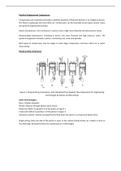
Figure 1: Reciprocating compressor cycle (Extracted from Applied Thermodynamics for Engineering
Technologist by Eastop and McConkey)
Some terminologies:
Bore: Cylinder diameter
Stroke: distance through which piston moves
Head end: Refers to position A of the piston in Figure 1
Crank end: Refers to position C of the piston in Figure 1
Clearance volume: Volume occupied by the fluid when the piston is at head end dead centre
Single acting: Only one side of the piston is used. In the suction (back) stroke, air is taken in and, on
the discharge, (forward) stroke the compressed air is discharged.
, Figure 2: Single acting (Extracted from Applied Thermodynamics for Engineering Technologist by
Eastop and McConkey)
Double acting: Both sides of the piston are used. On the suction stroke, the suction valve at the front
end opens and the discharge valve at the back end opens. On the discharge stroke, the discharge valve
opens at the front end and the suction valve opens at the back end.
Figure 3: Double acting (Extracted from Applied Thermodynamics for Engineering Technologist by
Eastop and McConkey)
Reciprocating compressors without clearance
c
d
Figure 4: Indicator diagram without clearance
The P-v diagram for compressor is also referred to as the indicator diagram.
Compressors are machinery that takes a definite quantity of fluid and delivers it at a higher pressure.
The fluid is usually gas and most often air. Compressors can be classified as two types namely rotary
and positive displacement pumps.
Rotary Compressors: Are continuous in action, have a high mass flowrate and low pressure ratios.
Reciprocating Compressors: Pulsating in action, low mass flowrate and high pressure ratios. The
typical arrangement includes a piston, connecting rod, crank and cylinder.
Both types of compressors may be single or multi stage compression and have either air or water
intercooling.
Reciprocating Compressor
Figure 1: Reciprocating compressor cycle (Extracted from Applied Thermodynamics for Engineering
Technologist by Eastop and McConkey)
Some terminologies:
Bore: Cylinder diameter
Stroke: distance through which piston moves
Head end: Refers to position A of the piston in Figure 1
Crank end: Refers to position C of the piston in Figure 1
Clearance volume: Volume occupied by the fluid when the piston is at head end dead centre
Single acting: Only one side of the piston is used. In the suction (back) stroke, air is taken in and, on
the discharge, (forward) stroke the compressed air is discharged.
, Figure 2: Single acting (Extracted from Applied Thermodynamics for Engineering Technologist by
Eastop and McConkey)
Double acting: Both sides of the piston are used. On the suction stroke, the suction valve at the front
end opens and the discharge valve at the back end opens. On the discharge stroke, the discharge valve
opens at the front end and the suction valve opens at the back end.
Figure 3: Double acting (Extracted from Applied Thermodynamics for Engineering Technologist by
Eastop and McConkey)
Reciprocating compressors without clearance
c
d
Figure 4: Indicator diagram without clearance
The P-v diagram for compressor is also referred to as the indicator diagram.


