WHO IS AN “EMPLOYEE”?
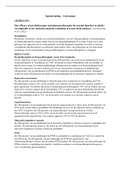
The primary aim of the LRA is to promote sound relations between employers and employees in the workplace.
Workers who are not employees fall outside the scope of the LRA and are, amongst others, not entitled to
protection against unfair dismissal. It is important to draw distinction between employees and other workers who
do not qualify as employees, so called “independent contractors” (hard to distinguish between the 2 because they
closely resemble each other)
An independent contractor is contracted to perform a specified task or to produce a specific result
While an employee is appointed to render personal services in terms of a job description.
The LRA, the BCEA, the EEA and the SDA all use the same definition of an employee.
This definition states that employee is:
a. Any person, excluding independent contractor, who works for another person or for the state and who
receives, or is entitled to receive, any remuneration
b. Any other person who in any manner assist in carrying on or conducting the business of an employer
The first part (a) includes both employees in the private sector and public sector. The definition also includes
domestic and farm workers as employees. Part (a) incorporates the common-law contract of service (the location
conduction opera rum in common law) and excludes the contract of work (the location conduction operis in
common law) which relates to an independent contractor.
The second part (b) includes any person who in any manner assists in carrying on or conducting the business of an
employer. This part is couched in broader terms and can include various categories of workers, which complicates
the matter further as far as the distinction between an employee and independent contractor is concerned.
Such categories include permanent employees, temporary employees, casual workers, contract workers, part-time
employees, self-employed people, and other such as seasonal workers or those working from home. It is easy to
confuse fixed-term employee with independent contractor.
The difficulty of determining who qualifies s an employee and who does not has prompted the courts to formulate
various tests to distinguish between employees and independent contractors.
, GUIDELINES TO DISTINGUISH BETWEEN EMPLOYEES AND INDEPENDENT
CONTRACTORS
The courts have given guidelines to distinguish between employees and independent contractors, and developed
three tests in this regard. There are:
The control test
The organisation test
The dominant impression test
These tests helped clarify the concept of employee but were not sufficiently clear to solve the problem. As a result
the LRA and BCEA were amended in 2002 to include a rebuttable presumption as to who would be regarded as an
employee. The presumption implies that as soon as one of the factors, listed in section 200A of the LRA or section
83A of the BCEA, is found to exist in the relationship between the two parties, there is presumed to be an
employment relationship. The other party then has the opportunity to show, on a balance of probabilities that no
employment relationship exists. The presumptions will, however, not apply to any person earning more than the
amount determined by the Minister in terms of the BCEA, and to a work arrangement involving persons who earn
amounts equal to or below the amount determined by the Minister
Section 200A reads as follow:
Until the contrary is proved, a person who works for, or renders services to, another person is presumed to be an
employee, if any one or more of the following factors are present:
a. Manner in which the person works is subject to control or direction of another person
b. Persons hours of work are subject to the control or direction of another person
c. The case of a person who works for an organisation, the person forms part of that organisation
d. Person has worked for that other person for an average of at least 40 hours per month over the last three
months
e. Person is economiclly dependent on the person for whom he or she works or renders services.
f. Person is provided with tools of trade of work equipment by other person
g. Person only works for or renders services to one person
Section 200A and 83A should be read in conjunction with the Code: who is an employee? The code incorporates
the three tests developed by the courts but it goes further and provides guidance for the possible interpretation
and application of these tests in a modern context.
The primary aim of the LRA is to promote sound relations between employers and employees in the workplace.
Workers who are not employees fall outside the scope of the LRA and are, amongst others, not entitled to
protection against unfair dismissal. It is important to draw distinction between employees and other workers who
do not qualify as employees, so called “independent contractors” (hard to distinguish between the 2 because they
closely resemble each other)
An independent contractor is contracted to perform a specified task or to produce a specific result
While an employee is appointed to render personal services in terms of a job description.
The LRA, the BCEA, the EEA and the SDA all use the same definition of an employee.
This definition states that employee is:
a. Any person, excluding independent contractor, who works for another person or for the state and who
receives, or is entitled to receive, any remuneration
b. Any other person who in any manner assist in carrying on or conducting the business of an employer
The first part (a) includes both employees in the private sector and public sector. The definition also includes
domestic and farm workers as employees. Part (a) incorporates the common-law contract of service (the location
conduction opera rum in common law) and excludes the contract of work (the location conduction operis in
common law) which relates to an independent contractor.
The second part (b) includes any person who in any manner assists in carrying on or conducting the business of an
employer. This part is couched in broader terms and can include various categories of workers, which complicates
the matter further as far as the distinction between an employee and independent contractor is concerned.
Such categories include permanent employees, temporary employees, casual workers, contract workers, part-time
employees, self-employed people, and other such as seasonal workers or those working from home. It is easy to
confuse fixed-term employee with independent contractor.
The difficulty of determining who qualifies s an employee and who does not has prompted the courts to formulate
various tests to distinguish between employees and independent contractors.
, GUIDELINES TO DISTINGUISH BETWEEN EMPLOYEES AND INDEPENDENT
CONTRACTORS
The courts have given guidelines to distinguish between employees and independent contractors, and developed
three tests in this regard. There are:
The control test
The organisation test
The dominant impression test
These tests helped clarify the concept of employee but were not sufficiently clear to solve the problem. As a result
the LRA and BCEA were amended in 2002 to include a rebuttable presumption as to who would be regarded as an
employee. The presumption implies that as soon as one of the factors, listed in section 200A of the LRA or section
83A of the BCEA, is found to exist in the relationship between the two parties, there is presumed to be an
employment relationship. The other party then has the opportunity to show, on a balance of probabilities that no
employment relationship exists. The presumptions will, however, not apply to any person earning more than the
amount determined by the Minister in terms of the BCEA, and to a work arrangement involving persons who earn
amounts equal to or below the amount determined by the Minister
Section 200A reads as follow:
Until the contrary is proved, a person who works for, or renders services to, another person is presumed to be an
employee, if any one or more of the following factors are present:
a. Manner in which the person works is subject to control or direction of another person
b. Persons hours of work are subject to the control or direction of another person
c. The case of a person who works for an organisation, the person forms part of that organisation
d. Person has worked for that other person for an average of at least 40 hours per month over the last three
months
e. Person is economiclly dependent on the person for whom he or she works or renders services.
f. Person is provided with tools of trade of work equipment by other person
g. Person only works for or renders services to one person
Section 200A and 83A should be read in conjunction with the Code: who is an employee? The code incorporates
the three tests developed by the courts but it goes further and provides guidance for the possible interpretation
and application of these tests in a modern context.