, Question 1:
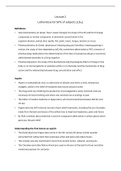
1. A socio- constructivist’s (Vygotsky) view of the impact of context on curriculum
implementation. (7)
Vygotsky, argued for a constructionist perspective in education.
• He believed that the lifelong process of development is dependent on social
interaction, and that social learning leads to cognitive development.
• Schools have promoted environments in which learners play an active role int their
own education as well as that of their peers.
• According to Vygotsky’s theory, the physical classroom should provide clustered
desks or tables and workspace for peer instruction, collaboration, and small group
instruction.
• Vygotsky asserts that cognitive change occurs within zone of proximal development,
instruction should be designed to reach a developmental level that is just above the
learner’s current developmental level.
• Appropriation is necessary for cognitive development within the zone of proximal
development.
• Individuals in peer collaboration or guided teaching must share the same focus to
access the zone of proximal development.
• It is essential that the “partners” in this educational environment be on different
developmental levels, and that the higher- level partner be aware of the lower
partner’s level.
Do you agree with his view? (1) Motivate your answer. (2)
Yes, in a South African context, the process approach and purpose approach, which is a
holistic perspective, is essential to encourage the emergence of compassion, optimal
learning environments, just relationships and ecological sustainability, which are echoed in
the postmodern philosophy of curriculum development.
This is especially true for a multicultural society like South Africa with a variety of
languages, beliefs, and values which the education system seeks to integrate learners and
teachers form all walks of life into a harmonious and effective learning environment.
Learning is relevant to the real-life situations and experiences of the learner, therefore
cross-curricular integration of knowledge and skills prepares for reality and the world of
work, as well as living and functioning in a developing country and integrated society.
Mental processes can be shaped and transformed by social settings and language abilities.
Culture and context in which learner finds himself can provided all the tools of intellectual
adaptation needed for both what and how to think.
2. The influence of changes in the South Africa context on curriculum by referring
briefly to the most important economic, social, and political forces.
Economic forces:
• One of the forces that drives our new education system is globalisation.
• This suggests that our country is not producing people capable of competing with their
counterparts in other parts of the world in terms of producing high- quality goods cost-
effectively.
1. A socio- constructivist’s (Vygotsky) view of the impact of context on curriculum
implementation. (7)
Vygotsky, argued for a constructionist perspective in education.
• He believed that the lifelong process of development is dependent on social
interaction, and that social learning leads to cognitive development.
• Schools have promoted environments in which learners play an active role int their
own education as well as that of their peers.
• According to Vygotsky’s theory, the physical classroom should provide clustered
desks or tables and workspace for peer instruction, collaboration, and small group
instruction.
• Vygotsky asserts that cognitive change occurs within zone of proximal development,
instruction should be designed to reach a developmental level that is just above the
learner’s current developmental level.
• Appropriation is necessary for cognitive development within the zone of proximal
development.
• Individuals in peer collaboration or guided teaching must share the same focus to
access the zone of proximal development.
• It is essential that the “partners” in this educational environment be on different
developmental levels, and that the higher- level partner be aware of the lower
partner’s level.
Do you agree with his view? (1) Motivate your answer. (2)
Yes, in a South African context, the process approach and purpose approach, which is a
holistic perspective, is essential to encourage the emergence of compassion, optimal
learning environments, just relationships and ecological sustainability, which are echoed in
the postmodern philosophy of curriculum development.
This is especially true for a multicultural society like South Africa with a variety of
languages, beliefs, and values which the education system seeks to integrate learners and
teachers form all walks of life into a harmonious and effective learning environment.
Learning is relevant to the real-life situations and experiences of the learner, therefore
cross-curricular integration of knowledge and skills prepares for reality and the world of
work, as well as living and functioning in a developing country and integrated society.
Mental processes can be shaped and transformed by social settings and language abilities.
Culture and context in which learner finds himself can provided all the tools of intellectual
adaptation needed for both what and how to think.
2. The influence of changes in the South Africa context on curriculum by referring
briefly to the most important economic, social, and political forces.
Economic forces:
• One of the forces that drives our new education system is globalisation.
• This suggests that our country is not producing people capable of competing with their
counterparts in other parts of the world in terms of producing high- quality goods cost-
effectively.