NR 507 WEEK 1 QUIZ 1 – QUESTION AND ANSWERS
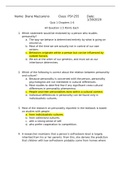
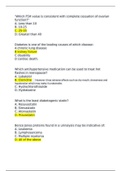
NR 507 Week 1 Quiz – Advanced Pathophysiology Cells in _____ may act as a reservoir in which HIV can be relatively protected from antiviral drugs. What is the role of reverse transcriptase in HIV infection? After sexual transmission of HIV, a person can be infected yet seronegative for _____ months. What of the following remains a significant cause of morbidity and mortality worldwide? Which statement about vaccines is true? Which statement is true about fungal infections? What disease involves the deposition of circulating immune complexes containing an antibody against host DNA, resulting in tissue damage? The class of antibody involved in type I hypersensitivity reactions is In which primary immune deficiency is there a partial to complete absence of T-cell immunity? Deficiencies in which element can produce depression of both B- and T-cell function? During an IgE-mediated hypersensitivity reaction, what causes bronchospasm? A person with type O blood is likely to have high titers of anti-___ antibodies. Hypersensitivity is best defined as a(n) Exhaustion occurs if stress continues and _____ is not successful. What effect does estrogen have on lymphocytes? During a stress response, increased anxiety, vigilance, and arousal is prompted by Stress-age syndrome results in decreased Which of the viruses below are oncogenic DNA viruses? Which of the following represents the correct nomenclature for benign and malignant tumors of adipose tissue, respectively? In chronic myeloid leukemia (CML), a piece of chromosome 9 fuses to a piece of chromosome 22. This is an example of which mutation of normal genes to oncogenes? Which of the following cancers originate from connective tissue? nr 507 week 1 quiz Inherited mutations that predispose to cancer are almost invariably what kind of gene? Intestinal polyps are benign neoplasms and the first stage in development of colon cancer. These findings support the notion that Which characteristic among women correlates with a high morbidity of cancer of the colon, liver, gallbladder, pancreas, breast, uterus, and kidney? Childhood exposure to all of the following risk factors increases susceptibility to cancer exceptnr 507 week 1 quiz RELATED PRODUCTS
Written for
- Institution
- Chamberlain College Nursing
- Course
- NR 507 WEEK 1 QUIZ 1 – QUESTION AND ANSWERS
Document information
- Uploaded on
- November 30, 2021
- Number of pages
- 10
- Written in
- 2021/2022
- Type
- Exam (elaborations)
- Contains
- Questions & answers
Subjects
-
nr 507 week 1 quiz – advanced pathophysiology cells in may act as a reservoir in which hiv can be relatively protected from antiviral drugs what is the role of reverse transcriptase in hiv inf