

Acids, bases & pH values
All substances can be classified in different ways, such as pure substances or
mixtures, elements or compounds. Many substances can also be classified as
acids or bases. These are common ingredients in the foods and cleaning
products we find at home. Some acids and bases are stronger than others.
The concept of pH value
We use acids and bases every day without realizing it. The acids in our stomachs
help us digest food and we find acids in our foods and soft drinks. Bases are
found in soaps and cleaning products. If a base can dissolve in water, we call it
an alkali. Acids and bases can be stronger or weaker. Often the stronger the acid
or base the more dangerous it is. Strong acids are corrosive and can eat away
metals and other strong materials. These stronger acids and bases can cause
serious burns and as a result are diluted with water when in a laboratory.
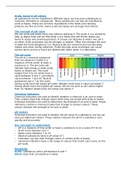
The pH scale
The pH of a chemical substance
that can dissolve in water is a
measure of how acidic or basic a
substance is. The pH scale will
indicate how strong or weak acids,
bases or alkalis are. The scale
ranges from 0 to 14. Acids have a
value between 0 and 7, and alkalis
value between 7 and 14. Neutral
substances are a 7 on the scale.
Strong acids have the lowest pH value. Weaker acids have a value just below 7.
Strong alkalis have the highest pH values. We do not work on pH values higher
than 14. Weaker alkalis have pH values just above 7.
Chemical indicators
Chemical indicators are used to identify whether a chemical is an acid or base.
They contain dyes that change colour when they are mixed with acids or bases.
Universal indicators are used to determine the strength of an acid or base. These
indicators contain a mixture of dyes that change to various colours. These
colours indicate the strength of an acid or alkali.
pH meters
Universal indicators are used to identify the pH value of a substance, but we can
also use digital pH meters. These meters measure the pH of a substance very
quickly and accurately.
Key concepts to understand
• pH is a measure of how acidic or basic a substance is on a scale of 0 to 14.
• Acids score between 0 to 7.
• Bases score between 7 to 14.
• Neutral substances have a pH value of 7.
• Indicators use dye that changes colour in certain acids or bases.
• Universal indicators have a full range of colours that match each score on the
pH scale.
Keywords:
Acids: substances with a pH between 0 and 7
Alkali: base that can dissolve in water
All substances can be classified in different ways, such as pure substances or
mixtures, elements or compounds. Many substances can also be classified as
acids or bases. These are common ingredients in the foods and cleaning
products we find at home. Some acids and bases are stronger than others.
The concept of pH value
We use acids and bases every day without realizing it. The acids in our stomachs
help us digest food and we find acids in our foods and soft drinks. Bases are
found in soaps and cleaning products. If a base can dissolve in water, we call it
an alkali. Acids and bases can be stronger or weaker. Often the stronger the acid
or base the more dangerous it is. Strong acids are corrosive and can eat away
metals and other strong materials. These stronger acids and bases can cause
serious burns and as a result are diluted with water when in a laboratory.
The pH scale
The pH of a chemical substance
that can dissolve in water is a
measure of how acidic or basic a
substance is. The pH scale will
indicate how strong or weak acids,
bases or alkalis are. The scale
ranges from 0 to 14. Acids have a
value between 0 and 7, and alkalis
value between 7 and 14. Neutral
substances are a 7 on the scale.
Strong acids have the lowest pH value. Weaker acids have a value just below 7.
Strong alkalis have the highest pH values. We do not work on pH values higher
than 14. Weaker alkalis have pH values just above 7.
Chemical indicators
Chemical indicators are used to identify whether a chemical is an acid or base.
They contain dyes that change colour when they are mixed with acids or bases.
Universal indicators are used to determine the strength of an acid or base. These
indicators contain a mixture of dyes that change to various colours. These
colours indicate the strength of an acid or alkali.
pH meters
Universal indicators are used to identify the pH value of a substance, but we can
also use digital pH meters. These meters measure the pH of a substance very
quickly and accurately.
Key concepts to understand
• pH is a measure of how acidic or basic a substance is on a scale of 0 to 14.
• Acids score between 0 to 7.
• Bases score between 7 to 14.
• Neutral substances have a pH value of 7.
• Indicators use dye that changes colour in certain acids or bases.
• Universal indicators have a full range of colours that match each score on the
pH scale.
Keywords:
Acids: substances with a pH between 0 and 7
Alkali: base that can dissolve in water


