

Discussion Forum: Managers versus Leaders (Raisin vs Grapes)
Lunenburg (2011), cited that Abraham Zaleznik is the first scholar who articulated the
difference between leaders and managers in 1977. Whether the management is an art or
science (Bohoris & Vorria, 2010, p.2), it plays a critical role in achieving organizational goal.
Albeit, leaders are responsible for inspiring and influencing people towards achieving these
goals. Organization require both strong manger and leaders to work hand in hand to cope with
complexity, changes and developments regarding to pave the path for its success and
effectiveness (Loana, 2016).
Generally, manager refer to a person who forecast, plan, organize, command,
coordinate, and control the activities of others. While, Perrin (2010, p.2-3), propound six
correlated characters as a ‘leadership zone model’ namely; Reflection (assess motives, beliefs,
attitudes and actions), Society (balance individual and group well-being), Diversity (Leverage
basic differences such as gender, ethnicity, age and etc. ), Ingenuity (offer practical ideas and
encourage to be innovative), People (commitments, inspiration and communication) and
Business (guide effort towards particular objectives and results).
Bohoris & Vorria (2010, p.4), argued that a well-balance organization require a mix of
great leaders and first-class managers (opined Jim Collins research result in 1996) to ascertain
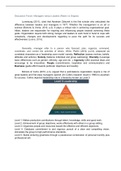
its success. Collins depicted leadership role in a hierarchy known as Level 5
Level 1: Makes productive contributions through talent, knowledge, skills and good work.
Level 2: Achievement of group objectives, works effectively with others in a group setting,
Level 3: Organizes people and resources toward the effective and efficient objectives.
Level 4: Catalyzes commitment to and vigorous pursuit of a clear and compelling vision;
stimulates the group to high performance standards,
Level 5: Builds enduring greatness through a paradoxical combination of personal humility plus
professional will.
Lunenburg (2011), cited that Abraham Zaleznik is the first scholar who articulated the
difference between leaders and managers in 1977. Whether the management is an art or
science (Bohoris & Vorria, 2010, p.2), it plays a critical role in achieving organizational goal.
Albeit, leaders are responsible for inspiring and influencing people towards achieving these
goals. Organization require both strong manger and leaders to work hand in hand to cope with
complexity, changes and developments regarding to pave the path for its success and
effectiveness (Loana, 2016).
Generally, manager refer to a person who forecast, plan, organize, command,
coordinate, and control the activities of others. While, Perrin (2010, p.2-3), propound six
correlated characters as a ‘leadership zone model’ namely; Reflection (assess motives, beliefs,
attitudes and actions), Society (balance individual and group well-being), Diversity (Leverage
basic differences such as gender, ethnicity, age and etc. ), Ingenuity (offer practical ideas and
encourage to be innovative), People (commitments, inspiration and communication) and
Business (guide effort towards particular objectives and results).
Bohoris & Vorria (2010, p.4), argued that a well-balance organization require a mix of
great leaders and first-class managers (opined Jim Collins research result in 1996) to ascertain
its success. Collins depicted leadership role in a hierarchy known as Level 5
Level 1: Makes productive contributions through talent, knowledge, skills and good work.
Level 2: Achievement of group objectives, works effectively with others in a group setting,
Level 3: Organizes people and resources toward the effective and efficient objectives.
Level 4: Catalyzes commitment to and vigorous pursuit of a clear and compelling vision;
stimulates the group to high performance standards,
Level 5: Builds enduring greatness through a paradoxical combination of personal humility plus
professional will.



