
competition
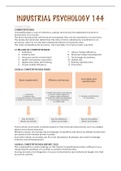
COMPETITIVENESS
Competitiveness is a set of institutions, policies and factors that determine the level of
productivity of a country.
The level of productivity sets the level of prosperity that can be reached by an economy.
The production level also determines the rates of return obtained by investments in an
economy, which in turn are the fundamental drivers of its growth rates.
The more competitive the economy, the more likely it is to grow faster over time.
12 PILLARS OF COMPETITIVENESS
1. Institutions. 7. Labour market efficiency.
2. Infrastructure. 8. Financial market development.
3. Macroeconomic environment. 9. Technological readiness.
4. Health and primary education. 10. Market size.
5. Higher education and training. 11. Business sophistication.
6. Goods market efficiency. 12. Innovation.
GLOBAL COMPETITIVENESS INDEX
Innovation and
Basic requirements Efficiency enhancers
sophistication
5. Higher education and training
1. Institutions 6. Goods market efficiency
2. Infrastructure 7. Labour market efficiency 11. Business sophistication
3. Macroeconomic environment 8. Financial market development 12. Innovation
4. Health and primary education 9. Technological readiness
10. Market size
Key for factor- Key for efficiency- Key for innovation-
driven economies driven economies driven economies
Factor-driven economies compete based on their financial endowments such as unskilled
labour and natural resources.
Efficiency-driven. Economies are increasingly competitive and driven by efficient production
processes and increased product quality.
Innovation-driven economies are the most developed. Businesses are more knowledge-
intensive and entrepreneurial.
GLOBAL COMPETITIVENESS REPORT 2020
Has comparative country rankings on the Global Competitiveness Index, shifting its focus,
measuring the readiness of countries to achieve transformation.
Moving towards a full integration of social, environmental and institutional targets into their
economic systems.
,Determining how to shape our economic systems in the future so that they are not just
productive but also lead to environmental sustainability and shared prosperity for all.
Growing calls for building back better.
How best to return to growth but also, how to build back better economies that improve
outcomes for people and the planet.
ASSESSING COUNTRIES’ TRANSFORMATION READINESS: 11 PRIORITIES FOR THE NEXT
3 – 5 YEARS
1. Ensure public institutions embed strong governance principles and a long-term vision
and build trust by serving their citizens.
2. Upgrade infrastructure to accelerate the energy transition and broaden access to
electricity and ICT.
3. Shift to more progressive taxation, rethinking how corporations, wealth and labour are
taxed, nationally and in an international cooperative framework.
4. Update education curricula and expand investment in the skills needed for the jobs
and ”markets of tomorrow”.
5. Rethink labour laws and social protection for the new economy and the new needs
of the workforce.
6. Expand eldercare, childcare and healthcare infrastructure, access and innovation for
the benefit of people and the economy.
7. Increase incentives to direct financial resources towards long-term investments,
strengthen stability and expand inclusion.
8. Rethink competition and anti-trust framework needed in the Fourth Industrial
Revolution, ensuring market access, both locally and internationally.
9. Facilitate the creation of “markets of tomorrow”, especially in areas that require
public-private collaboration.
10. Incentivize and expand patient investments in research, innovation and invention
that can create new “markets of tomorrow”.
11. Incentivize firms to embrace diversity, equity and inclusion to enhance creativity.
KEY FEATURES OF COMPETITIVENESS THAT ENHANCED COUNTRIES’ RESPONSES TO
THE PANDEMIC
- Economic digitalization and digital skills. Countries that could continue running
significant segments of their economy remotely were better placed to go through the
pandemic.
- Safety nets and financial soundness. Since multiple segments of the economy had to
cope w. full lockdowns / reduced business activity, countries that already had in
place strong safety nets to support those who could not work through the pandemic
were better placed to salvage livelihoods.
- Governance and planning.
- Health system and research capacity.
MAJOR CHALLENGES FACED BY HR PROFESSIONALS SINCE COVID PANDEMIC
- Shift to digitalized platform and the - Changing workforce.
creation of virtual teams. - Global economy.
- Remote working and work life - Technology and training.
balance. - Downsizing, delayering and de-
- Downsizing productivity. recruiting.
- Quality improvement. - Employee productivity.
,THE FOUNDATION AND CHALLENGES OF HUMAN RESOURCE MANAGEMENT
THE HUMAN RESOURCE APPROACH
HUMAN RESOURCES: PAST AND PRESENT
People practices in South Africa. Higher
employee
The scientific management approach: motivation
and applied
- Scientific management is a management theory that ability
analyzes workflows to improve economic efficiency,
Le
o
st
ad
especially labour productivity.
ad
st
Le
o
- Developed by Frederick Taylor.
The human relations approach:
- A socio-psychological human behavioural
approach. Greater The Human Greater
- Concentrates on the study of human
employee
rewards and Resource quality,
quantity of
needs and the social and psychological recognition
approach work
aspects of the work.
- An approach to management based on the
idea that employees are motivated not only by
to
Le
financial rewards but also by a range of social
ds
ad
a
st
Le
o
factors.
The human resource approach: Higher
organisational
- Holds that organizational goals and employee needs are productivity,
profits
mutual and compatible: one need not be achieved at the
expense of another.
- Principles of the HR approach:
o Employees are investments that will, if effectively managed and developed,
provide long-term rewards to the organization in the form of greater
productivity.
o Policies, programmes, and practices must be created that satisfy both the
economic and emotional needs of employees.
o A working environment must be created in which employees are encouraged
to develop and use their skills to the maximum extent.
o HR programmes and practices must be implemented w. goal of balancing
the needs and meeting the goals of both the organization and the employee.
STRATEGIC HUMAN RESOURCE MANAGEMENT
Strategic management: how organizations make decisions about their future in the complex,
rapidly changing world. Involves making the decisions that define the overall mission and
objectives of the organization, determining the most effective use of resources, and crafting
and executing the strategy in ways that produce the intended results.
Business strategy is a management’s game plan.
Strategic Human Resource Management [SHRM] activities address a wide variety of people
issues relevant to the business strategy.
Process is led and coordinated by top management.
HR manager will need set of competencies:
Business mastery:
- HR manager will need to know the business and strategies of the organization
thoroughly.
HR mastery:
- HR manager will have to keep informed about changes relating to issues such as
staffing, development, appraisals, rewards, team building and communication.
Change mastery:
- HR manager will have to be able to manage change processes so that HR activities
are effectively merged w. the business needs of the organization.
Four pillars of HR professionalism:
body of knowledge, ethics, self-
governance and duty to society.
, Personal credibility:
- HR manager must establish personal credibility [as seen by people inside and outside
the organization], which they can do so by standing up for their beliefs and being
fair-minded in dealing w. others.
STRATEGIC VS TRADITIONAL HUMAN RESOURCE MANAGEMENT
DIMENSIONS STRATEGIC HRM TRADITIONAL HRM
Planning and Participates in formulating Is involved in operational
strategy overall organizational strategic planning only.
formulation plan and aligning HR functions
w. company strategy.
Authority Has high status and authority for Has medium status and authority.
top HR officer.
Scope Is concerned w. all managers Is concerned primarily w. hourly,
and employees. operational and clerical
employees.
Decision-making Is involved in making strategic Makes operational decisions
decisions. only.
Integration Is fully integrated w. other Has moderate to little integration
organizational functions [e.g. w. other organizational functions.
marketing, finance, production].
Coordination Coordinates all HRM activities. Does not coordinate all HR
functions.
MODEL OF STRATEGIC HRM
HR FUNCTIONS
Assigned exclusively to HR:
- Compensation and benefits issues - Affirmative action and
[e.g. insurance administration, employment equity.
wage and salary administration, - Job analysis programmes.
etc.]. - Pre-employment testing.
- Attitude surveys [research].
HR ACTIVITIES
Assigned to HR jointly w. other departments:
- Job analysis and job design. - Recruitment, selection, orientation
and internal staffing.
COMPETITIVENESS
Competitiveness is a set of institutions, policies and factors that determine the level of
productivity of a country.
The level of productivity sets the level of prosperity that can be reached by an economy.
The production level also determines the rates of return obtained by investments in an
economy, which in turn are the fundamental drivers of its growth rates.
The more competitive the economy, the more likely it is to grow faster over time.
12 PILLARS OF COMPETITIVENESS
1. Institutions. 7. Labour market efficiency.
2. Infrastructure. 8. Financial market development.
3. Macroeconomic environment. 9. Technological readiness.
4. Health and primary education. 10. Market size.
5. Higher education and training. 11. Business sophistication.
6. Goods market efficiency. 12. Innovation.
GLOBAL COMPETITIVENESS INDEX
Innovation and
Basic requirements Efficiency enhancers
sophistication
5. Higher education and training
1. Institutions 6. Goods market efficiency
2. Infrastructure 7. Labour market efficiency 11. Business sophistication
3. Macroeconomic environment 8. Financial market development 12. Innovation
4. Health and primary education 9. Technological readiness
10. Market size
Key for factor- Key for efficiency- Key for innovation-
driven economies driven economies driven economies
Factor-driven economies compete based on their financial endowments such as unskilled
labour and natural resources.
Efficiency-driven. Economies are increasingly competitive and driven by efficient production
processes and increased product quality.
Innovation-driven economies are the most developed. Businesses are more knowledge-
intensive and entrepreneurial.
GLOBAL COMPETITIVENESS REPORT 2020
Has comparative country rankings on the Global Competitiveness Index, shifting its focus,
measuring the readiness of countries to achieve transformation.
Moving towards a full integration of social, environmental and institutional targets into their
economic systems.
,Determining how to shape our economic systems in the future so that they are not just
productive but also lead to environmental sustainability and shared prosperity for all.
Growing calls for building back better.
How best to return to growth but also, how to build back better economies that improve
outcomes for people and the planet.
ASSESSING COUNTRIES’ TRANSFORMATION READINESS: 11 PRIORITIES FOR THE NEXT
3 – 5 YEARS
1. Ensure public institutions embed strong governance principles and a long-term vision
and build trust by serving their citizens.
2. Upgrade infrastructure to accelerate the energy transition and broaden access to
electricity and ICT.
3. Shift to more progressive taxation, rethinking how corporations, wealth and labour are
taxed, nationally and in an international cooperative framework.
4. Update education curricula and expand investment in the skills needed for the jobs
and ”markets of tomorrow”.
5. Rethink labour laws and social protection for the new economy and the new needs
of the workforce.
6. Expand eldercare, childcare and healthcare infrastructure, access and innovation for
the benefit of people and the economy.
7. Increase incentives to direct financial resources towards long-term investments,
strengthen stability and expand inclusion.
8. Rethink competition and anti-trust framework needed in the Fourth Industrial
Revolution, ensuring market access, both locally and internationally.
9. Facilitate the creation of “markets of tomorrow”, especially in areas that require
public-private collaboration.
10. Incentivize and expand patient investments in research, innovation and invention
that can create new “markets of tomorrow”.
11. Incentivize firms to embrace diversity, equity and inclusion to enhance creativity.
KEY FEATURES OF COMPETITIVENESS THAT ENHANCED COUNTRIES’ RESPONSES TO
THE PANDEMIC
- Economic digitalization and digital skills. Countries that could continue running
significant segments of their economy remotely were better placed to go through the
pandemic.
- Safety nets and financial soundness. Since multiple segments of the economy had to
cope w. full lockdowns / reduced business activity, countries that already had in
place strong safety nets to support those who could not work through the pandemic
were better placed to salvage livelihoods.
- Governance and planning.
- Health system and research capacity.
MAJOR CHALLENGES FACED BY HR PROFESSIONALS SINCE COVID PANDEMIC
- Shift to digitalized platform and the - Changing workforce.
creation of virtual teams. - Global economy.
- Remote working and work life - Technology and training.
balance. - Downsizing, delayering and de-
- Downsizing productivity. recruiting.
- Quality improvement. - Employee productivity.
,THE FOUNDATION AND CHALLENGES OF HUMAN RESOURCE MANAGEMENT
THE HUMAN RESOURCE APPROACH
HUMAN RESOURCES: PAST AND PRESENT
People practices in South Africa. Higher
employee
The scientific management approach: motivation
and applied
- Scientific management is a management theory that ability
analyzes workflows to improve economic efficiency,
Le
o
st
ad
especially labour productivity.
ad
st
Le
o
- Developed by Frederick Taylor.
The human relations approach:
- A socio-psychological human behavioural
approach. Greater The Human Greater
- Concentrates on the study of human
employee
rewards and Resource quality,
quantity of
needs and the social and psychological recognition
approach work
aspects of the work.
- An approach to management based on the
idea that employees are motivated not only by
to
Le
financial rewards but also by a range of social
ds
ad
a
st
Le
o
factors.
The human resource approach: Higher
organisational
- Holds that organizational goals and employee needs are productivity,
profits
mutual and compatible: one need not be achieved at the
expense of another.
- Principles of the HR approach:
o Employees are investments that will, if effectively managed and developed,
provide long-term rewards to the organization in the form of greater
productivity.
o Policies, programmes, and practices must be created that satisfy both the
economic and emotional needs of employees.
o A working environment must be created in which employees are encouraged
to develop and use their skills to the maximum extent.
o HR programmes and practices must be implemented w. goal of balancing
the needs and meeting the goals of both the organization and the employee.
STRATEGIC HUMAN RESOURCE MANAGEMENT
Strategic management: how organizations make decisions about their future in the complex,
rapidly changing world. Involves making the decisions that define the overall mission and
objectives of the organization, determining the most effective use of resources, and crafting
and executing the strategy in ways that produce the intended results.
Business strategy is a management’s game plan.
Strategic Human Resource Management [SHRM] activities address a wide variety of people
issues relevant to the business strategy.
Process is led and coordinated by top management.
HR manager will need set of competencies:
Business mastery:
- HR manager will need to know the business and strategies of the organization
thoroughly.
HR mastery:
- HR manager will have to keep informed about changes relating to issues such as
staffing, development, appraisals, rewards, team building and communication.
Change mastery:
- HR manager will have to be able to manage change processes so that HR activities
are effectively merged w. the business needs of the organization.
Four pillars of HR professionalism:
body of knowledge, ethics, self-
governance and duty to society.
, Personal credibility:
- HR manager must establish personal credibility [as seen by people inside and outside
the organization], which they can do so by standing up for their beliefs and being
fair-minded in dealing w. others.
STRATEGIC VS TRADITIONAL HUMAN RESOURCE MANAGEMENT
DIMENSIONS STRATEGIC HRM TRADITIONAL HRM
Planning and Participates in formulating Is involved in operational
strategy overall organizational strategic planning only.
formulation plan and aligning HR functions
w. company strategy.
Authority Has high status and authority for Has medium status and authority.
top HR officer.
Scope Is concerned w. all managers Is concerned primarily w. hourly,
and employees. operational and clerical
employees.
Decision-making Is involved in making strategic Makes operational decisions
decisions. only.
Integration Is fully integrated w. other Has moderate to little integration
organizational functions [e.g. w. other organizational functions.
marketing, finance, production].
Coordination Coordinates all HRM activities. Does not coordinate all HR
functions.
MODEL OF STRATEGIC HRM
HR FUNCTIONS
Assigned exclusively to HR:
- Compensation and benefits issues - Affirmative action and
[e.g. insurance administration, employment equity.
wage and salary administration, - Job analysis programmes.
etc.]. - Pre-employment testing.
- Attitude surveys [research].
HR ACTIVITIES
Assigned to HR jointly w. other departments:
- Job analysis and job design. - Recruitment, selection, orientation
and internal staffing.


