Literature Notes:
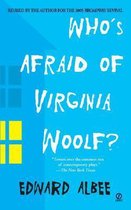
“Who’s Afraid of Virginia Woolf?”
By Edward Albee.
, Act 1: Fun and Games
Setting of the Play
o University Town
o Cultured custodian of civilisation. The Academic setting.
o Link this to the philosophical debate between History and Biology, Past and Future.
o Support this with the joke “Who’s afraid of Virginia Woolf?” which is an intellectual
reference.
o Talk about the contrast between the intellectual, dignified setting and the animalistic
behaviours of the characters.
o New Carthage
o Reference to the ancient civilisation Carthage, which was prosperous until the Punic
wars. It was conquered and made sterile by the Romans.
o See that New Carthage is also under threat and is sterile. There is a cyclical pattern of
historical destruction, and mythic influence on the individuals. It also suggests that
there is a historical inevitability of destruction.
o Also refer to George’s comparison of New Carthage to MIT or UCLA. To George,
New Carthage is lacking, and is inferior.
o Living Room & 1960’s American Suburbs
o Living room is the domestic setting. It presents issues related to family values and
tradition. Link this to George and Martha’s inability to live up to the expectations set
for their gender (Martha’s masculinity and George’s lack thereof), and their
impotence and inability to conceive a child.
o American suburbs also linked to this idea of traditional values. Individuals in this
society are expected to play a certain role. Contrast Nick and Honey (who meet the
ideals and expectations) against George and Martha (who don’t).
,Who’s Afraid of Virginia Woolf?
o Play on the nursery rhyme. “Who’s afraid of the Big Bad wolf?”
o Childlike diction, reveals a lack of development in the characters (contradicts the
intelligent academic setting)
o Establishes the academic environment (the joke is one that is highly intellectual, and
would only be understood by academics)
o Asking “Who’s afraid of Virginia Wolf?” is asking “Who’s afraid of living life without
illusion?” because of the nature of Virginia Woolf’s literature.
o Progression of use throughout the play kind of mirrors the mental state of the characters
as they grow progressively angrier and more frantic
o Transition of its use throughout the play:
1. In A1 used light-heartedly and in a rather humorous way
2. Then used by George to drown out Martha at the end of A1 (furthers the
depiction of their conflict)
3. Also used as the characters pick sides during the play – Honey “joins
[George] drunkenly” (p. 94) – Shows us how the characters have formed
alliances (George & Honey vs Martha & Nick)
4. Lastly used by George as he begs Martha to live life without illusions, to kill
the illusion of their son (A3)
, Martha:
o “Jesus H. Christ” + “What a cluck!”
o Use of language here is crass and vulgar, not considered socially acceptable for the
time (the 60’s). The fact that Martha, a woman, delivers these lines is highly
unusual and doesn’t correspond with the societal expectations of the time.
o As the first line of the play, this sets up the audiences expectations of Martha from
the very beginning and establishes her character as not traditionally feminine, but
instead rather masculine.
o Effect of line is intended to be shocking (use of vulgarities)
o Her masculinity (seen through vulgar language) juxtaposes George, who is seen as
not masculine (as he appears passive)
o Martha is seen as Masculine, not feminine (Compare to Honey)
o Entrance of the characters; It is Martha who leads
o “Martha enters, followed by George” - Use of “follows” connotes George’s
passivity and lack of control, suggests that it is Martha who dominates.
o Martha as loud, commanding
o Martha uses imperatives, commands George: “WHAT’S IT FROM FOR CHRISTS
SAKE”, “Nobody’s asking you to remember every single goddamn Warner
Brothers epic… just one!”
o Martha’s loudness is seen as overpowering, demands to be seen and heard.
o ^ Seen through her continual shouting (use of capitalisation and exclamation marks,
which indicate loudness), and the use of “braying” – which in itself is indicative of
loudness.
o However, “braying” also has animalistic connotations, which furthers this idea of
loudness. The “braying” also juxtaposes George’s delivery “softly”, which comes
right after. This creates an immediate and direct contrast between the characters,
and furthers the idea that it is Martha who dominates, and George who submits.
“Who’s Afraid of Virginia Woolf?”
By Edward Albee.
, Act 1: Fun and Games
Setting of the Play
o University Town
o Cultured custodian of civilisation. The Academic setting.
o Link this to the philosophical debate between History and Biology, Past and Future.
o Support this with the joke “Who’s afraid of Virginia Woolf?” which is an intellectual
reference.
o Talk about the contrast between the intellectual, dignified setting and the animalistic
behaviours of the characters.
o New Carthage
o Reference to the ancient civilisation Carthage, which was prosperous until the Punic
wars. It was conquered and made sterile by the Romans.
o See that New Carthage is also under threat and is sterile. There is a cyclical pattern of
historical destruction, and mythic influence on the individuals. It also suggests that
there is a historical inevitability of destruction.
o Also refer to George’s comparison of New Carthage to MIT or UCLA. To George,
New Carthage is lacking, and is inferior.
o Living Room & 1960’s American Suburbs
o Living room is the domestic setting. It presents issues related to family values and
tradition. Link this to George and Martha’s inability to live up to the expectations set
for their gender (Martha’s masculinity and George’s lack thereof), and their
impotence and inability to conceive a child.
o American suburbs also linked to this idea of traditional values. Individuals in this
society are expected to play a certain role. Contrast Nick and Honey (who meet the
ideals and expectations) against George and Martha (who don’t).
,Who’s Afraid of Virginia Woolf?
o Play on the nursery rhyme. “Who’s afraid of the Big Bad wolf?”
o Childlike diction, reveals a lack of development in the characters (contradicts the
intelligent academic setting)
o Establishes the academic environment (the joke is one that is highly intellectual, and
would only be understood by academics)
o Asking “Who’s afraid of Virginia Wolf?” is asking “Who’s afraid of living life without
illusion?” because of the nature of Virginia Woolf’s literature.
o Progression of use throughout the play kind of mirrors the mental state of the characters
as they grow progressively angrier and more frantic
o Transition of its use throughout the play:
1. In A1 used light-heartedly and in a rather humorous way
2. Then used by George to drown out Martha at the end of A1 (furthers the
depiction of their conflict)
3. Also used as the characters pick sides during the play – Honey “joins
[George] drunkenly” (p. 94) – Shows us how the characters have formed
alliances (George & Honey vs Martha & Nick)
4. Lastly used by George as he begs Martha to live life without illusions, to kill
the illusion of their son (A3)
, Martha:
o “Jesus H. Christ” + “What a cluck!”
o Use of language here is crass and vulgar, not considered socially acceptable for the
time (the 60’s). The fact that Martha, a woman, delivers these lines is highly
unusual and doesn’t correspond with the societal expectations of the time.
o As the first line of the play, this sets up the audiences expectations of Martha from
the very beginning and establishes her character as not traditionally feminine, but
instead rather masculine.
o Effect of line is intended to be shocking (use of vulgarities)
o Her masculinity (seen through vulgar language) juxtaposes George, who is seen as
not masculine (as he appears passive)
o Martha is seen as Masculine, not feminine (Compare to Honey)
o Entrance of the characters; It is Martha who leads
o “Martha enters, followed by George” - Use of “follows” connotes George’s
passivity and lack of control, suggests that it is Martha who dominates.
o Martha as loud, commanding
o Martha uses imperatives, commands George: “WHAT’S IT FROM FOR CHRISTS
SAKE”, “Nobody’s asking you to remember every single goddamn Warner
Brothers epic… just one!”
o Martha’s loudness is seen as overpowering, demands to be seen and heard.
o ^ Seen through her continual shouting (use of capitalisation and exclamation marks,
which indicate loudness), and the use of “braying” – which in itself is indicative of
loudness.
o However, “braying” also has animalistic connotations, which furthers this idea of
loudness. The “braying” also juxtaposes George’s delivery “softly”, which comes
right after. This creates an immediate and direct contrast between the characters,
and furthers the idea that it is Martha who dominates, and George who submits.