Index
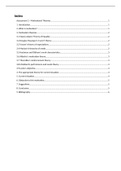
Assessment 2 - Motivational Theories.....................................................................................................1
1. Introduction.........................................................................................................................................1
2. What is motivation?.............................................................................................................................1
3. Motivation theories.............................................................................................................................2
3.1 Stacey Adams' Theory of Equality......................................................................................................2
3.2 Douglas Mcgregor's X and Y theory...................................................................................................2
3.3 Vroom’s theory of expectations.........................................................................................................2
3.4 Maslow's hierarchy of needs.............................................................................................................2
3.5 Hackman and Oldham's work characteristics....................................................................................3
3.6 Alderfer's motivation theory..............................................................................................................3
3.7 Thorndike's reinforcement theory.....................................................................................................3
3.8 Mclelland's performance and needs theory......................................................................................3
3.9 Locke's objective................................................................................................................................3
4. The appropriate theory for current situation......................................................................................3
5. Current situation..................................................................................................................................4
6. Obstacles to this motivation................................................................................................................5
7. Suggestions..........................................................................................................................................5
8. Conclusion...........................................................................................................................................5
9. Bibliography.........................................................................................................................................6
, Assessment 2 - Motivational Theories
1. Introduction
What gives people the drive, the will to learn and make a difference or to transfer knowledge?
These are just a few questions about motivation. The effect of motivation on any person can
make a huge impact on their lives i.e. that motivation is an attitude. The theory that highly
motivated teachers' learners are also so motivated is seen around the world as not a theory, but
a reality.
Teachers are motivated by money, the feeling of satisfaction, good working conditions,
constructive feedback, their colleagues etc. Teachers will stay motivated as long as they feel
they have something they can strive for. There will be many obstacles for every teacher, but it's
about the way they handle it.
No teacher is the same, every teacher has their own views and feelings about motivation. It is
important for the leader of the school to give the teachers the optimal chance that keeps them
motivated.
2. What is motivation?
Motivation is the positive, inner feeling of completing a task. Motivation differs from self-
discipline, because motivation is a feeling of wanting to do something, where self-discipline is
something that needs to be done but the person is not willing to do it. When a person is
motivated then the self-discipline will be low, when someone is not motivated, the self-discipline
of the person will be high. Man depends on both of them. Motivation can become less and it can
become more, there are many factors that can influence this.
Motivation is not just a talk with the teachers to make them feel better. It's about sustainability.
There must always be an urge and an attitude to do something (Brophy, 2004). This is the
leader's goal, he must put actions in place so that teachers feel that they are working for
something, that what they are doing is noticed. The leader needs to cultivate the urge within his
teachers to get motivated.
More often than not, motivation is driven by an interest. If a person does not value the task
highly, not much value will be attached to the task. The task must have a personal effect on the
person's values. People also feel that if a task is too difficult to complete, that they are not
motivated to do it (Brophy, 2004). Teachers are motivated by the support of the principal (Caine
& Caine, 1997). Teachers add highly motivated if they know someone is behind them. It is clear
that a catalyst must serve as a motivator.
1
Assessment 2 - Motivational Theories.....................................................................................................1
1. Introduction.........................................................................................................................................1
2. What is motivation?.............................................................................................................................1
3. Motivation theories.............................................................................................................................2
3.1 Stacey Adams' Theory of Equality......................................................................................................2
3.2 Douglas Mcgregor's X and Y theory...................................................................................................2
3.3 Vroom’s theory of expectations.........................................................................................................2
3.4 Maslow's hierarchy of needs.............................................................................................................2
3.5 Hackman and Oldham's work characteristics....................................................................................3
3.6 Alderfer's motivation theory..............................................................................................................3
3.7 Thorndike's reinforcement theory.....................................................................................................3
3.8 Mclelland's performance and needs theory......................................................................................3
3.9 Locke's objective................................................................................................................................3
4. The appropriate theory for current situation......................................................................................3
5. Current situation..................................................................................................................................4
6. Obstacles to this motivation................................................................................................................5
7. Suggestions..........................................................................................................................................5
8. Conclusion...........................................................................................................................................5
9. Bibliography.........................................................................................................................................6
, Assessment 2 - Motivational Theories
1. Introduction
What gives people the drive, the will to learn and make a difference or to transfer knowledge?
These are just a few questions about motivation. The effect of motivation on any person can
make a huge impact on their lives i.e. that motivation is an attitude. The theory that highly
motivated teachers' learners are also so motivated is seen around the world as not a theory, but
a reality.
Teachers are motivated by money, the feeling of satisfaction, good working conditions,
constructive feedback, their colleagues etc. Teachers will stay motivated as long as they feel
they have something they can strive for. There will be many obstacles for every teacher, but it's
about the way they handle it.
No teacher is the same, every teacher has their own views and feelings about motivation. It is
important for the leader of the school to give the teachers the optimal chance that keeps them
motivated.
2. What is motivation?
Motivation is the positive, inner feeling of completing a task. Motivation differs from self-
discipline, because motivation is a feeling of wanting to do something, where self-discipline is
something that needs to be done but the person is not willing to do it. When a person is
motivated then the self-discipline will be low, when someone is not motivated, the self-discipline
of the person will be high. Man depends on both of them. Motivation can become less and it can
become more, there are many factors that can influence this.
Motivation is not just a talk with the teachers to make them feel better. It's about sustainability.
There must always be an urge and an attitude to do something (Brophy, 2004). This is the
leader's goal, he must put actions in place so that teachers feel that they are working for
something, that what they are doing is noticed. The leader needs to cultivate the urge within his
teachers to get motivated.
More often than not, motivation is driven by an interest. If a person does not value the task
highly, not much value will be attached to the task. The task must have a personal effect on the
person's values. People also feel that if a task is too difficult to complete, that they are not
motivated to do it (Brophy, 2004). Teachers are motivated by the support of the principal (Caine
& Caine, 1997). Teachers add highly motivated if they know someone is behind them. It is clear
that a catalyst must serve as a motivator.
1