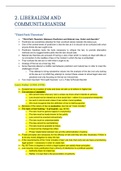
2. LIBERALISM AND
COMMUNITARIANISM
“Third Path Theorists”
“Third Path Theorists: Between Positivism and Natural Law, Fuller and Dworkin”
Positivists are sometimes attacked for their uncritical stance towards the status quo.
One of the central tenets of positivism is that the law as it is should not be confused with what
anyone thinks the law ought to be.
Positivism therefore lacks the tools necessary to critique the law, to provide alternative
methods and to suggest better paths that the law should take.
Natural law theorists are accused of having a view of law which is merely an ideal with little or
no connection to the realities of law or the context in which the law is embedded.
They confuse the law as it is with what it ought to be.
Analogy of the law as a boat (pg. 84).
Some theorists attempt a middle road between positivism and natural law in order to meet the
challenges of both.
o They attempt to bring substantive values into the analysis of the law (not only looking
at the law as it is) AND they attempt to connect these values to actual legal rules and
practices (not only focusing on the law as it should be).
Two most important “third path theorists”: Lon L Fuller & Ronald Dworkin
Lon L Fuller (1902-1978)
Accepts law as a system of rules and does not ask us to believe in higher law.
The concept of “purpose”:
o We cannot know what any rule is unless we know what it intends to achieve.
o Law should not be viewed as a brut social fact – rather it is a purposive enterprise.
o As such it cannot exist unless it has certain moral qualities.
o We must recognise that the definition of law is itself purposive.
Because of the nature of law as purposive, law has an “inner morality”.
The laws of law-making – 8 principles: (pg. 86-88)
o The law must be general (apply to everybody);
o The law must be made known to the public;
o Law cannot be enacted retroactively;
o The law must be understandable;
o The law cannot be contradictory;
o The law must be possible to follow;
o It must not be changed too often;
o Proper relationship between law and the administration of justice.
These principles are necessary for the efficacy of law and they are also necessary if there is
to be any moral obligation to obey the law.
If the requirements of the “inner morality of law” are met, then only can we have a functioning
legal system – necessary in order to create law.
Pg. 89 There is degrees to which a legal system can satisfy these principles.
Law requires more justification than a theory of obedience to a political superior.
o Authority does not make law.
o Rather, it is law that is the precondition of authority.
, Ronald Dworkin (1931-2013)
The point of law is the need for a justification of the state’s use of coercion.
Law does not merely consist of rules, but it also consists of general standards or principles.
o Rules apply in an all-or-nothing fashion.
o Principles provide weight or gravitational pull.
o One cannot have two competing rules – one must be chosen over the other.
o Principles can co-exist in the law because they do not apply in an all-or-nothing
fashion. They can be continually balanced with more weight given to one or another
in a given context.
o For Dworkin there are numerous moral principles that evade legal systems.
Legal principles are often implicit and underline, justify or give reasons for the various rules
we find in the legal system.
We cannot sharply distinguish legal principles from moral principles. Law is relative to the
legal system one is working within:
o “You cannot think about the correct answers to questions of law unless you have
thought through a theoretical system of complex principles about the nature of the
given area of law.” (98)
o The principles of political morality that you turn to in order to justify state coercion are
those that come from the system one is working within.
o One principle or another will provide a better justification for some part of the legal
practice.
o Choose the principle or value that best “fit and justify the historical record of law” =
Law as integrity.
E.g. writing the following chapter of a novel.
o Law as integrity draws us to the overarching theoretical system of principles.
Like cases should be treated alike, turn to community’s historical record of
cases and find the principle that best fits and justifies the record.
o Important for Dworkin that judges should turn to these principles in difficult cases
(conform to the law of integrity).
What if there is disagreement about what principles best justifies the area of law or the legal
system? Competing interests?
Dworkin’s ideal judge: Hercules (pg. 106).
Ronald Dworkin article
Famous legal philosopher
o Prof at Oxford & NYU
Author of Taking Rights Seriously, Law’s Empire; Life’s Domination; Sovereign Virtue; Justice
for Hedgehogs
Know for his favour of constitutional/judicial review (which the Brits don’t like)
o Looked at counter majoritarian dilemma
o How can the unelected judge make decisions which frustrate the will of the elected
legislature
Third way theorists between natural law & positivism
o People started to have doubts about legal positivism towards the middle of the 20 th c
o Due to Nazi Germany. The judges typically felt that they need ed to apply the law as it
is, and as a result there was a huge outcry about legal positivism
o Natural law is a difficult & problematic type of philosophy in the 20 th c
COMMUNITARIANISM
“Third Path Theorists”
“Third Path Theorists: Between Positivism and Natural Law, Fuller and Dworkin”
Positivists are sometimes attacked for their uncritical stance towards the status quo.
One of the central tenets of positivism is that the law as it is should not be confused with what
anyone thinks the law ought to be.
Positivism therefore lacks the tools necessary to critique the law, to provide alternative
methods and to suggest better paths that the law should take.
Natural law theorists are accused of having a view of law which is merely an ideal with little or
no connection to the realities of law or the context in which the law is embedded.
They confuse the law as it is with what it ought to be.
Analogy of the law as a boat (pg. 84).
Some theorists attempt a middle road between positivism and natural law in order to meet the
challenges of both.
o They attempt to bring substantive values into the analysis of the law (not only looking
at the law as it is) AND they attempt to connect these values to actual legal rules and
practices (not only focusing on the law as it should be).
Two most important “third path theorists”: Lon L Fuller & Ronald Dworkin
Lon L Fuller (1902-1978)
Accepts law as a system of rules and does not ask us to believe in higher law.
The concept of “purpose”:
o We cannot know what any rule is unless we know what it intends to achieve.
o Law should not be viewed as a brut social fact – rather it is a purposive enterprise.
o As such it cannot exist unless it has certain moral qualities.
o We must recognise that the definition of law is itself purposive.
Because of the nature of law as purposive, law has an “inner morality”.
The laws of law-making – 8 principles: (pg. 86-88)
o The law must be general (apply to everybody);
o The law must be made known to the public;
o Law cannot be enacted retroactively;
o The law must be understandable;
o The law cannot be contradictory;
o The law must be possible to follow;
o It must not be changed too often;
o Proper relationship between law and the administration of justice.
These principles are necessary for the efficacy of law and they are also necessary if there is
to be any moral obligation to obey the law.
If the requirements of the “inner morality of law” are met, then only can we have a functioning
legal system – necessary in order to create law.
Pg. 89 There is degrees to which a legal system can satisfy these principles.
Law requires more justification than a theory of obedience to a political superior.
o Authority does not make law.
o Rather, it is law that is the precondition of authority.
, Ronald Dworkin (1931-2013)
The point of law is the need for a justification of the state’s use of coercion.
Law does not merely consist of rules, but it also consists of general standards or principles.
o Rules apply in an all-or-nothing fashion.
o Principles provide weight or gravitational pull.
o One cannot have two competing rules – one must be chosen over the other.
o Principles can co-exist in the law because they do not apply in an all-or-nothing
fashion. They can be continually balanced with more weight given to one or another
in a given context.
o For Dworkin there are numerous moral principles that evade legal systems.
Legal principles are often implicit and underline, justify or give reasons for the various rules
we find in the legal system.
We cannot sharply distinguish legal principles from moral principles. Law is relative to the
legal system one is working within:
o “You cannot think about the correct answers to questions of law unless you have
thought through a theoretical system of complex principles about the nature of the
given area of law.” (98)
o The principles of political morality that you turn to in order to justify state coercion are
those that come from the system one is working within.
o One principle or another will provide a better justification for some part of the legal
practice.
o Choose the principle or value that best “fit and justify the historical record of law” =
Law as integrity.
E.g. writing the following chapter of a novel.
o Law as integrity draws us to the overarching theoretical system of principles.
Like cases should be treated alike, turn to community’s historical record of
cases and find the principle that best fits and justifies the record.
o Important for Dworkin that judges should turn to these principles in difficult cases
(conform to the law of integrity).
What if there is disagreement about what principles best justifies the area of law or the legal
system? Competing interests?
Dworkin’s ideal judge: Hercules (pg. 106).
Ronald Dworkin article
Famous legal philosopher
o Prof at Oxford & NYU
Author of Taking Rights Seriously, Law’s Empire; Life’s Domination; Sovereign Virtue; Justice
for Hedgehogs
Know for his favour of constitutional/judicial review (which the Brits don’t like)
o Looked at counter majoritarian dilemma
o How can the unelected judge make decisions which frustrate the will of the elected
legislature
Third way theorists between natural law & positivism
o People started to have doubts about legal positivism towards the middle of the 20 th c
o Due to Nazi Germany. The judges typically felt that they need ed to apply the law as it
is, and as a result there was a huge outcry about legal positivism
o Natural law is a difficult & problematic type of philosophy in the 20 th c