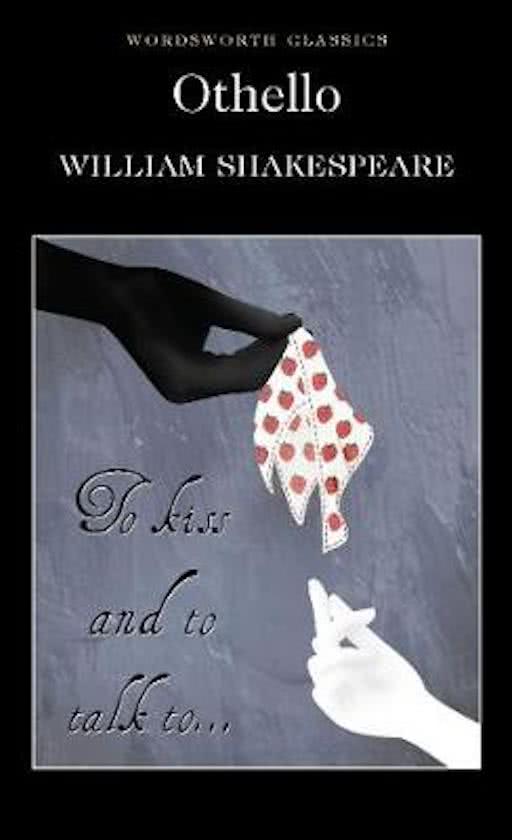
OTHELLO
THE ULTIMATE SPIDER-MAN STUDY GUIDE
"With great power comes great responsibility" — and great quotes for your exam.
Shakespeare's Othello is a web of jealousy, manipulation, race, power, and identity. This guide gives you every
quote, every technique, every essay plan, and every angle — for every possible exam question. Think of it as
your Spider-Sense for the exam room.
WEB OF CONTENTS
1. Jealousy & Manipulation 2. Race & Otherness 3. Gender & Power 4. Appearance vs Reality / Deception 5.
Love & Desire 6. Honour & Reputation 7. Chaos vs Order 8. Internal Conflict vs External Manipulation 9.
Animalistic Imagery 10. Shakespeare to the Audience 11. Universal Quotes — Fit ANY Essay 12. Notes from
Your Resources 13. Essay Planning Grids: All 7 Topics 14. Exam Power Phrases
, THEME 1: JEALOUSY & MANIPULATION
Jealousy is the venom that destroys Othello. Iago is the ultimate manipulator while Othello is the hero whose
greatest weakness is his trusting nature. Shakespeare presents jealousy as an unstoppable, consuming force
that corrupts even the most noble.
"O, beware, my lord, of jealousy! It is the green-eyed monster which doth mock the meat it feeds
on."
— Iago, Act 3, Scene 3
Point: Iago ironically warns Othello of the very trap he is setting.
Evidence/Link: The 'green-eyed monster' metaphor is extended — jealousy both torments and feeds off its victim,
suggesting Othello's destruction is inevitable once it takes hold. Link to: deception, Iago's villainy, animal imagery,
dramatic irony.
"I am not what I am."
— Iago, Act 1, Scene 1
Point: Iago openly announces his deceptive nature — he is the web-spinner behind all events.
Evidence/Link: The inversion of Exodus ('I am that I am') casts Iago as anti-God: a figure of pure evil and chaos.
This is the thematic foundation of manipulation throughout the play. Link to: appearance vs reality,
Satan/Machiavellian villain archetype.
"I'll pour this pestilence into his ear."
— Iago, Act 2, Scene 3
Point: Iago frames manipulation as disease — something that spreads and corrupts from within.
Evidence/Link: 'Pestilence' = plague. The ear imagery links to the idea that language itself can poison. Iago is a
biological predator. Link to: power of language, manipulation, corruption of the noble.
"O, now for ever farewell the tranquil mind!"
— Othello, Act 3, Scene 3
Point: This is the turning point — Othello's psyche breaks under Iago's manipulation.
Evidence/Link: The rhetorical farewell speech marks Othello's transformation from general to consumed man. His
identity collapses without 'Othello the soldier.' Link to: identity, jealousy, the tragic hero's fall.
"They are not ever jealous for the cause, but jealous for they are jealous. It is a monster begot
upon itself, born on itself."
— Emilia, Act 3, Scene 4
Point: Emilia understands jealousy better than anyone — it is self-generating, needing no real cause.
Evidence/Link: Jealousy is a 'monster / begot on itself' — it reproduces by feeding on itself. This directly
undermines Iago's stated 'reasons': the real reason is that jealousy needs no reason. Link to: jealousy,
manipulation, Iago's motivations, chaos.
,SPIDEY SENSE: Jealousy quotes work for: Othello's downfall, Iago's villainy, tragic flaw, power of language,
corruption, internal conflict.
, THEME 2: RACE & OTHERNESS
Othello is the ultimate outsider. Shakespeare presents race as a social construct used to undermine Othello's
authority — yet Othello himself internalises these racist views, making race a key factor in his psychological
collapse.
"Even now, now, very now, an old black ram is tupping your white ewe!"
— Iago, Act 1, Scene 1
Point: Iago uses bestial, sexualised racial imagery to provoke Brabantio — race is weaponised as social shock.
Evidence/Link: 'Black ram' vs 'white ewe' — animal imagery degrades Othello and frames interracial love as
unnatural. This sets up Venetian prejudice before Othello even speaks. Link to: dehumanisation, power, gender,
Iago's manipulation.
"Her name, that was as fresh as Dian's visage, is now begrimed and black as mine own face."
— Othello, Act 3, Scene 3
Point: Crucially, Othello begins to use racist language against HIMSELF — he has internalised society's prejudice.
Evidence/Link: The comparison of Desdemona's honour to his own 'black' face shows how deeply racism has
entered his psyche. This is the tragedy of the 'outsider' who can never truly belong. Link to: identity crisis, jealousy,
destruction of the self, colonised mindset.
"Haply, for I am black and have not those soft parts of conversation that chamberers have..."
— Othello, Act 3, Scene 3
Point: Othello attributes Desdemona's (imagined) infidelity to his race and social difference.
Evidence/Link: 'Haply' (perhaps) shows Othello's uncertainty has been poisoned into racist self-explanation. He
blames his own identity rather than Iago's lies. Link to: otherness, jealousy, manipulation, identity, internal conflict.
"I fetch my life and being from men of royal siege."
— Othello, Act 1, Scene 2
Point: Othello asserts his nobility early — he is not defined by how others see him.
Evidence/Link: This early confidence contrasts sharply with his later self-doubt. Race-based attacks erode even
the most dignified self-image. Link to: honour, identity, tragic fall, power.
SPIDEY SENSE: Race quotes work for: identity, power, prejudice, Othello's downfall, society, Iago's villainy,
appearance vs reality, internal conflict.
, THEME 3: GENDER & POWER
Women in Othello exist in a Venetian world that owns and silences them — yet Desdemona and Emilia push
back. Emilia is the real hero: she speaks truth to power even when it costs her everything.
"I am your wife, my lord, and you are my lord... I am obedient."
— Desdemona, Act 3, Scene 3
Point: Desdemona defines herself entirely through Othello — showing how patriarchal society strips women of
independent identity.
Evidence/Link: The repetition of 'lord' frames marriage as ownership. Desdemona's obedience is what makes her
vulnerable. Link to: power, love, gender roles, tragedy, patriarchy.
"'Tis not a year or two shows us a man. They are all but stomachs, and we all but food."
— Emilia, Act 3, Scene 4
Point: Emilia offers a cynical but sharp critique of men and marriage — a proto-feminist voice.
Evidence/Link: The food metaphor is brutal: men consume women and discard them. This contrasts with
Desdemona's idealism. Link to: gender, power, marriage, Emilia as voice of truth.
"But I do think it is their husbands' faults if wives do fall."
— Emilia, Act 4, Scene 3
Point: Emilia directly challenges the double standard that punishes women for behaviour caused by men.
Evidence/Link: This 'willow scene' speech is radical for the period. Shakespeare uses her as a moral compass
that the other characters ignore to their cost. Link to: feminism, gender, power, justice.
"Nobody — I myself. Farewell. Commend me to my kind lord."
— Desdemona, Act 5, Scene 2
Point: Desdemona's dying words protect Othello — patriarchy internalised so deeply she shields her murderer.
Evidence/Link: The ultimate act of unconditional love — or the ultimate tragedy of female powerlessness.
Shakespeare lets the audience decide. Link to: gender, love, patriarchy, power, tragedy.
SPIDEY SENSE: Gender quotes work for: power, love, feminist readings, Emilia's role, Desdemona as victim,
patriarchy, tragedy.
, THEME 4: APPEARANCE vs REALITY / DECEPTION
This is Iago's superpower — the mask. Like any great villain, Iago's power lies in appearing trustworthy while
being the opposite. Shakespeare questions whether anyone can truly 'see' reality.
"Men should be what they seem; or those that be not, would they might seem none!"
— Iago, Act 3, Scene 3
Point: Iago ironically preaches honesty while embodying its opposite — pure theatrical villainy.
Evidence/Link: The dramatic irony is devastating: Iago himself is the proof that men are not what they seem. Link
to: deception, honesty, Iago's villainy, dramatic irony.
"Honest Iago."
— Othello, Act 1, Scene 3
Point: Othello's repeated use of 'honest Iago' (10+ times) is the central irony of the play.
Evidence/Link: Each repetition deepens the tragedy. The word 'honest' becomes corrupted — showing how
language shapes perception. Link to: deception, tragic flaw, irony, manipulation.
"Trifles light as air are to the jealous confirmations strong as proofs of holy writ."
— Iago, Act 3, Scene 3
Point: Iago understands that jealousy distorts reality — small things become 'proof' when the mind is poisoned.
Evidence/Link: Religious imagery ('holy writ') is sinister: jealousy becomes a kind of faith. Othello replaces truth
with Iago's fabricated narrative. Link to: jealousy, manipulation, appearance vs reality, religion.
SPIDEY SENSE: Appearance vs Reality quotes work for: Iago's villainy, Othello's downfall, dramatic irony,
deception, trust, the handkerchief as symbol.