BDE 214: Ecosystems
Lecture One: Systems Ecology Energetics
Definitions Angiosperms: Plants that produce flowers and fruit. The seeds
develop in the flower and are protected in the fruit.
Gymnosperms: Plants that only produce seeds.
Autotroph: Organisms which make their own organic compounds.
Standing Crop (SCB): The total biomass of a system.
GPP: Gross Primary Production
NPP: Net Primary Production
ANPP: Above-ground Net Primary Production
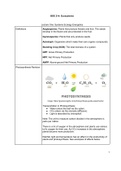
Photosynthesis Revision
Image: https://gosciencegirls.com/photosynthesis-guide-experiments/
Transportation in Photosynthesis
● Water enters the leaf via the xylem.
● CO2 enters via the stomata (diffusion).
● Light is absorbed by chlorophyll.
Note: The unit to measure carbon dioxide in the atmosphere is
parts per million.
There is a lot of oxygen in the atmosphere and plants use rubisco
to fix oxygen for their use. As CO 2 increases in the atmosphere,
plants become more productive.
Rainfall, light and temperature has an effect on the productivity of
plants and photosynthesis. See examples of effects below.
1
, Rainfall
Adjusted root depth, soil types, competing plants and types of
xylems that evolved. Angiosperms have vessels and
gymnosperms have tracheas (thin and narrow). The thinner and
narrower trachea is less efficient. But this is sufficient in dry areas.
Light
Cloud cover effects, day lengths, time of day.
Temperature
Rate of metabolic reactions.
Productivity Introduction
Source:
https://www.khanacademy.org/science/biology/ecology/intro-to-ecosystems/a/ene
rgy-flow-primary-productivity
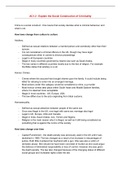
Energy Transfer in The energy fixed by photosynthesis is the basis of primary
Photosynthesis production.
The rate of conversion of radiant energy to organic compounds =
primary productivity.
GPP (Gross Primary Production): The total rate of
photosynthesis.
NPP (Net Primary Production): The GPP-autotrophic respiration.
The rate at which material is accumulated in excess of respiration.
The units used for this are kcal/m^2/year or g/m^2/year.
Standing Crop Standing crop is the total biomass of an ecosystem and its
components at a given time. This is not the same thing as
productivity.
2
, Image: http://www.sliderbase.com/spitem-1477-4.html
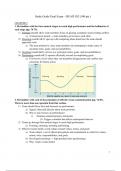
GPP & NPP
Image: Lecture Notes
The GPP & NPP indicate the ecosystems health and productivity.
NEE NEE is the Net Ecosystem Exchange.
This is the measure of the net exchange of C between an
ecosystem.
3
, Image:
https://biology.stackexchange.com/questions/81773/what-does-the-difference-bet
ween-gpp-npp-represent
Measuring NPP Measuring NPP is done by analyzing change in biomass (standing
crop).
SCB: Standing Crop Biomass (This takes account of the losses
due to autotrophic respiration).
t: Time
ΔSCB = SCBt2 ‐ SCBt1
But the losses due to death (D) and consumption (C) must be
included to calculate NPP.
NPP = ΔSCB + D + C
Belowground Biomass
● This is the biomass present below ground (roots).
● Errors in the calculations occur due to belowground
biomass.
● This is fixed by using ANPP, the Above-ground Net Primary
Production.
Measuring ANPP
Litterfall traps are used to measure above ground net primary
production. This method is not foolproof.
Ecosystem Flux
Measurement
3D Sonic Anemometer Gas Analyzer
Measures vertical wind speed Measures CO2 density and
and temperature. H2O density.
4
Lecture One: Systems Ecology Energetics
Definitions Angiosperms: Plants that produce flowers and fruit. The seeds
develop in the flower and are protected in the fruit.
Gymnosperms: Plants that only produce seeds.
Autotroph: Organisms which make their own organic compounds.
Standing Crop (SCB): The total biomass of a system.
GPP: Gross Primary Production
NPP: Net Primary Production
ANPP: Above-ground Net Primary Production
Photosynthesis Revision
Image: https://gosciencegirls.com/photosynthesis-guide-experiments/
Transportation in Photosynthesis
● Water enters the leaf via the xylem.
● CO2 enters via the stomata (diffusion).
● Light is absorbed by chlorophyll.
Note: The unit to measure carbon dioxide in the atmosphere is
parts per million.
There is a lot of oxygen in the atmosphere and plants use rubisco
to fix oxygen for their use. As CO 2 increases in the atmosphere,
plants become more productive.
Rainfall, light and temperature has an effect on the productivity of
plants and photosynthesis. See examples of effects below.
1
, Rainfall
Adjusted root depth, soil types, competing plants and types of
xylems that evolved. Angiosperms have vessels and
gymnosperms have tracheas (thin and narrow). The thinner and
narrower trachea is less efficient. But this is sufficient in dry areas.
Light
Cloud cover effects, day lengths, time of day.
Temperature
Rate of metabolic reactions.
Productivity Introduction
Source:
https://www.khanacademy.org/science/biology/ecology/intro-to-ecosystems/a/ene
rgy-flow-primary-productivity
Energy Transfer in The energy fixed by photosynthesis is the basis of primary
Photosynthesis production.
The rate of conversion of radiant energy to organic compounds =
primary productivity.
GPP (Gross Primary Production): The total rate of
photosynthesis.
NPP (Net Primary Production): The GPP-autotrophic respiration.
The rate at which material is accumulated in excess of respiration.
The units used for this are kcal/m^2/year or g/m^2/year.
Standing Crop Standing crop is the total biomass of an ecosystem and its
components at a given time. This is not the same thing as
productivity.
2
, Image: http://www.sliderbase.com/spitem-1477-4.html
GPP & NPP
Image: Lecture Notes
The GPP & NPP indicate the ecosystems health and productivity.
NEE NEE is the Net Ecosystem Exchange.
This is the measure of the net exchange of C between an
ecosystem.
3
, Image:
https://biology.stackexchange.com/questions/81773/what-does-the-difference-bet
ween-gpp-npp-represent
Measuring NPP Measuring NPP is done by analyzing change in biomass (standing
crop).
SCB: Standing Crop Biomass (This takes account of the losses
due to autotrophic respiration).
t: Time
ΔSCB = SCBt2 ‐ SCBt1
But the losses due to death (D) and consumption (C) must be
included to calculate NPP.
NPP = ΔSCB + D + C
Belowground Biomass
● This is the biomass present below ground (roots).
● Errors in the calculations occur due to belowground
biomass.
● This is fixed by using ANPP, the Above-ground Net Primary
Production.
Measuring ANPP
Litterfall traps are used to measure above ground net primary
production. This method is not foolproof.
Ecosystem Flux
Measurement
3D Sonic Anemometer Gas Analyzer
Measures vertical wind speed Measures CO2 density and
and temperature. H2O density.
4