Anatomy 101
The Cardiovascular System
,The Cardiovascular System
Overview
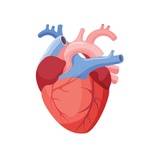
The cardiovascular system, is a network composed
of the heart as a centralised pump, bloods vessels
that distribute blood throughout the body, and the
blood which transports of different substances.
The circulatory system is divided into two separate
loops:
Pulmonary circuit that exchanges blood between
the heart and the lungs for oxygenation
Systemic circuit that distributes blood throughout
all other systems and tissues of the body. Both of
these circuits begin and end in the heart.
,The Cardiovascular System
Key facts
Functions Transport of gases, nutrients, electrolytes, wastes, hormones
Heart Layers - myocardium, endocardium, epicardium
Chambers - left and right atria, left and right ventricles
Blood vessels - arteries (oxygenated blood), veins (deoxygenated blood)
Blood vessels Arteries, veins, capillaries
Hierarchy: Heart -> arteries -> arterioles -> capillaries [gas exchange - oxygenated
blood becomes deoxygenated] -> venules -> veins -> heart
Circulations Pulmonary - superior and inferior vena cava (with deoxygenated blood) -> right atrium -
> right ventricle -> right and left pulmonary artery -> capillaries of each lung
(oxygenation of the blood) -> pulmonary veins -> left atrium -> systemic circulation
Systemic - left atrium -> left ventricle -> aorta and all of its branches -> capillaries ->
veins -> superior and inferior vena cava -> pulmonary circulation
Coronary - ascending aorta -> right coronary artery -> right marginal branch, posterior
interventricular artery, left coronary artery -> anterior interventricular branch
(anastomoses with the posterior branch), circumflex artery
Blood Plasma with cellular components:
Erythrocytes (red blood cells) - contain hemoglobin and carry oxygen in blood vessels.
Leukocytes (white blood cells) - immune system cells
Thrombocytes (platelets) - coagulation cells
Clinical relations Arteriosclerosis, cerebrovascular disease, peripheral artery disease, aneurysm, varices,
arrhytmia, heart failure
,The Cardiovascular System
Functions
The main function of the CVS is to deliver oxygen to
the body tissues, whilst simultaneously removing
carbon dioxide.
Beginning in the heart, deoxygenated blood
(containing carbon dioxide) is returned from systemic
circulation to the right side of the heart.
It is pumped into pulmonary circulation and is
delivered to the lungs, where gas exchange occurs.
The carbon dioxide is removed from the blood and
replaced with oxygen.
The blood is now oxygenated, and returns to the left
side of the heart.
, The Cardiovascular System
Functions
From the left side of the heart, blood is pumped through
the aorta into the systemic circuit.
Blood delivers oxygen to the tissues as arteries, and
returns again to the right side of the heart as veins.
The blood also acts as an excellent transport medium
for nutrients, such as electrolytes, as well as hormones.
The blood transports waste products, that are filtered
from the blood in the liver.
The Cardiovascular System
,The Cardiovascular System
Overview
The cardiovascular system, is a network composed
of the heart as a centralised pump, bloods vessels
that distribute blood throughout the body, and the
blood which transports of different substances.
The circulatory system is divided into two separate
loops:
Pulmonary circuit that exchanges blood between
the heart and the lungs for oxygenation
Systemic circuit that distributes blood throughout
all other systems and tissues of the body. Both of
these circuits begin and end in the heart.
,The Cardiovascular System
Key facts
Functions Transport of gases, nutrients, electrolytes, wastes, hormones
Heart Layers - myocardium, endocardium, epicardium
Chambers - left and right atria, left and right ventricles
Blood vessels - arteries (oxygenated blood), veins (deoxygenated blood)
Blood vessels Arteries, veins, capillaries
Hierarchy: Heart -> arteries -> arterioles -> capillaries [gas exchange - oxygenated
blood becomes deoxygenated] -> venules -> veins -> heart
Circulations Pulmonary - superior and inferior vena cava (with deoxygenated blood) -> right atrium -
> right ventricle -> right and left pulmonary artery -> capillaries of each lung
(oxygenation of the blood) -> pulmonary veins -> left atrium -> systemic circulation
Systemic - left atrium -> left ventricle -> aorta and all of its branches -> capillaries ->
veins -> superior and inferior vena cava -> pulmonary circulation
Coronary - ascending aorta -> right coronary artery -> right marginal branch, posterior
interventricular artery, left coronary artery -> anterior interventricular branch
(anastomoses with the posterior branch), circumflex artery
Blood Plasma with cellular components:
Erythrocytes (red blood cells) - contain hemoglobin and carry oxygen in blood vessels.
Leukocytes (white blood cells) - immune system cells
Thrombocytes (platelets) - coagulation cells
Clinical relations Arteriosclerosis, cerebrovascular disease, peripheral artery disease, aneurysm, varices,
arrhytmia, heart failure
,The Cardiovascular System
Functions
The main function of the CVS is to deliver oxygen to
the body tissues, whilst simultaneously removing
carbon dioxide.
Beginning in the heart, deoxygenated blood
(containing carbon dioxide) is returned from systemic
circulation to the right side of the heart.
It is pumped into pulmonary circulation and is
delivered to the lungs, where gas exchange occurs.
The carbon dioxide is removed from the blood and
replaced with oxygen.
The blood is now oxygenated, and returns to the left
side of the heart.
, The Cardiovascular System
Functions
From the left side of the heart, blood is pumped through
the aorta into the systemic circuit.
Blood delivers oxygen to the tissues as arteries, and
returns again to the right side of the heart as veins.
The blood also acts as an excellent transport medium
for nutrients, such as electrolytes, as well as hormones.
The blood transports waste products, that are filtered
from the blood in the liver.