Atomic Structure and Periodic Table
Molecule is a group of 2 or more atoms held together by chemical bonds.
Groups are columns on a periodic table; each element has the same number of electrons
in their outer shell. Period are the rows.
Metal + non-metal= name of metal + non metal ending with ide
e.g. oxygen-oxide
When metal is combined with oxygen it ends with ate
e.g. sulphur+ oxygen- sulphate
When water and metal combine it ends with:
e.g. lithium + water= lithium hydroxide + water
Homogeneous mixtures- is a mixture so well mixed, that you cant see individual bits
Heterogeneous mixtures- is a mixture not well mixed, you can seethe individual pieces.
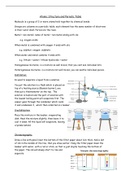
Distillation:
Is used to separate a liquid from a solution.
You put the solution in a flask which is placed on
top of a heating source (Bunsen burner), you
then put a thermometer on the top . The
solution is heated and the part of solution with
the lowest boiling point will evaporate frst. The
vapour goes through the condenser which cools
it and condenses it, which then collected in a beaker.
Crystallisation:
Place the mixture in the beaker, evaporating
dish. Heat the mixture slightly, then leave it to
cool it down. All the liquid will evaporate, leaving
crystals behind.
Chromotography:
Draw a line with pencil near the bottom of the filter paper about 1cm thick. Add a dot
of ink in the middle of the line, that you drew earlier. Hang the filter paper down the
beaker with water, with a rod or stick, so that is just sligtly touching the bottom of
the paper. The ink will slowly start to rise and
separate
Molecule is a group of 2 or more atoms held together by chemical bonds.
Groups are columns on a periodic table; each element has the same number of electrons
in their outer shell. Period are the rows.
Metal + non-metal= name of metal + non metal ending with ide
e.g. oxygen-oxide
When metal is combined with oxygen it ends with ate
e.g. sulphur+ oxygen- sulphate
When water and metal combine it ends with:
e.g. lithium + water= lithium hydroxide + water
Homogeneous mixtures- is a mixture so well mixed, that you cant see individual bits
Heterogeneous mixtures- is a mixture not well mixed, you can seethe individual pieces.
Distillation:
Is used to separate a liquid from a solution.
You put the solution in a flask which is placed on
top of a heating source (Bunsen burner), you
then put a thermometer on the top . The
solution is heated and the part of solution with
the lowest boiling point will evaporate frst. The
vapour goes through the condenser which cools
it and condenses it, which then collected in a beaker.
Crystallisation:
Place the mixture in the beaker, evaporating
dish. Heat the mixture slightly, then leave it to
cool it down. All the liquid will evaporate, leaving
crystals behind.
Chromotography:
Draw a line with pencil near the bottom of the filter paper about 1cm thick. Add a dot
of ink in the middle of the line, that you drew earlier. Hang the filter paper down the
beaker with water, with a rod or stick, so that is just sligtly touching the bottom of
the paper. The ink will slowly start to rise and
separate