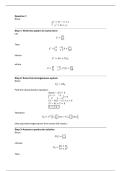
Question 1
Solve
𝑥 ′ = 3𝑥 − 𝑦 + 𝑡,
{
𝑦 ′ = 2𝑥 + 𝑦.
Step 1: Write the system in matrix form
Let
𝑥
𝑋 = [𝑦].
Then
3 −1 𝑡
𝑋′ = [ ] 𝑋 + [ ].
2 1 0
Hence
𝑋 ′ = 𝐴𝑋 + 𝐹(𝑡),
where
3 −1 𝑡
𝐴=[ ] , 𝐹(𝑡) = [ ].
2 1 0
Step 2: Solve the homogeneous system
Solve
𝑋ℎ′ = 𝐴𝑋ℎ .
Find the characteristic equation.
det(𝐴 − 𝜆𝐼) = 0
∣∣3 − 𝜆 −1 ∣
∣=0
∣ 2 1 − 𝜆∣
(3 − 𝜆)(1 − 𝜆) + 2 = 0
𝜆2 − 4𝜆 + 5 = 0
𝜆 =2±𝑖
Therefore
1 1
𝑋ℎ = 𝑒 2𝑡 [𝐶1 [ ] cos 𝑡 + 𝐶2 [ ] sin 𝑡].
1 1
(Any equivalent eigenvector form earns full marks.)
Step 3: Assume a particular solution
Since
𝑡
𝐹(𝑡) = [ ],
0
choose
𝑎𝑡 + 𝑏
𝑋𝑝 = [ ].
𝑐𝑡 + 𝑑
Then
, 𝑎
𝑋𝑝′ = [ ].
𝑐
Step 4: Substitute into
𝑋𝑝′ = 𝐴𝑋𝑝 + 𝐹(𝑡).
Compute
3 −1 𝑎𝑡 + 𝑏 (3𝑎 − 𝑐)𝑡 + (3𝑏 − 𝑑)
𝐴𝑋𝑝 = [ ][ ]=[ ].
2 1 𝑐𝑡 + 𝑑 (2𝑎 + 𝑐)𝑡 + (2𝑏 + 𝑑)
Therefore
𝑎 (3𝑎 − 𝑐 + 1)𝑡 + (3𝑏 − 𝑑)
[ ]=[ ].
𝑐 (2𝑎 + 𝑐)𝑡 + (2𝑏 + 𝑑)
Step 5: Compare coefficients
Coefficient of 𝑡:
3𝑎 − 𝑐 + 1 = 0
2𝑎 + 𝑐 = 0
Constant terms:
3𝑏 − 𝑑 = 𝑎
2𝑏 + 𝑑 = 𝑐
Solve:
1 2
𝑎=− , 𝑐= ,
5 5
1 13
𝑏=− , 𝑑= .
25 25
Hence
1 1
− 𝑡−
𝑋𝑝 = [ 5 25].
2 13
𝑡+
5 25
Step 6: General solution
𝑋(𝑡) = 𝑋ℎ + 𝑋𝑝
or
1 1
𝑥 − 𝑡 −
[𝑦] = 𝑒 2𝑡 [𝐶1 𝑉1 + 𝐶2 𝑉2 ] + [ 5 25] ,
2 13
𝑡+
5 25
, where 𝑉1and 𝑉2are the eigenvector combinations corresponding to the eigenvalues 2 ±
𝑖.
Question 2
Solve
𝑥 ′ = 𝑥 + 2𝑦 + 𝑒 2𝑡 ,
{
𝑦 ′ = 4𝑦.
Step 1: Matrix form
𝑥
𝑋 = [𝑦],
1 2 2𝑡
𝑋′ = [ ] 𝑋 + [𝑒 ].
0 4 0
Step 2: Homogeneous solution
Characteristic equation
∣∣1 − 𝜆 2 ∣
∣=0
∣ 0 4 − 𝜆∣
gives
𝜆1 = 1, 𝜆2 = 4.
Hence
2
1𝑡 4𝑡
𝑋ℎ = 𝐶1 𝑒 [ ] + 𝐶2 𝑒 [3].
0
1
Step 3: Assume
Since the forcing is 𝑒 2𝑡 ,
𝑎
𝑋𝑝 = 𝑒 2𝑡 [ ].
𝑏
Differentiate:
𝑎
𝑋𝑝′ = 2𝑒 2𝑡 [ ].
𝑏
Substitute into
𝑋 ′ = 𝐴𝑋 + 𝐹(𝑡)
to obtain
𝑎 1 2 𝑎 1
2[ ] = [ ] [ ] + [ ].
𝑏 0 4 𝑏 0
This gives
𝑎 = 1, 𝑏 = 0.
Thus
Solve
𝑥 ′ = 3𝑥 − 𝑦 + 𝑡,
{
𝑦 ′ = 2𝑥 + 𝑦.
Step 1: Write the system in matrix form
Let
𝑥
𝑋 = [𝑦].
Then
3 −1 𝑡
𝑋′ = [ ] 𝑋 + [ ].
2 1 0
Hence
𝑋 ′ = 𝐴𝑋 + 𝐹(𝑡),
where
3 −1 𝑡
𝐴=[ ] , 𝐹(𝑡) = [ ].
2 1 0
Step 2: Solve the homogeneous system
Solve
𝑋ℎ′ = 𝐴𝑋ℎ .
Find the characteristic equation.
det(𝐴 − 𝜆𝐼) = 0
∣∣3 − 𝜆 −1 ∣
∣=0
∣ 2 1 − 𝜆∣
(3 − 𝜆)(1 − 𝜆) + 2 = 0
𝜆2 − 4𝜆 + 5 = 0
𝜆 =2±𝑖
Therefore
1 1
𝑋ℎ = 𝑒 2𝑡 [𝐶1 [ ] cos 𝑡 + 𝐶2 [ ] sin 𝑡].
1 1
(Any equivalent eigenvector form earns full marks.)
Step 3: Assume a particular solution
Since
𝑡
𝐹(𝑡) = [ ],
0
choose
𝑎𝑡 + 𝑏
𝑋𝑝 = [ ].
𝑐𝑡 + 𝑑
Then
, 𝑎
𝑋𝑝′ = [ ].
𝑐
Step 4: Substitute into
𝑋𝑝′ = 𝐴𝑋𝑝 + 𝐹(𝑡).
Compute
3 −1 𝑎𝑡 + 𝑏 (3𝑎 − 𝑐)𝑡 + (3𝑏 − 𝑑)
𝐴𝑋𝑝 = [ ][ ]=[ ].
2 1 𝑐𝑡 + 𝑑 (2𝑎 + 𝑐)𝑡 + (2𝑏 + 𝑑)
Therefore
𝑎 (3𝑎 − 𝑐 + 1)𝑡 + (3𝑏 − 𝑑)
[ ]=[ ].
𝑐 (2𝑎 + 𝑐)𝑡 + (2𝑏 + 𝑑)
Step 5: Compare coefficients
Coefficient of 𝑡:
3𝑎 − 𝑐 + 1 = 0
2𝑎 + 𝑐 = 0
Constant terms:
3𝑏 − 𝑑 = 𝑎
2𝑏 + 𝑑 = 𝑐
Solve:
1 2
𝑎=− , 𝑐= ,
5 5
1 13
𝑏=− , 𝑑= .
25 25
Hence
1 1
− 𝑡−
𝑋𝑝 = [ 5 25].
2 13
𝑡+
5 25
Step 6: General solution
𝑋(𝑡) = 𝑋ℎ + 𝑋𝑝
or
1 1
𝑥 − 𝑡 −
[𝑦] = 𝑒 2𝑡 [𝐶1 𝑉1 + 𝐶2 𝑉2 ] + [ 5 25] ,
2 13
𝑡+
5 25
, where 𝑉1and 𝑉2are the eigenvector combinations corresponding to the eigenvalues 2 ±
𝑖.
Question 2
Solve
𝑥 ′ = 𝑥 + 2𝑦 + 𝑒 2𝑡 ,
{
𝑦 ′ = 4𝑦.
Step 1: Matrix form
𝑥
𝑋 = [𝑦],
1 2 2𝑡
𝑋′ = [ ] 𝑋 + [𝑒 ].
0 4 0
Step 2: Homogeneous solution
Characteristic equation
∣∣1 − 𝜆 2 ∣
∣=0
∣ 0 4 − 𝜆∣
gives
𝜆1 = 1, 𝜆2 = 4.
Hence
2
1𝑡 4𝑡
𝑋ℎ = 𝐶1 𝑒 [ ] + 𝐶2 𝑒 [3].
0
1
Step 3: Assume
Since the forcing is 𝑒 2𝑡 ,
𝑎
𝑋𝑝 = 𝑒 2𝑡 [ ].
𝑏
Differentiate:
𝑎
𝑋𝑝′ = 2𝑒 2𝑡 [ ].
𝑏
Substitute into
𝑋 ′ = 𝐴𝑋 + 𝐹(𝑡)
to obtain
𝑎 1 2 𝑎 1
2[ ] = [ ] [ ] + [ ].
𝑏 0 4 𝑏 0
This gives
𝑎 = 1, 𝑏 = 0.
Thus