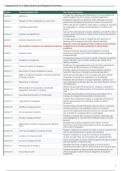
Companies Act 71 of 2008: Sections and Regulations Summary
Number Section/Regulation title Key Concept or Purpose
Provides the meanings and interpretations of various legal terms
Section 1 Definitions
used throughout the Act to ensure consistent application.
Establishes legal tests to determine when individuals or juristic
Section 2 Related and inter-related persons, and control
persons are considered connected or in control of one another.
Defines the specific conditions under which a company is classified
Section 3 Subsidiary relationships as a subsidiary or a wholly-owned subsidiary of another juristic
person.
Sets out the criteria based on assets, liabilities, and cash flow that a
Section 4 Solvency and liquidity test company must satisfy before making certain financial distributions
or transactions.
Provides guidance on how to interpret the Act's provisions in
Section 5 General interpretation of Act
harmony with its purposes and other national legislation.
Empowers courts and regulatory bodies to address actions intended
Section 6 Anti-avoidance, exemptions and substantial compliance to defeat the Act's provisions and allows for administrative
exemptions.
Outlines the primary objectives of the legislation, including
Section 7 Purposes of Act promoting compliance with the Bill of Rights and encouraging
entrepreneurship.
Distinguishes between profit and non-profit companies and defines
Section 8 Categories of companies various sub-types such as state-owned, private, and personal
liability companies.
Establishes the legal requirements and restrictions regarding the
Section 11 Criteria for names of companies
composition and distinctiveness of company names.
Provides a process for persons to reserve potential company
Section 12 Reservation of name and defensive names
names for future use or to protect existing naming rights.
Right to incorporate company or transfer registration Grants persons the right to form a company and allows foreign
Section 13
of foreign company companies to transfer their registration into the Republic.
Mandates the Commission to assign registration numbers and
Section 14 Registration of company issue registration certificates upon the successful filing of a Notice
of Incorporation.
Defines the governance framework of a company, including the
Memorandum of Incorporation, shareholder
Section 15 binding nature of the Memorandum of Incorporation and internal
agreements and rules of company
rules.
Prescribes the procedures and necessary authorizations for a
Section 16 Amending Memorandum of Incorporation
company to change its Memorandum of Incorporation.
Confirms that a registered company is a separate juristic person
Section 19 Legal status of companies with the legal capacity of an individual, subject to specific
limitations.
Protects third parties by limiting the extent to which a company's
Section 20 Validity of company actions
internal restrictions can invalidate its actions or contracts.
Governs the liability and ratification process for contracts entered
Section 21 Pre-incorporation contracts
into on behalf of a company before it exists legally.
Prohibits a company from carrying on business recklessly, with
Section 22 Reckless trading prohibited gross negligence, or with the intent to defraud creditors or other
persons.
Mandates that external companies must register with the
Registration of external companies and registered
Section 23 Commission and continuously maintain at least one registered
office
office within the Republic.
Requires companies to maintain accurate records in a specific form
Section 24 Form and standards for company records
and for specified durations to ensure accountability.
Requires companies to notify the Commission of where their
Section 25 Location of company records
records are kept if they are not located at the registered office.
Grants shareholders and other interested parties the right to inspect
Section 26 Access to company records
and copy specific company records.
Mandates that every company establish a financial year for
Section 27 Financial year of company
reporting and provides rules for determining its start and end dates.
Compels companies to keep accurate accounting records in an
Section 28 Accounting records official language to satisfy financial obligations and prepare
statements.
1
, Companies Act 71 of 2008: Sections and Regulations Summary
Number Section/Regulation title Key Concept or Purpose
Sets the standards for the form and content of financial statements
Section 29 Financial statements
to ensure they fairly represent the company's financial state.
Requires companies to prepare and potentially audit annual
Section 30 Annual financial statements financial statements within six months of the end of their financial
year.
Ensures that persons with beneficial interests in securities can
Section 31 Access to financial statements or related information
access a company's financial statements without demand.
Regulates how a company must present its name and registration
Section 32 Use of company name and registration number
number to the public to prevent misleading impressions.
Requires every company to file an annual return with the
Section 33 Annual return Commission to confirm its continued existence and compliance
details.
Additional accountability requirements for certain Imposes enhanced transparency and accountability standards on
Section 34
companies public and state-owned companies compared to private entities.
Defines shares as movable property and establishes that
Legal nature of company shares and requirement to
Section 35 companies must have shareholders and cannot issue shares to
have shareholders
themselves.
Outlines the board's power to issue different classes of shares and
Section 36 Authorisation for shares
the necessity of defining their preferences and rights.
Ensures that all shares of a specific class carry identical rights and
Section 37 Preferences, rights, limitations and other share terms
requires the disclosure of any varied terms between classes.
Authorizes the board to issue shares within approved classes and
Section 38 Issuing shares provides a 60-day window for retroactive authorization of
unauthorized issues.
Grants existing shareholders in private companies a pre-emptive
Section 39 Subscription of shares right to subscribe for new share issues to maintain their
proportional interest.
Requires that the board determines adequate payment for shares
Section 40 Consideration for shares
before they are issued and held in trust until fully paid.
Shareholder approval for issuing shares in certain Mandates a special resolution from shareholders when shares are
Section 41
cases issued to directors or other related parties of the company.
Governs the authorisation, issuance, and rights associated with
Section 43 Securities other than shares
debt instruments and other non-share securities.
Regulates the circumstances and approvals necessary for a
Section 44 Financial assistance for subscription of securities company to provide financial help to someone buying its own
shares.
Sets strict requirements for a company to provide loans or other
Section 45 Financial assistance
financial assistance to directors or related companies.
Prohibits the company from making payments to shareholders
Section 46 Distributions must be authorised by board unless the board formally authorizes it and the company passes the
solvency and liquidity test.
Allows the board to issue shares as a dividend to existing
Section 47 Capitalisation shares
shareholders rather than paying out cash.
Regulates the conditions under which a company or its subsidiary
Section 48 Company or subsidiary acquiring company's shares
may buy back its own shares from shareholders.
Securities to be evidenced by certificates or Clarifies that securities can be held in either physical certificate
Section 49
uncertificated form or as electronic (uncertificated) entries in a register.
Mandates that every company establish and maintain a detailed
Section 50 Securities register and numbering
register of all securities it has issued.
Outlines the legal process for transferring ownership of securities
Section 51 Registration and transfer of certificated securities
that are held in physical paper form.
Sets out the requirements for recording and managing ownership of
Section 52 Registration of uncertificated securities
securities held in electronic form through a central depository.
Specifies that the transfer of electronic securities must be handled
Section 53 Transfer of uncertificated securities
through a participant or central securities depository.
Establishes legal liability for any person who causes loss or
Section 55 Liability relating to uncertificated securities
damage through unauthorized actions in the securities register.
Beneficial interest in securities and beneficial ownership Requires disclosure and tracking of who ultimately owns or benefits
Section 56
of company from a company's shares, even if they are not the registered holder.
2
Number Section/Regulation title Key Concept or Purpose
Provides the meanings and interpretations of various legal terms
Section 1 Definitions
used throughout the Act to ensure consistent application.
Establishes legal tests to determine when individuals or juristic
Section 2 Related and inter-related persons, and control
persons are considered connected or in control of one another.
Defines the specific conditions under which a company is classified
Section 3 Subsidiary relationships as a subsidiary or a wholly-owned subsidiary of another juristic
person.
Sets out the criteria based on assets, liabilities, and cash flow that a
Section 4 Solvency and liquidity test company must satisfy before making certain financial distributions
or transactions.
Provides guidance on how to interpret the Act's provisions in
Section 5 General interpretation of Act
harmony with its purposes and other national legislation.
Empowers courts and regulatory bodies to address actions intended
Section 6 Anti-avoidance, exemptions and substantial compliance to defeat the Act's provisions and allows for administrative
exemptions.
Outlines the primary objectives of the legislation, including
Section 7 Purposes of Act promoting compliance with the Bill of Rights and encouraging
entrepreneurship.
Distinguishes between profit and non-profit companies and defines
Section 8 Categories of companies various sub-types such as state-owned, private, and personal
liability companies.
Establishes the legal requirements and restrictions regarding the
Section 11 Criteria for names of companies
composition and distinctiveness of company names.
Provides a process for persons to reserve potential company
Section 12 Reservation of name and defensive names
names for future use or to protect existing naming rights.
Right to incorporate company or transfer registration Grants persons the right to form a company and allows foreign
Section 13
of foreign company companies to transfer their registration into the Republic.
Mandates the Commission to assign registration numbers and
Section 14 Registration of company issue registration certificates upon the successful filing of a Notice
of Incorporation.
Defines the governance framework of a company, including the
Memorandum of Incorporation, shareholder
Section 15 binding nature of the Memorandum of Incorporation and internal
agreements and rules of company
rules.
Prescribes the procedures and necessary authorizations for a
Section 16 Amending Memorandum of Incorporation
company to change its Memorandum of Incorporation.
Confirms that a registered company is a separate juristic person
Section 19 Legal status of companies with the legal capacity of an individual, subject to specific
limitations.
Protects third parties by limiting the extent to which a company's
Section 20 Validity of company actions
internal restrictions can invalidate its actions or contracts.
Governs the liability and ratification process for contracts entered
Section 21 Pre-incorporation contracts
into on behalf of a company before it exists legally.
Prohibits a company from carrying on business recklessly, with
Section 22 Reckless trading prohibited gross negligence, or with the intent to defraud creditors or other
persons.
Mandates that external companies must register with the
Registration of external companies and registered
Section 23 Commission and continuously maintain at least one registered
office
office within the Republic.
Requires companies to maintain accurate records in a specific form
Section 24 Form and standards for company records
and for specified durations to ensure accountability.
Requires companies to notify the Commission of where their
Section 25 Location of company records
records are kept if they are not located at the registered office.
Grants shareholders and other interested parties the right to inspect
Section 26 Access to company records
and copy specific company records.
Mandates that every company establish a financial year for
Section 27 Financial year of company
reporting and provides rules for determining its start and end dates.
Compels companies to keep accurate accounting records in an
Section 28 Accounting records official language to satisfy financial obligations and prepare
statements.
1
, Companies Act 71 of 2008: Sections and Regulations Summary
Number Section/Regulation title Key Concept or Purpose
Sets the standards for the form and content of financial statements
Section 29 Financial statements
to ensure they fairly represent the company's financial state.
Requires companies to prepare and potentially audit annual
Section 30 Annual financial statements financial statements within six months of the end of their financial
year.
Ensures that persons with beneficial interests in securities can
Section 31 Access to financial statements or related information
access a company's financial statements without demand.
Regulates how a company must present its name and registration
Section 32 Use of company name and registration number
number to the public to prevent misleading impressions.
Requires every company to file an annual return with the
Section 33 Annual return Commission to confirm its continued existence and compliance
details.
Additional accountability requirements for certain Imposes enhanced transparency and accountability standards on
Section 34
companies public and state-owned companies compared to private entities.
Defines shares as movable property and establishes that
Legal nature of company shares and requirement to
Section 35 companies must have shareholders and cannot issue shares to
have shareholders
themselves.
Outlines the board's power to issue different classes of shares and
Section 36 Authorisation for shares
the necessity of defining their preferences and rights.
Ensures that all shares of a specific class carry identical rights and
Section 37 Preferences, rights, limitations and other share terms
requires the disclosure of any varied terms between classes.
Authorizes the board to issue shares within approved classes and
Section 38 Issuing shares provides a 60-day window for retroactive authorization of
unauthorized issues.
Grants existing shareholders in private companies a pre-emptive
Section 39 Subscription of shares right to subscribe for new share issues to maintain their
proportional interest.
Requires that the board determines adequate payment for shares
Section 40 Consideration for shares
before they are issued and held in trust until fully paid.
Shareholder approval for issuing shares in certain Mandates a special resolution from shareholders when shares are
Section 41
cases issued to directors or other related parties of the company.
Governs the authorisation, issuance, and rights associated with
Section 43 Securities other than shares
debt instruments and other non-share securities.
Regulates the circumstances and approvals necessary for a
Section 44 Financial assistance for subscription of securities company to provide financial help to someone buying its own
shares.
Sets strict requirements for a company to provide loans or other
Section 45 Financial assistance
financial assistance to directors or related companies.
Prohibits the company from making payments to shareholders
Section 46 Distributions must be authorised by board unless the board formally authorizes it and the company passes the
solvency and liquidity test.
Allows the board to issue shares as a dividend to existing
Section 47 Capitalisation shares
shareholders rather than paying out cash.
Regulates the conditions under which a company or its subsidiary
Section 48 Company or subsidiary acquiring company's shares
may buy back its own shares from shareholders.
Securities to be evidenced by certificates or Clarifies that securities can be held in either physical certificate
Section 49
uncertificated form or as electronic (uncertificated) entries in a register.
Mandates that every company establish and maintain a detailed
Section 50 Securities register and numbering
register of all securities it has issued.
Outlines the legal process for transferring ownership of securities
Section 51 Registration and transfer of certificated securities
that are held in physical paper form.
Sets out the requirements for recording and managing ownership of
Section 52 Registration of uncertificated securities
securities held in electronic form through a central depository.
Specifies that the transfer of electronic securities must be handled
Section 53 Transfer of uncertificated securities
through a participant or central securities depository.
Establishes legal liability for any person who causes loss or
Section 55 Liability relating to uncertificated securities
damage through unauthorized actions in the securities register.
Beneficial interest in securities and beneficial ownership Requires disclosure and tracking of who ultimately owns or benefits
Section 56
of company from a company's shares, even if they are not the registered holder.
2