The personal care industry usually engages in gender-based discrimination, with women
paying more than men. Price discrimination occurs when producers sell the same product to
different consumers at different prices, and it takes place when the producer has price-
setting ability. This specific case pertains to third-degree price discrimination. Here,
consumers are identified in different market segments, and a separate price is charged in
each segment according to its elasticity, which is how much the demand changes when the
price of a product changes. When demand is inelastic, the change in demand is less than
the change in price, and when demand is elastic, the change in demand is greater than the
change in price. In this case, demand for products is much higher and more inelastic for
female consumers, and producers are able to charge more as this does not affect demand.
For male consumers, however, demand for products is lower and more elastic, so producers
have to set their prices lower to maintain the level of demand.
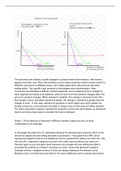
Graph 1. Price elasticity of demand in different markets, taking the price of facial
moisturizers as an example.
In this graph,the green line, D, represents demand for personal care products, which is the
amount of people who are willing and able to purchase it. The purple line is MR, which
represents marginal revenue, the additional revenue gained from selling one extra unit. The
red line, MC, represents marginal cost that is the extra cost to produce one extra unit.
Demand goes up as price goes down because more people who are willing and able to
purchase the product as it doesn’t cost them as much. Given that demand is equal to
average revenue, marginal revenue is twice as steeply sloping as the demand curve.
Marginal cost is constant because there is the same additional cost to produce the product
paying more than men. Price discrimination occurs when producers sell the same product to
different consumers at different prices, and it takes place when the producer has price-
setting ability. This specific case pertains to third-degree price discrimination. Here,
consumers are identified in different market segments, and a separate price is charged in
each segment according to its elasticity, which is how much the demand changes when the
price of a product changes. When demand is inelastic, the change in demand is less than
the change in price, and when demand is elastic, the change in demand is greater than the
change in price. In this case, demand for products is much higher and more inelastic for
female consumers, and producers are able to charge more as this does not affect demand.
For male consumers, however, demand for products is lower and more elastic, so producers
have to set their prices lower to maintain the level of demand.
Graph 1. Price elasticity of demand in different markets, taking the price of facial
moisturizers as an example.
In this graph,the green line, D, represents demand for personal care products, which is the
amount of people who are willing and able to purchase it. The purple line is MR, which
represents marginal revenue, the additional revenue gained from selling one extra unit. The
red line, MC, represents marginal cost that is the extra cost to produce one extra unit.
Demand goes up as price goes down because more people who are willing and able to
purchase the product as it doesn’t cost them as much. Given that demand is equal to
average revenue, marginal revenue is twice as steeply sloping as the demand curve.
Marginal cost is constant because there is the same additional cost to produce the product