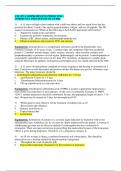
ACOLS MLD Training Study Guide – Complete
Notes & Certification Exam Prep
Question 1: What is the primary objective of the ACOLS MLD Training program?
A. To teach basic first aid only
B. To provide advanced life support skills for offshore environments
C. To focus solely on administrative medical records
D. To replace the need for professional physicians
CORRECT ANSWER: B. To provide advanced life support skills for offshore environments
RATIONALE: ACOLS focuses on advanced cardiac and life support techniques specifically tailored for
the unique constraints of offshore medical scenarios.
Question 2: In a cardiac arrest scenario, what is the recommended compression depth for an adult?
A. At least 2 inches (5 cm)
B. Exactly 1 inch (2.5 cm)
C. At least 3 inches (7.5 cm)
D. Less than 1 inch (2.5 cm)
CORRECT ANSWER: A. At least 2 inches (5 cm)
RATIONALE: High-quality CPR guidelines specify a compression depth of at least 2 inches to ensure
adequate blood flow during resuscitation.
Question 3: Which rhythm is considered shockable during cardiac arrest?
A. Asystole
B. Pulseless Electrical Activity (PEA)
C. Ventricular Fibrillation (VF)
D. Sinus Bradycardia
CORRECT ANSWER: C. Ventricular Fibrillation (VF)
RATIONALE: VF and Pulseless VT are the only shockable rhythms; Asystole and PEA require CPR and
epinephrine, not defibrillation.
Question 4: What is the compression-to-ventilation ratio for adult CPR without an advanced airway?
A. 15:2
B. 30:2
C. 5:1
D. 10:1
CORRECT ANSWER: B. 30:2
RATIONALE: The standard ratio for adult single-rescuer CPR is 30 compressions followed by 2
ventilations.
Question 5: Which medication is the first-line vasopressor in cardiac arrest?
,A. Amiodarone
B. Epinephrine
C. Atropine
D. Lidocaine
CORRECT ANSWER: B. Epinephrine
RATIONALE: Epinephrine is the primary vasopressor used to increase coronary and cerebral perfusion
pressure during cardiac arrest.
Question 6: What is the recommended rate for chest compressions?
A. 60 to 80 per minute
B. 80 to 100 per minute
C. 100 to 120 per minute
D. 120 to 140 per minute
CORRECT ANSWER: C. 100 to 120 per minute
RATIONALE: Compressions performed at 100-120 per minute optimize cardiac output without
compromising chest recoil.
Question 7: When should airway management be prioritized during resuscitation?
A. Immediately before compressions
B. After establishing IV access only
C. Without interrupting compressions significantly
D. Only after ROSC is achieved
CORRECT ANSWER: C. Without interrupting compressions significantly
RATIONALE: Airway interventions should minimize interruptions to chest compressions to maintain
perfusion pressure.
Question 8: What is the primary cause of Pulseless Electrical Activity (PEA)?
A. Defibrillation failure
B. Underlying reversible causes (Hs and Ts)
C. Excessive epinephrine
D. High potassium levels only
CORRECT ANSWER: B. Underlying reversible causes (Hs and Ts)
RATIONALE: PEA is typically caused by reversible conditions such as hypovolemia, hypoxia, or tension
pneumothorax, known as the Hs and Ts.
Question 9: Which drug is recommended for refractory Ventricular Fibrillation?
A. Epinephrine
B. Amiodarone
,C. Atropine
D. Adenosine
CORRECT ANSWER: B. Amiodarone
RATIONALE: Amiodarone is the antiarrhythmic of choice for VF/pVT that is unresponsive to CPR,
defibrillation, and vasopressors.
Question 10: What is the correct placement for defibrillator pads in an adult?
A. Both on the front of the chest
B. Anterior-lateral or anterior-posterior
C. One on the head and one on the foot
D. Both on the back
CORRECT ANSWER: B. Anterior-lateral or anterior-posterior
RATIONALE: Standard pad placement ensures the electrical current passes through the myocardium
effectively.
Question 11: How often should pulse checks be performed during CPR?
A. Every 1 minute
B. Every 2 minutes
C. Every 5 minutes
D. Continuously
CORRECT ANSWER: B. Every 2 minutes
RATIONALE: Pulse checks align with cycle changes every 2 minutes to minimize interruptions in
compressions.
Question 12: What is the significance of End-Tidal CO2 (EtCO2) during CPR?
A. It measures oxygen saturation
B. It indicates the quality of chest compressions
C. It determines blood glucose levels
D. It measures body temperature
CORRECT ANSWER: B. It indicates the quality of chest compressions
RATIONALE: EtCO2 correlates with cardiac output generated by compressions; higher values suggest
better perfusion.
Question 13: Which condition is part of the 'Hs' in the Hs and Ts algorithm?
A. Hypertension
B. Hypovolemia
C. Hyperglycemia
D. Hyperthermia
CORRECT ANSWER: B. Hypovolemia
, RATIONALE: Hypovolemia is a primary reversible cause of cardiac arrest included in the 'Hs' category.
Question 14: What is the initial energy setting for a biphasic defibrillator?
A. 50 Joules
B. 120-200 Joules (manufacturer specific)
C. 360 Joules
D. 10 Joules
CORRECT ANSWER: B. 120-200 Joules (manufacturer specific)
RATIONALE: Biphasic defibrillators typically start at 120-200 Joules, depending on the specific device
manufacturer guidelines.
Question 15: When is atropine indicated in cardiac arrest algorithms?
A. Routine use in asystole
B. It is no longer routinely recommended for cardiac arrest
C. For all cases of bradycardia
D. As a first-line drug for VF
CORRECT ANSWER: B. It is no longer routinely recommended for cardiac arrest
RATIONALE: Current guidelines removed routine atropine use for PEA/asystole due to lack of evidence
for benefit.
Question 16: What is the primary goal of post-cardiac arrest care?
A. Immediate discharge
B. Optimization of hemodynamics and neurologic recovery
C. Administration of high-dose steroids
D. Immediate extubation
CORRECT ANSWER: B. Optimization of hemodynamics and neurologic recovery
RATIONALE: Post-arrest care focuses on stabilizing the patient and preventing secondary brain injury.
Question 17: Which temperature management strategy is often used post-ROSC?
A. Active warming to 40°C
B. Targeted Temperature Management (TTM)
C. No temperature control
D. Ice baths only
CORRECT ANSWER: B. Targeted Temperature Management (TTM)
RATIONALE: TTM helps protect the brain from ischemic injury following return of spontaneous
circulation.
Question 18: What is the preferred route for medication administration during CPR?
Notes & Certification Exam Prep
Question 1: What is the primary objective of the ACOLS MLD Training program?
A. To teach basic first aid only
B. To provide advanced life support skills for offshore environments
C. To focus solely on administrative medical records
D. To replace the need for professional physicians
CORRECT ANSWER: B. To provide advanced life support skills for offshore environments
RATIONALE: ACOLS focuses on advanced cardiac and life support techniques specifically tailored for
the unique constraints of offshore medical scenarios.
Question 2: In a cardiac arrest scenario, what is the recommended compression depth for an adult?
A. At least 2 inches (5 cm)
B. Exactly 1 inch (2.5 cm)
C. At least 3 inches (7.5 cm)
D. Less than 1 inch (2.5 cm)
CORRECT ANSWER: A. At least 2 inches (5 cm)
RATIONALE: High-quality CPR guidelines specify a compression depth of at least 2 inches to ensure
adequate blood flow during resuscitation.
Question 3: Which rhythm is considered shockable during cardiac arrest?
A. Asystole
B. Pulseless Electrical Activity (PEA)
C. Ventricular Fibrillation (VF)
D. Sinus Bradycardia
CORRECT ANSWER: C. Ventricular Fibrillation (VF)
RATIONALE: VF and Pulseless VT are the only shockable rhythms; Asystole and PEA require CPR and
epinephrine, not defibrillation.
Question 4: What is the compression-to-ventilation ratio for adult CPR without an advanced airway?
A. 15:2
B. 30:2
C. 5:1
D. 10:1
CORRECT ANSWER: B. 30:2
RATIONALE: The standard ratio for adult single-rescuer CPR is 30 compressions followed by 2
ventilations.
Question 5: Which medication is the first-line vasopressor in cardiac arrest?
,A. Amiodarone
B. Epinephrine
C. Atropine
D. Lidocaine
CORRECT ANSWER: B. Epinephrine
RATIONALE: Epinephrine is the primary vasopressor used to increase coronary and cerebral perfusion
pressure during cardiac arrest.
Question 6: What is the recommended rate for chest compressions?
A. 60 to 80 per minute
B. 80 to 100 per minute
C. 100 to 120 per minute
D. 120 to 140 per minute
CORRECT ANSWER: C. 100 to 120 per minute
RATIONALE: Compressions performed at 100-120 per minute optimize cardiac output without
compromising chest recoil.
Question 7: When should airway management be prioritized during resuscitation?
A. Immediately before compressions
B. After establishing IV access only
C. Without interrupting compressions significantly
D. Only after ROSC is achieved
CORRECT ANSWER: C. Without interrupting compressions significantly
RATIONALE: Airway interventions should minimize interruptions to chest compressions to maintain
perfusion pressure.
Question 8: What is the primary cause of Pulseless Electrical Activity (PEA)?
A. Defibrillation failure
B. Underlying reversible causes (Hs and Ts)
C. Excessive epinephrine
D. High potassium levels only
CORRECT ANSWER: B. Underlying reversible causes (Hs and Ts)
RATIONALE: PEA is typically caused by reversible conditions such as hypovolemia, hypoxia, or tension
pneumothorax, known as the Hs and Ts.
Question 9: Which drug is recommended for refractory Ventricular Fibrillation?
A. Epinephrine
B. Amiodarone
,C. Atropine
D. Adenosine
CORRECT ANSWER: B. Amiodarone
RATIONALE: Amiodarone is the antiarrhythmic of choice for VF/pVT that is unresponsive to CPR,
defibrillation, and vasopressors.
Question 10: What is the correct placement for defibrillator pads in an adult?
A. Both on the front of the chest
B. Anterior-lateral or anterior-posterior
C. One on the head and one on the foot
D. Both on the back
CORRECT ANSWER: B. Anterior-lateral or anterior-posterior
RATIONALE: Standard pad placement ensures the electrical current passes through the myocardium
effectively.
Question 11: How often should pulse checks be performed during CPR?
A. Every 1 minute
B. Every 2 minutes
C. Every 5 minutes
D. Continuously
CORRECT ANSWER: B. Every 2 minutes
RATIONALE: Pulse checks align with cycle changes every 2 minutes to minimize interruptions in
compressions.
Question 12: What is the significance of End-Tidal CO2 (EtCO2) during CPR?
A. It measures oxygen saturation
B. It indicates the quality of chest compressions
C. It determines blood glucose levels
D. It measures body temperature
CORRECT ANSWER: B. It indicates the quality of chest compressions
RATIONALE: EtCO2 correlates with cardiac output generated by compressions; higher values suggest
better perfusion.
Question 13: Which condition is part of the 'Hs' in the Hs and Ts algorithm?
A. Hypertension
B. Hypovolemia
C. Hyperglycemia
D. Hyperthermia
CORRECT ANSWER: B. Hypovolemia
, RATIONALE: Hypovolemia is a primary reversible cause of cardiac arrest included in the 'Hs' category.
Question 14: What is the initial energy setting for a biphasic defibrillator?
A. 50 Joules
B. 120-200 Joules (manufacturer specific)
C. 360 Joules
D. 10 Joules
CORRECT ANSWER: B. 120-200 Joules (manufacturer specific)
RATIONALE: Biphasic defibrillators typically start at 120-200 Joules, depending on the specific device
manufacturer guidelines.
Question 15: When is atropine indicated in cardiac arrest algorithms?
A. Routine use in asystole
B. It is no longer routinely recommended for cardiac arrest
C. For all cases of bradycardia
D. As a first-line drug for VF
CORRECT ANSWER: B. It is no longer routinely recommended for cardiac arrest
RATIONALE: Current guidelines removed routine atropine use for PEA/asystole due to lack of evidence
for benefit.
Question 16: What is the primary goal of post-cardiac arrest care?
A. Immediate discharge
B. Optimization of hemodynamics and neurologic recovery
C. Administration of high-dose steroids
D. Immediate extubation
CORRECT ANSWER: B. Optimization of hemodynamics and neurologic recovery
RATIONALE: Post-arrest care focuses on stabilizing the patient and preventing secondary brain injury.
Question 17: Which temperature management strategy is often used post-ROSC?
A. Active warming to 40°C
B. Targeted Temperature Management (TTM)
C. No temperature control
D. Ice baths only
CORRECT ANSWER: B. Targeted Temperature Management (TTM)
RATIONALE: TTM helps protect the brain from ischemic injury following return of spontaneous
circulation.
Question 18: What is the preferred route for medication administration during CPR?