Heat energy changes in chemical reactions –
Reactions and temperature changes
When a chemical reaction happens, energy is transferred to or from the surroundings. For
example, changes in heat energy happen in the following situations:
- Salts dissolving in water.
- neutralisation reactions
- displacement reactions
- precipitation reactions
When these reactions happen in solution, there are temperature changes that can be
observed. These can be measured using a thermometer.
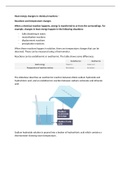
Reactions can be endothermic or exothermic. The table shows some differences.
The slideshow describes an exothermic reaction between dilute sodium hydroxide and
hydrochloric acid, and an endothermic reaction between sodium carbonate and ethanoic
acid.
Sodium hydroxide solution is poured into a beaker of hydrochloric acid which contains a
thermometer showing room temperature.
, Heat energy changes-
Breaking and making bonds
Energy is transferred when bonds are broken or are formed.
During a chemical reaction:
- bonds in the reactants are broken
- new bonds are made in the products
The difference between the energy needed to break bonds, and the energy released when
new bonds form, determines the type of reaction.
A reaction is:
- exothermic - if more heat energy is released in forming bonds in the products than is
taken in when breaking bonds in the reactants.
- endothermic - if less heat energy is released in forming bonds in the products than is
taken in when breaking bonds in the reactants.
An energy level diagram shows these differences more clearly.
Energy level diagrams-
An energy level diagram shows the energy in the reactants and products, and the difference
in energy between them.
Exothermic reaction-
The energy level decreases in an exothermic reaction. This is because energy is given out to
the surroundings.
Reactions and temperature changes
When a chemical reaction happens, energy is transferred to or from the surroundings. For
example, changes in heat energy happen in the following situations:
- Salts dissolving in water.
- neutralisation reactions
- displacement reactions
- precipitation reactions
When these reactions happen in solution, there are temperature changes that can be
observed. These can be measured using a thermometer.
Reactions can be endothermic or exothermic. The table shows some differences.
The slideshow describes an exothermic reaction between dilute sodium hydroxide and
hydrochloric acid, and an endothermic reaction between sodium carbonate and ethanoic
acid.
Sodium hydroxide solution is poured into a beaker of hydrochloric acid which contains a
thermometer showing room temperature.
, Heat energy changes-
Breaking and making bonds
Energy is transferred when bonds are broken or are formed.
During a chemical reaction:
- bonds in the reactants are broken
- new bonds are made in the products
The difference between the energy needed to break bonds, and the energy released when
new bonds form, determines the type of reaction.
A reaction is:
- exothermic - if more heat energy is released in forming bonds in the products than is
taken in when breaking bonds in the reactants.
- endothermic - if less heat energy is released in forming bonds in the products than is
taken in when breaking bonds in the reactants.
An energy level diagram shows these differences more clearly.
Energy level diagrams-
An energy level diagram shows the energy in the reactants and products, and the difference
in energy between them.
Exothermic reaction-
The energy level decreases in an exothermic reaction. This is because energy is given out to
the surroundings.